Sign up with Google
 Sign in with Zoho

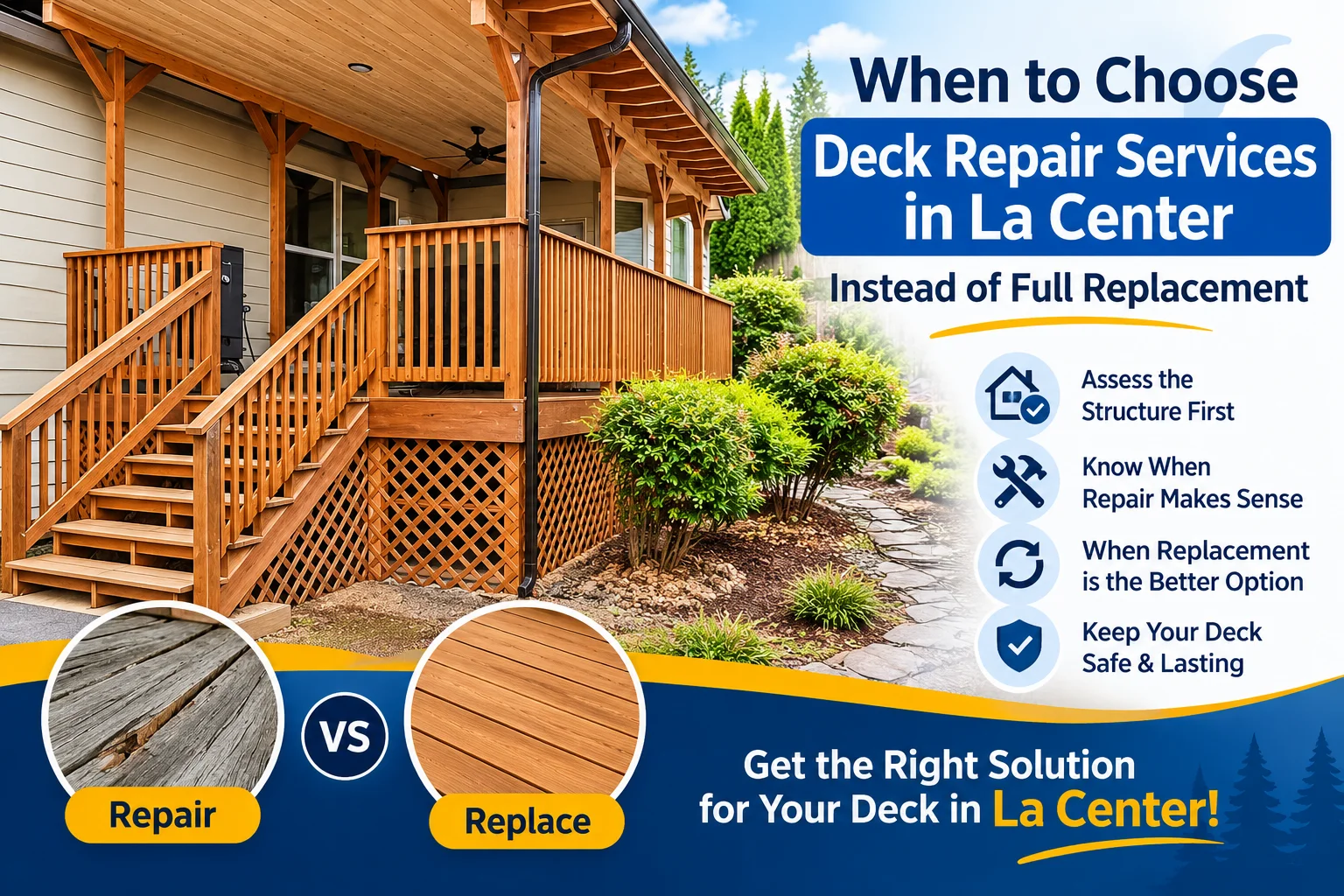
In La Center, a deck works hard. Months of rain, damp shade under the firs, moss on the boards and the occasional hard freeze all take their toll. Sooner or later, most homeowners look at a gray, splintered deck and ask the same question: can this be fixed, or does it need to come out?
The answer depends far more on what's underneath than what you see on top. A tired-looking surface often hides a perfectly sound frame, while a deck that looks fine can have rot where it matters most. This guide explains how to tell the difference, and when repair or restoration makes more sense than starting over.
Start With the Structure, Not the Surface
A deck has two parts: the surface you walk on (boards and railings) and the structure that holds it up (ledger, joists, beams, posts and footings). Surface problems are usually repairable. Structural problems decide whether repair is still an option.
Check the Ledger Connection
The ledger is the board that attaches the deck to your house, and it's the most critical connection on most decks. Look for:
- Rot or dark staining on the ledger or the house siding behind it
- Missing or rusted flashing above the ledger, which lets water in
- Nails instead of bolts or structural screws holding it to the house
The American Wood Council's DCA 6 deck construction guide sets out how ledgers should be fastened and flashed, and it specifically warns against relying on nails alone. Problems here need attention right away.
Probe the Joists and Beams
From underneath, push a screwdriver into joists, beams and the tops of posts, especially where boards meet and water collects. Sound wood resists. If the tip sinks in easily, there's rot.
Look at Posts, Footings and Hardware
Check that posts sit squarely on their footings and aren't sinking or leaning. Joist hangers and connectors should be intact, not heavily rusted.
Test the Railings
Grab the railing and push. Any noticeable movement is a safety issue, often caused by loose posts or rotted blocking.
When Repair or Restoration Is the Right Call
Repair usually makes sense when the structure is sound and the problems are limited. Typical cases include:
- Weathered, gray or mildewed boards that are still solid. Cleaning, sanding and resealing can bring them back.
- A few rotted or cracked boards that can be swapped for new ones.
- Loose railings or stairs that need reinforcing or partial rebuilding.
- Popped nails and loose fasteners that can be replaced with deck screws.
- Minor rot in isolated joists that can be repaired or sistered with new lumber.
- Missing or failed flashing that can be corrected before it causes deeper damage.
For a deck like this, professional deck repair services in La Center can add years of life at a fraction of the cost of replacement. Restoration that includes cleaning, repairs and a quality sealant also protects the wood against the next rainy season.
When Replacement Makes More Sense
Replacement is usually the better choice when:
- Rot is widespread in joists, beams or the ledger, not just a few boards
- The ledger connection is failing and the framing behind it is damaged
- Footings have shifted or posts are badly decayed
- The deck was built without permits or proper hardware, making it hard to bring up to standard
- Repairs would cover most of the deck anyway, so the cost approaches a new build
- You want a different size, layout or material, such as switching to composite decking
In these cases, the most cost-effective approach to deck and patio repair and replacement in La Center is often to rebuild the structure correctly, rather than keep patching it.
The Middle Ground: Resurfacing
If the frame is sound but the boards are worn out, resurfacing can be a smart compromise. The old decking and railings come off, and new boards, either wood or composite, go on the existing structure. You get a deck that looks new for less than full replacement.
Resurfacing only works if the frame is genuinely sound, and joist spacing must suit the new decking material. Composite boards often need closer joist spacing than wood.
Why the Pacific Northwest Climate Matters
La Center's long wet season is hard on wood. Moisture that sits on boards, in joints and around fasteners feeds rot, moss and mildew. That's why regular maintenance matters so much here:
- Clean the deck every year to remove moss, leaves and debris
- Keep gaps between boards clear so water can drain
- Reseal wood every couple of years, or as the product recommends
- Make sure gutters and downspouts don't dump water onto the deck
- Inspect the ledger and flashing each spring
Staying on top of these jobs often decides whether you'll be repairing your deck in ten years or replacing it.
Questions to Ask a Contractor
Before deciding, get a professional inspection and ask:
- Is the structure sound, and what did you find at the ledger?
- Which parts need repair now, and which can wait?
- Will repairs need a permit?
- How long can I expect the deck to last after repair or restoration?
- What would replacement cost by comparison?
A good contractor will show you what they found and explain the options, rather than pushing straight toward the biggest job.
Making the Decision
If the frame is solid, repair and restoration are usually the smarter investment. If the structure is compromised, replacement is safer and often cheaper over time. For many homes, professional Deck Restoration In La Center brings a weathered deck back to life, adds years of use, and keeps it ready for long summer evenings outside.