Sign up with Google
 Sign in with Zoho

Market Overview
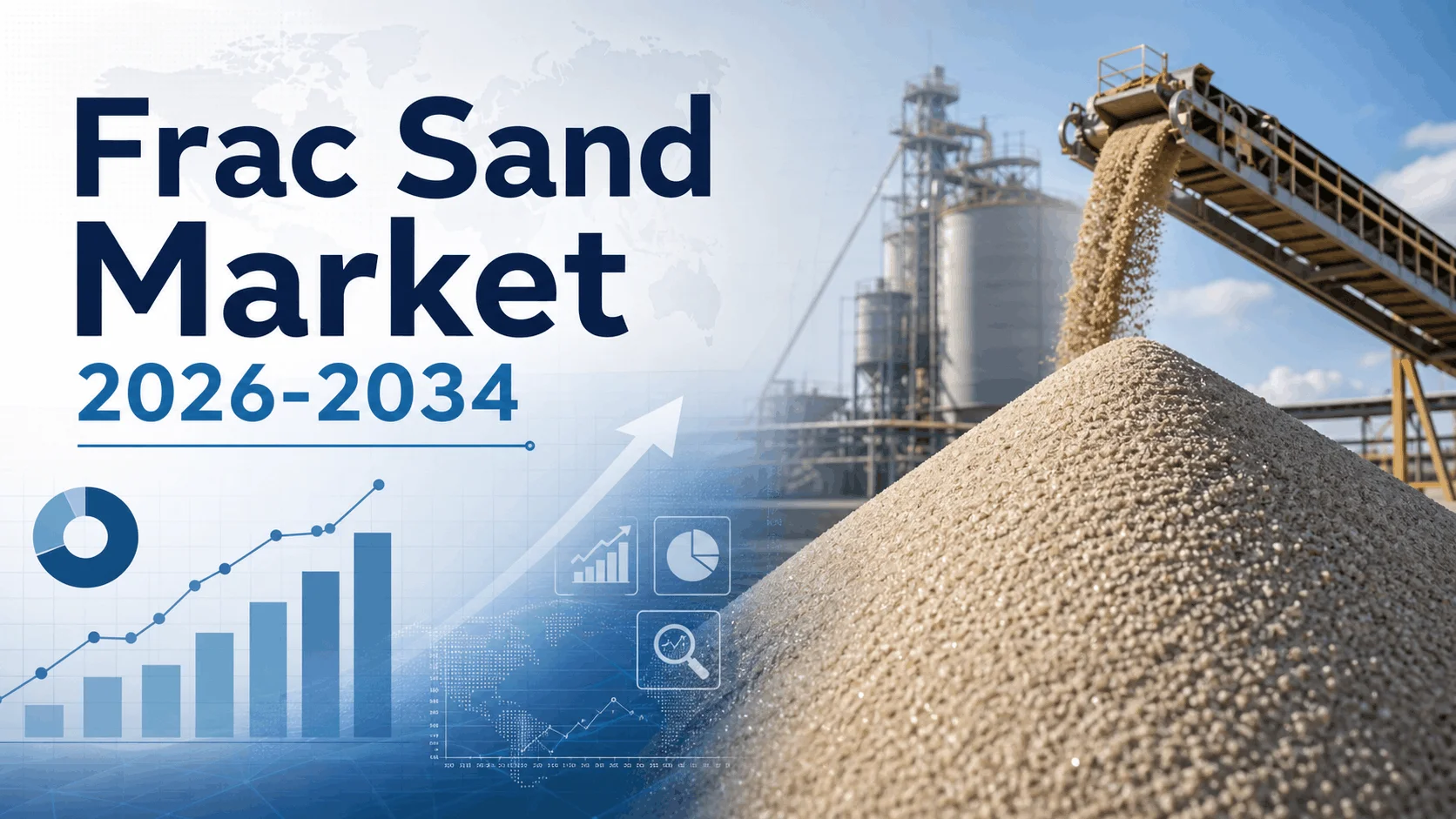
According to IMARC Group's latest research publication, "Frac Sand Market: Global Industry Trends, Share, Size, Growth, Opportunity and Forecast", the global frac sand market size was valued at USD 8.7 Billion in 2025. Looking forward, IMARC Group estimates the market to reach USD 16.3 Billion by 2034, exhibiting a CAGR of 6.98%, driven by rising proppant intensity per well and the Permian Basin's evolution into the industry's dominant growth engine. Industry metrics show proppant intensities in the Permian now averaging nearly one ton per lateral foot, with some completions reaching as high as two and a half tons per lateral foot, reflecting a structural shift in shale production as operators pursue longer horizontal laterals and tighter fracture stage spacing to maximize recovery rates.
Frac sand, or proppant, is a specialized granular material pumped into hydraulically fractured wells to hold open fissures and enable oil and gas flow, sourced from both premium northern white sand deposits and increasingly favored in-basin regional sand sources located closer to active drilling areas. The frac sand industry has evolved from treating sand as a basic commodity toward viewing it as a strategic input closely tied to execution speed and operational reliability, with in-basin production and advanced logistics increasingly determining competitive positioning across major shale plays.
How AI Is Reshaping the Future of the Frac Sand Industry
- Sand logistics companies are testing autonomous, driverless hauling technology to address persistent truck driver shortages and reduce transportation costs across the Permian Basin's dense network of well sites.
- Data-driven logistics platforms are increasingly used to optimize last-mile sand delivery scheduling, helping operators and suppliers reduce delays when completion crews and equipment are already mobilized on location.
- Predictive analytics tools are helping sand producers and pressure pumping companies anticipate demand fluctuations tied to rig count and completion activity, supporting more responsive capacity planning decisions.
- AI-assisted conveyor and rail logistics systems, including dedicated direct-delivery infrastructure bypassing traditional trucking, are reducing road congestion while improving delivery time predictability for high-volume completion operations.
- Digital monitoring systems embedded in dry sand production and storage facilities are helping operators manage dust control and environmental compliance requirements more efficiently as dry sand capacity expands.
Key Trends in the Frac Sand Industry
- Rising Proppant Intensity Driving Volume Growth: Proppant intensity per well has risen steadily over the past decade, driven by longer horizontal laterals and tighter fracture stage spacing, with Permian completions now averaging close to one ton of sand per lateral foot and reaching considerably higher volumes on the most aggressive well designs.
- In-Basin Dry Sand Capacity Expansion: Producers continue adding dry sand processing capability alongside traditional wet sand operations, offering longer storage periods and more flexible handling that help operators manage sudden changes in completion timing without supply disruption.
- Direct-Delivery Logistics Infrastructure Investment: Major sand suppliers continue investing in dedicated conveyor systems and expanded in-basin terminals designed to deliver frac sand directly to well sites without relying on trucking, reducing road congestion and shortening delivery times.
- Autonomous Hauling Technology Testing: Companies are piloting driverless sand hauling technology across Permian operations, signaling a new era in addressing persistent trucking constraints that have historically bottlenecked sand delivery during periods of elevated completion activity.
- Shift Toward Gas Basin and Integrated Logistics Expansion: Strategic acquisitions signal a broader industry shift toward gas-focused basins and integrated logistics capabilities, positioning suppliers to capture demand ahead of anticipated activity increases across multiple shale plays.
Growth Factors in the Frac Sand Industry
- Permian Basin Completion Activity Acceleration: Rising rig counts and completion activity across West Texas continue driving sustained demand for both premium and in-basin sand supply, with operators increasingly relying on regional producers to reduce logistics risk and improve delivery reliability.
- Advanced Completion Design Evolution: The industry's continued shift toward longer horizontal laterals, tighter fracture stage spacing, and triple-frac completion techniques is structurally increasing sand volume requirements per well across major operators.
- Logistics Infrastructure Investment: Substantial capital investment in conveyor systems, expanded in-basin terminals, and rail-linked supply chains continues improving delivery reliability and reducing costs across the frac sand supply chain.
- LNG-Linked Gas Development Growth: Emerging gas basin development tied to LNG export growth and domestic production targets continues creating new frac sand demand centers beyond traditional oil-focused shale plays.
- Strategic Positioning Around Execution Speed: Operators increasingly treat sand supply reliability as a competitive differentiator affecting well economics, driving sustained investment in supply chain resilience and in-basin production capacity.
Leading Companies Operating in the Global Frac Sand Industry
- Atlas Energy Solutions Inc.
- Hi-Crush Inc.
- Smart Sand Inc.
- U.S. Silica Holdings Inc.
- Covia Holdings Corporation
- ProFrac Holding Corp.
- Wallstreet Sand Co.
- Black Mountain Sand
- Alpine Silica
Frac Sand Market Report Segmentation
Breakup by Sand Type:
- Northern White Sand
- In-Basin (Regional) Sand
Northern white sand continues capturing significant market share given its high silica quality, superior grain strength, and established rail-linked supply chains that keep it relevant for the most demanding shale completions, while in-basin sand continues gaining share for standard completion applications where logistics cost reduction outweighs premium grain characteristics.
Breakup by Application:
- Shale Oil
- Shale Gas
- Tight Oil
Shale oil continues commanding the leading application share, supported by high-intensity completions in oil-rich basins where sand volume, flowback performance, and logistics precision directly influence well economics and overall recovery rates.
Breakup by Region:
- North America (United States, Canada)
- Asia Pacific (China, Japan, India, South Korea, Australia, Indonesia, Others)
- Europe (Germany, France, United Kingdom, Italy, Spain, Others)
- Latin America (Brazil, Mexico, Others)
- Middle East and Africa
North America remains the most important regional market by a wide margin, anchored by the deepest commercial base for shale oil, shale gas, and tight oil development across the Permian, Eagle Ford, Bakken, Haynesville, Marcellus, and Utica basins, while Asia Pacific represents a less mature but rapidly developing market supported by LNG-linked gas development and expanding domestic production targets.
Recent News and Developments in the Frac Sand Industry
- January 2025: Atlas Energy Solutions launched its Dune Express conveyor system, creating a direct route to deliver frac sand to key Permian Basin sites without relying on trucking, reducing road congestion and shortening delivery times for high-volume completion operations.
- December 2025: Detmar and Aurora began testing driverless sand hauling technology, signaling a new era in Permian sand logistics aimed at addressing persistent trucking constraints and reshaping how sand is transported across the heart of U.S. shale country.
- January 2026: Wallstreet Sand Co. launched dry frac sand operations at its Kermit, Texas facility, expanding in-basin proppant supply for Permian Basin completion activity and complementing its existing wet sand operations to serve a wider range of operator requirements as completion activity increases across West Texas.
- August 2026: Local sand mining activity in the Permian Basin set a new volume record, reflecting sustained growth in in-basin proppant production as operators continue prioritizing regional supply sources to reduce logistics risk and support rising completion intensity.
Note: If you require specific details, data, or insights that are not currently included in the scope of this report, we are happy to accommodate your request. As part of our customization service, we will gather and provide the additional information you need, tailored to your specific requirements. Please let us know your exact needs, and we will ensure the report is updated accordingly to meet your expectations.
About Us
IMARC Group is a global management consulting firm that helps the world's most ambitious changemakers create a lasting impact. The company provides a comprehensive suite of market entry and expansion services. IMARC offerings include thorough market assessment, feasibility studies, company incorporation assistance, factory setup support, regulatory approvals and licensing navigation, branding, marketing and sales strategies, competitive landscape and benchmarking analyses, pricing and cost research, and procurement research.
Contact Us
IMARC Group
134 N 4th St. Brooklyn, NY 11249, USA
United States: +1-201-971-6302