Sign up with Google
 Sign in with Zoho


What should founders include in a pre-seed pitch?
A pre-seed pitch should clearly explain the customer problem, proposed solution, target market, business model, founding team, early validation, and funding requirements. Since many pre-seed startups have limited revenue, investors often focus on the strength of the opportunity, founder capability, and evidence that customers genuinely need the solution.
At this stage, investors are not necessarily expecting a fully established company. However, they do want to understand why the business could become valuable and how the founders plan to develop it.
A focused pitch should answer:
- What problem does the startup solve?
- Who experiences the problem?
- Why is the solution different?
- How large is the potential market?
- How will the company make money?
- What evidence supports customer demand?
- Why is this team capable of executing the plan?
- How will funding be used?
Keeping these answers concise makes it easier for investors to understand the opportunity.
Why is validation important before approaching investors?
Direct Answer:Early validation helps demonstrate that a startup is solving a genuine problem rather than building a product based only on assumptions. Customer interviews, pilot programmes, early users, partnerships, and product testing can all provide useful evidence of market interest.
Founders should use the strongest available evidence to support their claims.
For example, a startup without significant revenue could demonstrate:
- Positive customer feedback
- Waiting-list signups
- Prototype testing
- Letters of intent
- Pilot customers
- Early partnerships
- Strong market research
The type of evidence matters less than whether it genuinely supports the business case.
How can founders make a pre-seed pitch more convincing?
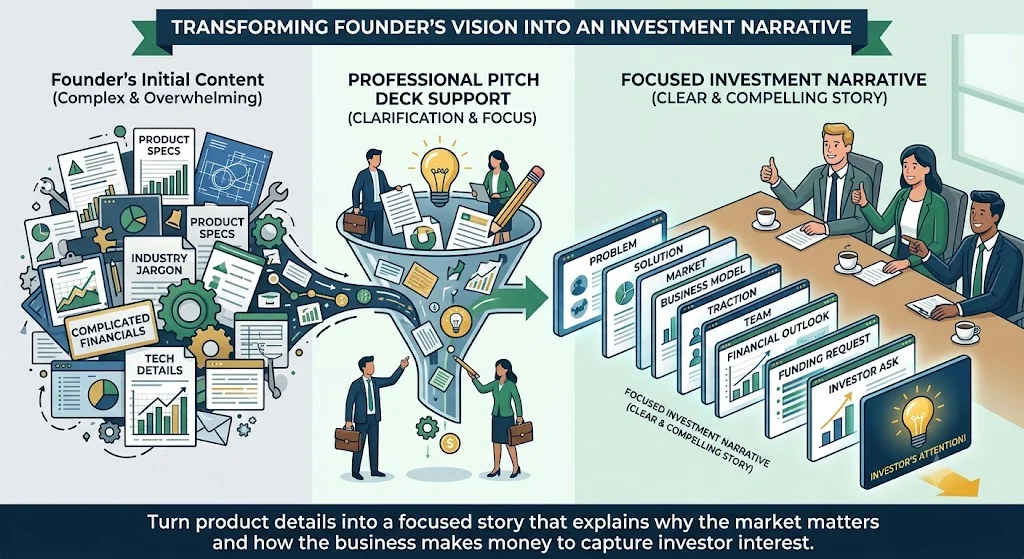
A strong pitch should tell a simple story. Investors should be able to understand the problem, solution, market opportunity, and growth potential without reading through excessive technical information.
This is where a pre seed pitch deck can help founders structure their investment story around the information investors need most.
The funding request should also be specific. Instead of simply stating an amount, explain what the capital will help achieve.
Funding might support:
- Product development
- Initial hiring
- Customer acquisition
- Market testing
- Technology development
- Key business milestones
Founders should also prepare for questions about competition, pricing, market size, customer acquisition, financial assumptions, and future funding.
FAQs
How many slides should a pre-seed pitch deck have?A focused pre-seed pitch commonly contains around 10 to 15 slides covering the key aspects of the business and investment opportunity.
Do pre-seed startups need revenue?Not necessarily. Early customer validation, product testing, partnerships, and other evidence of demand can strengthen a pre-seed investment case.
What is the biggest pre-seed pitch mistake?Focusing too heavily on product features while failing to explain the customer problem, market opportunity, business model, and reason the startup can scale.