Sign up with Google
 Sign in with Zoho

The expectations placed on modern commercial buildings have changed dramatically over the past decade. Facility owners, developers, and infrastructure managers are no longer focused solely on physical construction. Today, the emphasis is equally on operational efficiency, sustainability, occupant comfort, and long-term asset performance.
As commercial developments become larger and more technologically advanced, organizations are increasingly adopting integrated building management systems that enable real-time visibility and automated control of critical operations. From corporate offices and healthcare facilities to retail complexes and industrial campuses, intelligent automation is becoming a fundamental component of modern infrastructure planning.
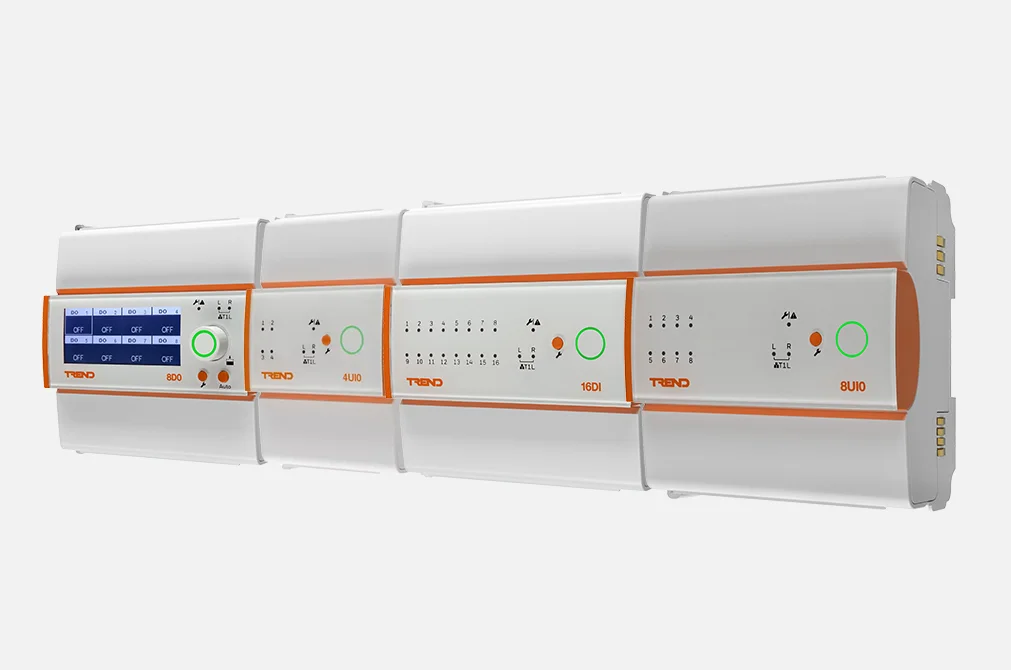
One technology contributing to this evolution is trend iq, which enables organizations to bring multiple building systems together within a unified operational framework. By connecting HVAC, lighting, ventilation, and energy management functions, trend iq helps facility teams gain better oversight of building performance while improving operational efficiency.
Why Integrated Building Control Is Becoming Essential
Traditional facilities often relied on separate systems operating independently across different areas of a building. While functional, these disconnected environments frequently created inefficiencies, increased maintenance requirements, and limited visibility into overall performance.
Today’s infrastructure projects demand a more coordinated approach.
Solutions powered by trend iq technology support centralized management, allowing building operators to monitor and optimize multiple systems through a single platform. This integrated approach enables faster response times, better energy management, and improved decision-making based on real-time operational data.
Some of the key advantages include:
- Centralized building monitoring and control
- Improved energy efficiency and sustainability
- Enhanced occupant comfort across multiple zones
- Faster identification of operational issues
- Reduced reliance on manual system adjustments
As infrastructure becomes smarter, centralized management is increasingly viewed as a strategic necessity rather than an optional enhancement.
The Growing Role of Advanced Automation Controllers
At the core of intelligent building environments are automation controllers that continuously collect data and coordinate responses across connected systems.
A modern trend iq controller helps facilities operate more efficiently by automatically adjusting environmental conditions based on occupancy, usage patterns, and operational requirements. For example, lighting and cooling systems can respond dynamically to changing occupancy levels, reducing unnecessary energy consumption while maintaining comfort.
The flexibility offered by a trend iq controller is particularly valuable in large commercial environments where manual monitoring of every system is impractical. By automating routine adjustments, facility managers can focus on higher-value operational priorities while maintaining consistent building performance.
Supporting Large-Scale Infrastructure Requirements
As commercial developments expand, scalability becomes increasingly important. Modern facilities require solutions capable of managing multiple zones, buildings, and operational environments simultaneously.
The iq5 controller has been developed to address these evolving requirements by providing advanced control capabilities across complex infrastructure environments. Whether deployed in office campuses, healthcare facilities, educational institutions, or mixed-use developments, the iq5 controller supports seamless communication between connected systems.
With the ability to scale alongside infrastructure growth, an iq5 controller helps organizations maintain consistent performance while simplifying overall facility management.
Building Smarter, More Sustainable Spaces
The benefits of intelligent automation extend beyond convenience. Organizations implementing advanced control systems often experience measurable improvements in energy efficiency, maintenance planning, and operational reliability.
Modern building automation can support:
- Lower energy consumption and operating costs
- Improved environmental performance
- Greater system reliability and uptime
- Better visibility into facility operations
- Enhanced long-term infrastructure management
As sustainability goals become more important across industries, intelligent building technologies are helping organizations balance performance with environmental responsibility.
Companies like Honeywell Building Technologies India continue to support this transformation through integrated automation, energy management, and smart building solutions designed to meet the needs of modern commercial infrastructure.
The Future of Smart Buildings in India
India's commercial infrastructure sector is entering a new phase of digital transformation. Building owners are increasingly seeking technologies that improve efficiency, enhance occupant experiences, and support long-term sustainability objectives.
As demand for intelligent infrastructure grows, solutions powered by trend iq, advanced trend iq controller technologies, and scalable iq5 controller platforms are expected to play an increasingly important role in shaping the future of connected and responsive buildings.
Facilities that embrace intelligent automation today will be better positioned to meet the operational, environmental, and technological demands of tomorrow.
FAQs
1. What is a building automation system?
A building automation system centrally manages functions such as HVAC, lighting, ventilation, and energy monitoring to improve efficiency, comfort, and operational performance.
2. Can intelligent controllers be installed in existing buildings?
Yes. Many modern automation solutions are designed to integrate with existing infrastructure, allowing organizations to upgrade operations without major disruption.
3. How do automation systems help reduce energy consumption?
They continuously monitor building conditions and automatically optimize system performance, helping reduce unnecessary energy use while maintaining occupant comfort.