Sign up with Google
 Sign in with Zoho

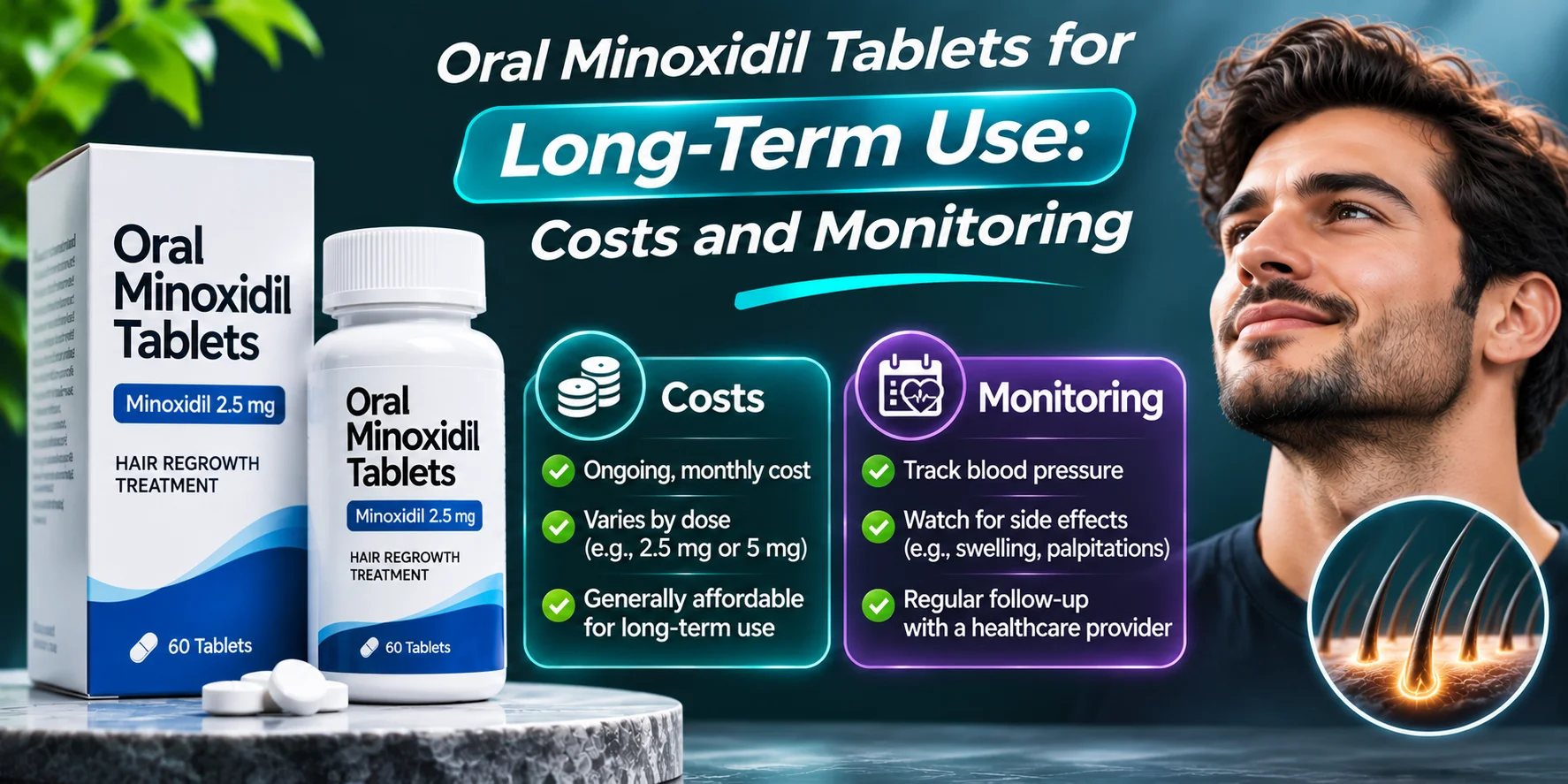
Long-term use of oral minoxidil tablets requires ongoing cardiovascular monitoring, consistent dosing, and an understanding of monthly costs that typically scale with dosage strength and supply size. Patients who prefer localized treatment often transition to a minoxidil spray to reduce systemic exposure while still supporting minoxidil hair growth over time.
Hair loss treatment isn't a one-time decision. For people using oral minoxidil tablets to manage androgenetic alopecia, the real commitment begins after the first prescription is filled. Long-term use introduces questions that short-term users rarely face: What does ongoing monitoring actually involve? How much should you expect to spend over a year, or five years? And at what point does it make sense to consider a topical alternative instead of continuing with a daily pill?
These questions matter because oral minoxidil, unlike many over-the-counter hair treatments, is a systemic medication. It doesn't stay confined to the scalp. That means long-term users need a clear understanding of both the financial and medical responsibilities that come with staying on the treatment for months or years at a stretch.
This guide breaks down what long-term oral minoxidil use actually looks like, from recurring costs to the clinical monitoring most providers require. It also compares oral tablets against a minoxidil spray, so you can evaluate which format best fits your health profile, your budget, and your long-term hair goals.
What Is Long-Term Use of Oral Minoxidil?
Oral minoxidil was originally developed to treat severe hypertension, where it works by relaxing and widening blood vessels. At much lower doses, typically between 0.25mg and 5mg daily, it's prescribed off-label for androgenetic alopecia. The same vasodilating effect that lowers blood pressure also increases blood flow to the scalp, which can help extend the hair growth cycle and reduce shedding.
"Long-term use" in the context of hair loss treatment generally means taking oral minoxidil continuously for six months or longer, often extending to multiple years. This is because minoxidil doesn't cure androgenetic alopecia. It manages it. Hair follicles that respond well to minoxidil tend to lose that benefit once the medication is stopped, with shedding typically resuming within a few months of discontinuation.
Why does long-term commitment matter for oral minoxidil users?
Because minoxidil's effects are maintenance-based rather than curative, long-term users should plan for continuous treatment rather than a fixed course. This has two direct implications: the cumulative cost over time becomes a meaningful factor in treatment planning, and the systemic nature of the oral tablet means ongoing health monitoring isn't optional; it's part of using the medication responsibly.
Providers typically reassess patients at regular intervals to confirm the treatment is still appropriate, particularly as dosage, age, or underlying health conditions change over time.
Costs of Long-Term Oral Minoxidil Use
Unlike a short-term prescription, long-term oral minoxidil use turns a single monthly cost into a recurring, multi-year financial commitment. Understanding what drives that cost helps patients budget accurately and compare providers on equal footing.
Oral minoxidil has been off-patent for decades, which keeps the base cost of the medication itself relatively low compared to newer, patented hair loss treatments. Most of the price variation patients encounter comes down to how a provider structures the prescription rather than the drug itself.
What factors influence the total cost of long-term oral minoxidil treatment?
Several variables determine what a patient pays over the course of a year or more:
- Dosage strength: Higher doses generally cost more per tablet, though the price increase isn't always proportional to the dose increase.
- Supply size: A 90-day supply typically lowers the per-day cost compared to a 30-day supply, since larger batches reduce per-unit packaging and dispensing costs.
- Consultation and monitoring fees: Long-term use often requires periodic check-ins with a prescribing provider, which may be billed separately or bundled into a subscription-style pricing model.
- Combination therapy: Patients using oral minoxidil alongside other treatments, such as finasteride, may find bundled pricing lowers the overall monthly cost compared to purchasing each medication separately.
- Formulation format: Switching between oral tablets and a minoxidil spray can shift total costs, since manufacturing and application methods differ between the two formats.
To accurately compare providers, calculate the true daily or monthly cost by dividing the total price by the number of days the supply covers. Sticker prices alone can be misleading, especially when consultation fees are itemized separately.
How does cost change as treatment continues for years?
Over multi-year use, many patients find their per-month cost actually decreases, since providers often reward longer-term subscriptions or larger bulk orders with lower per-unit pricing. However, this benefit assumes a patient stays on a stable dose. Dosage adjustments, which are common during long-term monitoring, can shift the total cost up or down depending on whether the new dose requires a different tablet strength or quantity.
Monitoring Requirements for Long-Term Use
Because oral minoxidil circulates throughout the bloodstream rather than acting only at the scalp, long-term use requires more structured medical oversight than a topical product typically demands.
What does routine monitoring for long-term oral minoxidil use involve?
Providers generally recommend the following checkpoints for patients on extended oral minoxidil therapy:
Blood pressure checks. Since minoxidil is a vasodilator, it can lower blood pressure, particularly in patients who weren't previously hypertensive. Regular blood pressure monitoring helps catch any concerning drops early, especially after dosage increases.
Heart rate assessment. Some patients experience a mild increase in heart rate while on oral minoxidil. Providers typically monitor for this during follow-up visits, particularly in the first few months of treatment or after any dose change.
Fluid retention evaluation. Swelling in the hands, feet, or face can signal fluid retention, a known side effect of systemic minoxidil use. Patients are generally advised to report new or worsening swelling promptly rather than waiting for a scheduled visit.
Periodic dose reassessment. As treatment continues, providers may adjust dosage based on how well a patient is responding and how they're tolerating side effects. This is one reason long-term users shouldn't expect to stay on a static prescription indefinitely without check-ins.
Review of unwanted hair growth. Because the oral tablet works systemically, some patients develop hair growth beyond the scalp, known as hypertrichosis. This is more frequently reported in women than men and is typically reviewed at follow-up appointments.
How often should long-term users schedule follow-up appointments?
While specific intervals vary by provider and individual health profile, long-term oral minoxidil users should expect more frequent monitoring in the first year of treatment, tapering to less frequent check-ins once a stable, well-tolerated dose has been established. Anyone experiencing new symptoms, regardless of how long they've been on treatment, should contact their provider before their next scheduled visit.
Minoxidil Spray as a Topical Alternative
For patients concerned about the systemic effects of long-term oral use, or simply looking for a lower-maintenance monitoring schedule, a minoxidil spray offers a localized alternative worth considering.
How does a minoxidil spray differ from oral tablets for long-term use?
A minoxidil spray is applied directly to the scalp, which limits how much of the medication enters the bloodstream compared to an oral dose. This localized application generally means less intensive cardiovascular monitoring is required, since the systemic exposure that drives blood pressure and heart rate concerns with oral tablets is significantly reduced with topical use.
That said, a minoxidil spray isn't without its own long-term considerations. Daily, consistent application is essential for maintaining results, and some users experience localized scalp irritation, dryness, or flaking with ongoing use. Unlike a tablet, there's no systemic dosing to adjust. Instead, concentration strength is the primary lever for tailoring treatment over time.
Who should consider switching from oral tablets to a minoxidil spray?
Patients who experience bothersome cardiovascular side effects from oral minoxidil, who prefer not to commit to routine blood pressure monitoring, or who simply want a treatment that acts locally rather than systemically are often good candidates for transitioning to a minoxidil spray. This decision should always be made in consultation with a prescribing provider, since switching formats can affect both results and the monitoring schedule going forward.
Minoxidil Hair Growth: What to Expect Over Time
Understanding the realistic timeline for minoxidil hair growth helps long-term users set appropriate expectations and avoid discontinuing treatment prematurely.
How long does it take to see minoxidil hair growth results?
Most patients don't see visible results from either oral minoxidil tablets or a minoxidil spray until three to six months of consistent use have passed. This delay reflects the biology of the hair growth cycle itself. Minoxidil works by extending the anagen (growth) phase of hair follicles, and existing hairs need time to cycle through their natural phases before new growth becomes visible.
Does minoxidil hair growth continue to improve with long-term use?
For many patients, minoxidil hair growth continues to improve modestly between six and twelve months of continuous use, after which results typically plateau. Maintaining this plateau requires continued treatment. Long-term users who stop taking oral minoxidil, or discontinue a minoxidil spray, generally see shedding resume within a few months, with most gains lost within six to twelve months of stopping.
What factors affect minoxidil hair growth results over the long term?
Several variables influence how well minoxidil hair growth holds up over time:
- Consistency of use: Missed doses or inconsistent application, particularly with a minoxidil spray, can reduce effectiveness.
- Underlying cause of hair loss: Minoxidil tends to work best for androgenetic alopecia and may be less effective for hair loss driven by other causes.
- Dosage adjustments: Changes made during routine monitoring can affect both side effects and growth outcomes.
- Combination therapy: Some patients combine oral minoxidil with other treatments, which may influence overall results compared to minoxidil alone.
Decision Criteria: Oral Tablets vs. Topical Options
Choosing between oral minoxidil tablets and a minoxidil spray for long-term use comes down to a handful of practical factors.
Choose oral minoxidil tablets if you prefer the convenience of a single daily pill over a twice-daily topical application, and you're comfortable committing to routine cardiovascular monitoring as part of your long-term treatment plan.
Choose a minoxidil spray if you want to minimize systemic exposure, have a cardiovascular health history that makes a provider cautious about oral dosing, or simply prefer applying treatment directly where it's needed without the broader monitoring requirements of a systemic medication.
Choose a combination approach, if your provider recommends it, if you're looking to maximize minoxidil hair growth results and are willing to manage the monitoring and cost considerations of layering multiple treatments.
In every case, the right long-term choice should be made alongside a healthcare provider who can factor in your cardiovascular health, hair loss pattern, and personal preferences around daily routine.
Where to Buy
Once you've weighed the cost and monitoring requirements of long-term oral minoxidil use, the next step is sourcing from a provider that's transparent about dosage strength, pricing, and prescribing requirements. Confirm what's included in the listed price, whether that's a consultation fee, follow-up monitoring, or simply the medication itself, before committing to a long-term plan.
For patients weighing the oral tablet against a topical option, reviewing a minoxidil spray listing side by side with oral tablet pricing is a practical way to compare concentration strength, application requirements, and total cost before deciding which format suits your long-term routine.
Frequently Asked Questions
How much does long-term oral minoxidil treatment typically cost per month?Monthly costs vary based on dosage strength, supply size, and whether consultation fees are bundled into the price. Larger supply orders and stable, consistent dosing generally lower the per-month cost over time compared to smaller, frequently renewed prescriptions.
What monitoring is required for long-term oral minoxidil use?Long-term users typically need periodic blood pressure checks, heart rate assessment, and evaluation for fluid retention or unwanted hair growth. Monitoring tends to be more frequent in the first year of treatment and less frequent once a stable dose is established.
Is it safe to take oral minoxidil indefinitely?Oral minoxidil can be used long-term under medical supervision, provided patients attend scheduled monitoring appointments and report new symptoms promptly. Since the medication is systemic, ongoing oversight helps catch cardiovascular side effects early.
Can I switch from oral minoxidil tablets to a minoxidil spray without losing results?Switching formats can affect both results and monitoring needs, so this transition should be guided by a healthcare provider. A minoxidil spray reduces systemic exposure but requires consistent daily application to maintain minoxidil hair growth results.
How long before I see minoxidil hair growth results, and does that change with long-term use?Most users see initial results after three to six months, with continued modest improvement up to the one-year mark. Long-term minoxidil hair growth results depend on consistent use; stopping treatment typically reverses gains within six to twelve months.
What happens if I stop long-term oral minoxidil treatment?Discontinuing oral minoxidil after long-term use typically leads to resumed shedding within a few months, since the medication manages hair loss rather than curing it. Most gains are lost within six to twelve months of stopping.
Planning for the Long Run with Oral Minoxidil
Long-term oral minoxidil use is a sustained commitment, not a short course of treatment. Understanding the recurring costs, from dosage strength to supply size, helps patients budget realistically for months or years of continued use. Equally important is recognizing that routine monitoring, including blood pressure checks and periodic dose reassessment, is a core part of using the medication safely over time.
For those who find the systemic effects or monitoring requirements of oral tablets burdensome, a minoxidil spray offers a localized alternative that can still support minoxidil hair growth while reducing systemic exposure. Whichever format you choose, consistent use and realistic expectations remain the foundation of long-term success.
Speak with a licensed healthcare provider to determine the right dosage, monitoring schedule, and treatment format for your long-term hair loss goals.