Sign up with Google
 Sign in with Zoho

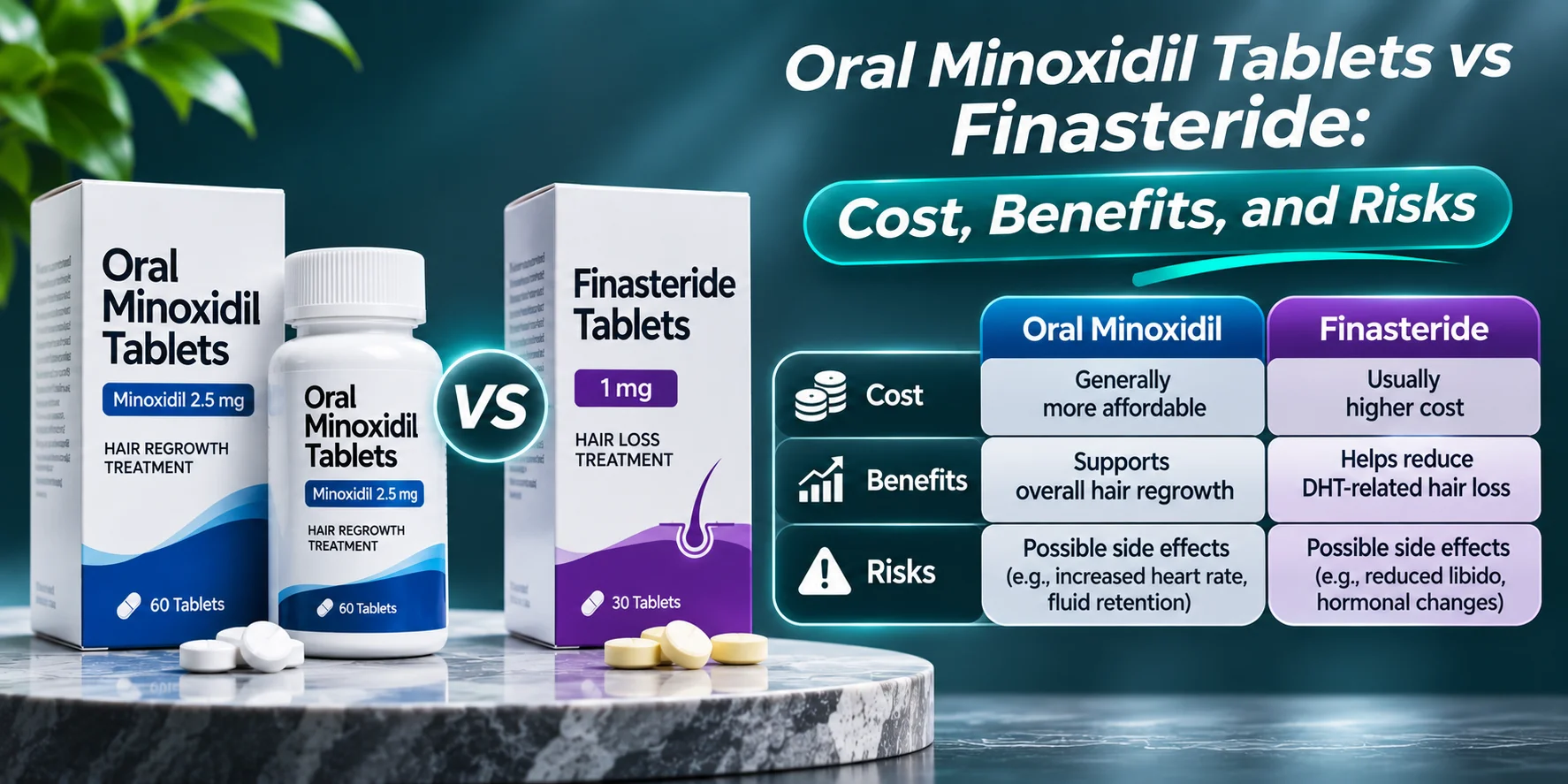
Oral minoxidil tablets and finasteride treat hair loss through different mechanisms—minoxidil widens blood vessels to boost scalp circulation, while finasteride blocks the hormone responsible for follicle shrinkage. Minoxidil tablets often cost less per month and work for both men and women, while finasteride is generally reserved for men due to pregnancy-related risks. Many providers combine both treatments or offer a minoxidil spray as a topical alternative for those who prefer localized application over a daily pill.
Choosing a hair loss treatment often comes down to two names that dominate the conversation: minoxidil and finasteride. Both have decades of clinical use behind them, yet they work in entirely different ways, carry distinct cost structures, and suit different candidates depending on sex, health history, and personal preference.
Oral minoxidil tablets have gained popularity as a low-dose, off-label alternative to topical formulas, prized for their simplicity and broad applicability. Finasteride, by contrast, targets the hormonal root of male pattern baldness but comes with a narrower set of appropriate users. Neither treatment is universally "better"—the right choice depends on what's driving your hair loss, your budget, and your tolerance for specific side effects.
This guide compares oral minoxidil tablets and finasteride across cost, benefits, and risks, with particular attention to considerations for minoxidil for women and how a minoxidil spray stacks up against the oral tablet format. By the end, you'll have a clear framework for discussing the right option with a healthcare provider.
What Is Oral Minoxidil?
Oral minoxidil was originally developed and approved as a treatment for severe high blood pressure. At the doses used for hypertension, minoxidil relaxes and widens blood vessels, lowering blood pressure and easing strain on the heart. Clinicians noticed an unexpected side effect in patients taking the medication: increased hair growth across the body, including the scalp.
That observation led to minoxidil's off-label use for androgenetic alopecia (pattern hair loss) at doses far lower than those prescribed for blood pressure management—typically between 0.25mg and 5mg daily, compared to the 10mg to 40mg range used for hypertension.
How does oral minoxidil work for hair loss?
Oral minoxidil functions as a vasodilator, meaning it widens blood vessels and increases blood flow to the scalp. This improved circulation delivers more oxygen and nutrients to hair follicles, which can help extend the growth (anagen) phase of the hair cycle and reduce shedding. Unlike finasteride, minoxidil doesn't target hormones—it works purely through improved follicle nourishment, which is part of why it's prescribed to both men and women.
Because oral minoxidil is taken as a tablet rather than applied topically, it distributes throughout the bloodstream rather than acting only at the application site. This systemic action is one reason some users report faster or more widespread results compared to topical minoxidil, though it also explains why the oral form requires closer medical supervision.
What Is Finasteride?
Finasteride is a prescription medication that works through an entirely different mechanism: hormone regulation. It belongs to a class of drugs called 5-alpha-reductase inhibitors, which block the conversion of testosterone into dihydrotestosterone (DHT).
Why does blocking DHT matter for hair loss?
DHT is the hormone most closely linked to androgenetic alopecia in men. In people genetically predisposed to pattern baldness, hair follicles are especially sensitive to DHT, which causes them to shrink over time in a process called miniaturization. Eventually, miniaturized follicles stop producing visible hair altogether.
By reducing circulating DHT levels, finasteride slows or halts this miniaturization process, which can stop further hair loss and, in many cases, support some regrowth. Finasteride is typically taken as a 1mg daily tablet for hair loss (a higher 5mg dose is used for an unrelated condition, benign prostatic hyperplasia).
Because finasteride's mechanism is hormone-based, it's generally prescribed only to men. DHT reduction during pregnancy can cause serious developmental abnormalities in a male fetus, which is why finasteride carries strict warnings for women who are or may become pregnant.
Cost Comparison: Oral Minoxidil Tablets vs Finasteride
Pricing for both treatments varies by dosage strength, provider, and whether a consultation fee is bundled into the total cost. That said, a few general cost patterns tend to hold true.
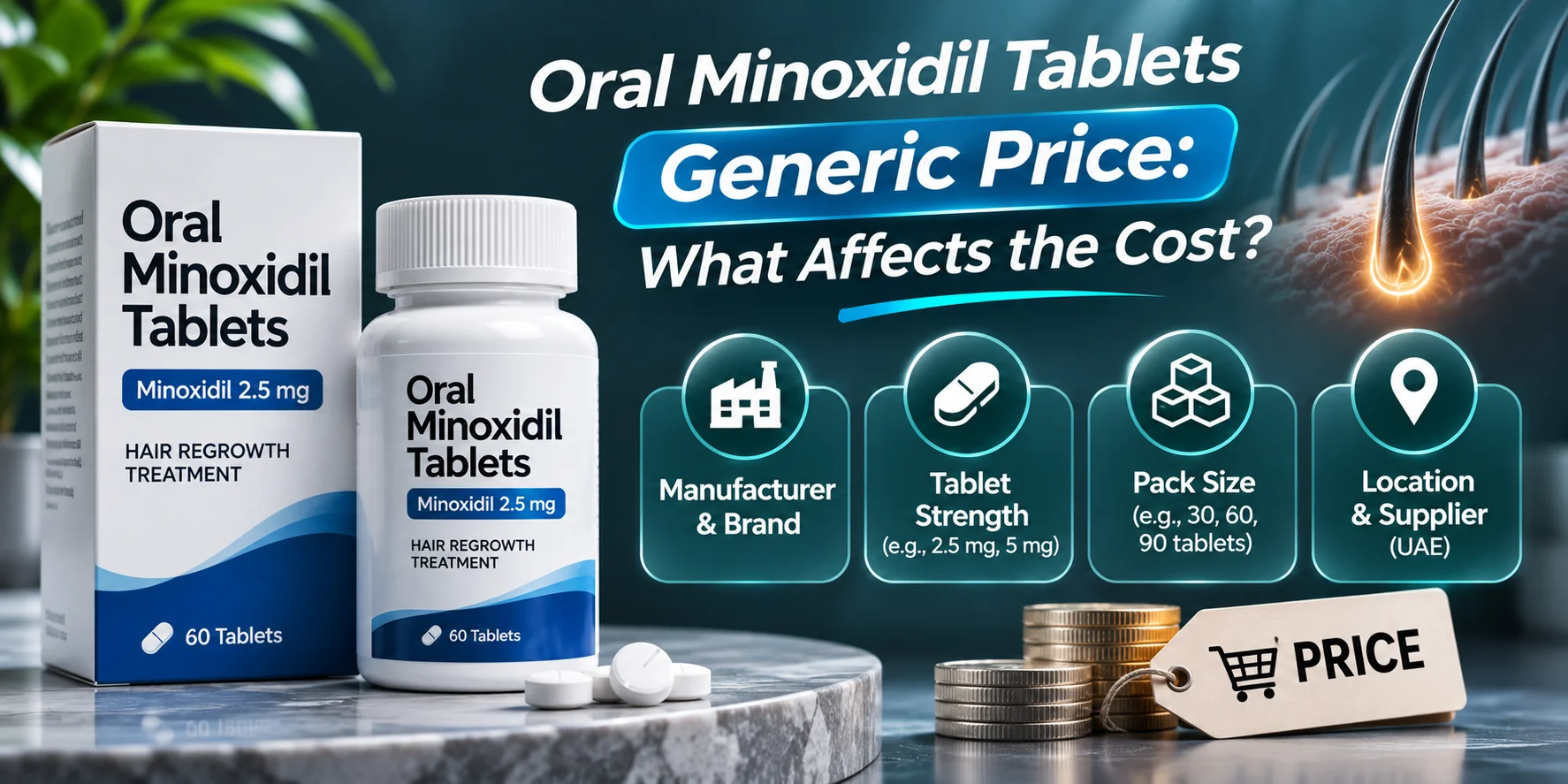
Oral minoxidil tablets are typically manufactured as low-cost generics, since the medication has been off-patent for decades and is prescribed off-label at low doses. Monthly costs are influenced primarily by dosage strength, batch size, and whether a telehealth consultation fee is included.
Finasteride is similarly available as a low-cost generic, and monthly pricing is often comparable to oral minoxidil, particularly when the two are prescribed together as part of a combined treatment protocol. Many providers bundle both medications into a single prescription plan, which can reduce the overall per-month cost compared to purchasing each separately.
What affects the total monthly cost of either treatment?
A handful of variables drive price differences between providers:
- Dosage strength and quantity: Higher doses or larger supply quantities (a 90-day order versus a 30-day order) typically lower the per-unit price.
- Consultation and prescribing fees: Both medications require a prescription in most regulated markets, and this fee is sometimes bundled into the product price and sometimes charged separately.
- Combination formulations: Providers offering minoxidil and finasteride together, whether as two tablets or a combined formula, may offer bundled pricing that beats buying each treatment individually.
- Delivery format: A minoxidil spray or topical solution may carry different pricing than an oral tablet, since manufacturing and application requirements differ.
When comparing listings, calculate the true monthly cost by dividing the total price by the number of days the supply covers, rather than comparing sticker prices alone.
Benefits of Oral Minoxidil
Oral minoxidil has become a popular option for several practical and clinical reasons.
Convenience. A single daily tablet is simpler for many users than applying a topical solution twice a day, which improves adherence—a major factor in long-term hair loss treatment success.
Broad applicability. Because minoxidil works through vascular mechanisms rather than hormone regulation, it's suitable for both men and women, unlike finasteride. This makes minoxidil for women a widely prescribed option for female pattern hair loss, postpartum shedding, and other forms of thinning not linked to DHT.
No scalp irritation from topical application. Some users experience itching, flaking, or contact dermatitis from topical minoxidil formulas. Oral tablets bypass this issue entirely since there's no direct scalp application involved.
Works well in combination protocols. Oral minoxidil is frequently paired with finasteride for men seeking to address hair loss from multiple angles—vascular support alongside hormone regulation—which some research suggests may improve outcomes compared to either treatment alone.
Benefits of Finasteride
Finasteride offers a different set of advantages, particularly for men with hormonally driven hair loss.
Addresses the root hormonal cause. For men whose hair loss is driven by DHT sensitivity, finasteride targets the underlying mechanism rather than simply supporting follicle health, which can lead to more durable results over time.
Strong, well-documented track record. Finasteride has been studied extensively since its approval for hair loss in the 1990s, giving both patients and providers a substantial body of clinical data to reference when setting expectations.
Simple, low-maintenance dosing. A single 1mg tablet taken daily is straightforward to incorporate into a routine, with no application technique or timing relative to other products to manage.
Can prevent further loss, not just support regrowth. Many users begin finasteride specifically to halt progression of hair loss, which is a meaningful benefit even for those who don't experience significant regrowth.
Risks and Side Effects of Oral Minoxidil
Because oral minoxidil distributes throughout the body rather than acting locally, it carries a different risk profile than topical formulas.
Cardiovascular effects. Minoxidil's vasodilating action can cause lowered blood pressure, fluid retention, and in some cases a rapid heart rate. These effects are generally more pronounced at higher doses, which is part of why hair loss protocols use doses far below those prescribed for hypertension.
Unwanted hair growth. Because minoxidil is systemic, it can stimulate hair growth beyond the scalp, including on the face, arms, and back—an effect known as hypertrichosis. This is more commonly reported in women than men.
Fluid retention and swelling. Some users experience swelling in the hands, feet, or face, which should be reported to a healthcare provider promptly.
Is a minoxidil spray a lower-risk alternative?
For users concerned about the systemic effects of oral tablets, a topical minoxidil spray offers localized application directly to the scalp, which limits how much of the medication enters the bloodstream compared to an oral dose. This makes a minoxidil spray a reasonable alternative for those who want minoxidil's vascular benefits with reduced systemic exposure, though topical formulas require consistent daily application and can cause localized scalp irritation in some users.
Risks and Side Effects of Finasteride
Finasteride's hormone-based mechanism comes with its own set of considerations.
Sexual side effects. A small percentage of users report decreased libido, erectile difficulty, or reduced ejaculate volume. These effects are generally reversible upon discontinuing the medication, though a small subset of users have reported persistent symptoms, a topic that continues to be studied.
Mood changes. Some users have reported mood changes, including depressive symptoms, while taking finasteride. Anyone experiencing new or worsening mood symptoms should discuss this with their prescribing provider.
Not suitable during pregnancy. Finasteride carries a strict warning against use by women who are pregnant or may become pregnant, due to the risk of developmental abnormalities in a male fetus. Pregnant women should also avoid handling crushed or broken finasteride tablets.
Minoxidil for Women: Special Considerations
Minoxidil for women differs from standard male dosing protocols in several important ways. Because DHT sensitivity isn't always the primary driver of female pattern hair loss, minoxidil's vascular mechanism makes it a preferred first-line option for many women, independent of finasteride, which is rarely prescribed off-label to women due to its hormonal action and pregnancy-related risks.
Dosing for minoxidil for women often starts lower than typical male protocols to minimize the risk of hypertrichosis and other side effects. Providers may also screen more closely for pregnancy status and hormonal health before prescribing, since oral minoxidil isn't recommended during pregnancy or breastfeeding.
Women considering a combination approach should note that finasteride is not typically included in treatment plans designed for minoxidil for women, given the hormonal risks discussed above. Instead, women are more likely to be offered oral minoxidil, topical minoxidil, or a minoxidil spray tailored to a lower concentration than standard male formulas.
Decision Criteria: Which Treatment Is Right for You?
Choose oral minoxidil if you want a treatment suitable regardless of sex, prefer a non-hormonal mechanism, and are comfortable with medical monitoring for cardiovascular side effects. This makes it a strong starting point for minoxidil for women and for men who want to avoid finasteride's hormonal effects.
Choose finasteride if you're a man with hair loss driven primarily by DHT sensitivity and you're comfortable accepting a small risk of sexual or mood-related side effects in exchange for addressing the hormonal root cause of hair loss.
Choose a combination of oral minoxidil and finasteride if you're a man seeking to maximize results by addressing both vascular support and hormone regulation simultaneously—a protocol many providers recommend for more advanced or faster-progressing hair loss.
Choose a minoxidil spray if daily tablet-taking isn't preferred and you'd rather apply treatment directly to the scalp with reduced systemic absorption.
In every case, the decision should be made in consultation with a healthcare provider who can assess your hair loss pattern, medical history, and treatment goals.
Where to Buy Oral Minoxidil Tablets and Topical Alternatives
Once you've weighed the mechanism, cost, and risk profile of each treatment, the next step is sourcing from a provider that offers clear, verifiable product and dosing information. Confirm tablet strength, prescribing requirements, and any bundled consultation fees before purchasing.
For those who'd rather avoid a daily oral tablet, reviewing a minoxidil spray option is a useful way to compare topical application, dosing concentration, and pricing against the oral tablet format before deciding which fits your routine best.
Frequently Asked Questions
Is oral minoxidil or finasteride more effective for hair loss?Effectiveness depends on the cause of hair loss. Finasteride tends to work best for men whose hair loss is driven by DHT sensitivity, while oral minoxidil supports follicle health through improved circulation and works for a broader range of users, including women.
Can women take finasteride instead of minoxidil?Finasteride is generally not prescribed to women due to the risk of serious developmental harm if taken during pregnancy. Minoxidil for women is the more common first-line option, since it doesn't carry the same hormonal risks.
Is a minoxidil spray as effective as oral minoxidil tablets?A minoxidil spray applies the medication directly to the scalp with limited systemic absorption, while oral tablets work throughout the body. Some users find oral tablets more convenient, while others prefer the localized application and reduced systemic exposure of a spray.
How long does it take to see results from minoxidil or finasteride?Both treatments typically require three to six months of consistent use before visible results appear, since hair growth cycles take time to respond to treatment. Discontinuing either medication generally reverses any gains over several months.
Can oral minoxidil and finasteride be taken together?Yes, many providers prescribe both medications together for men seeking a combined approach that addresses vascular support and hormone regulation simultaneously. This combination should only be started under medical guidance.
Are there serious risks associated with either treatment?Oral minoxidil carries cardiovascular risks, including lowered blood pressure and fluid retention, while finasteride carries risks of sexual side effects and, in rare cases, mood changes. Both require medical supervision and a clear understanding of personal health history before starting.
Making the Right Choice Between Minoxidil and Finasteride
Oral minoxidil tablets and finasteride each address hair loss through distinct biological pathways, and understanding that difference is the key to choosing the right treatment. Minoxidil supports follicle health through improved scalp circulation and suits a wide range of users, including minoxidil for women, while finasteride targets the hormonal driver of male pattern baldness but comes with a narrower set of appropriate candidates.
Cost differences between the two are often modest once consultation fees and dosage requirements are factored in, which means the decision should rest primarily on mechanism, risk tolerance, and personal health history rather than price alone. For those who prefer topical application over a daily tablet, a minoxidil spray offers a reduced-exposure alternative worth discussing with a provider.
Whichever path you choose, consistent use and realistic timelines are essential. Speak with a licensed healthcare provider to determine whether oral minoxidil, finasteride, or a combination approach best matches your hair loss pattern and overall health profile.