Sign up with Google
 Sign in with Zoho

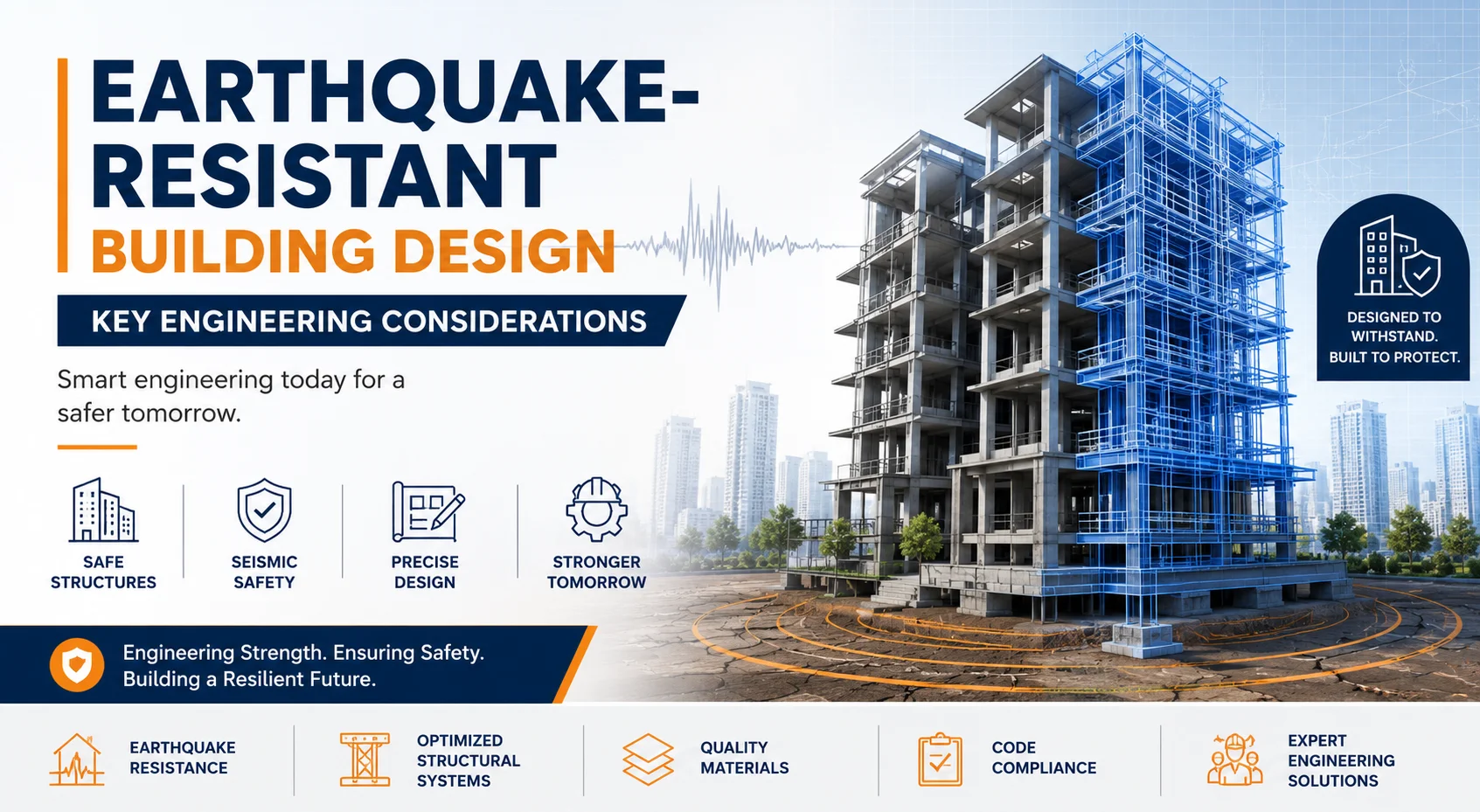
Earthquakes are among the most destructive natural disasters, capable of causing severe damage to buildings, infrastructure, and communities within seconds. As urbanization continues to grow and construction projects become more complex, designing structures that can withstand seismic forces has become a critical aspect of modern engineering.
Earthquake-resistant buildings are not designed to remain completely unaffected during a seismic event. Instead, they are engineered to absorb and dissipate seismic energy, minimize structural damage, and most importantly, protect human lives. Understanding the key engineering considerations behind earthquake-resistant design can help developers, property owners, and construction professionals make informed decisions.
Understanding Seismic Forces
When an earthquake occurs, the ground shakes in multiple directions, generating forces that act on a building. These forces create stress on structural elements such as beams, columns, foundations, and walls.
The intensity of these forces depends on several factors, including:
- Magnitude of the earthquake
- Distance from the epicenter
- Soil conditions
- Building height and weight
- Structural configuration
A properly designed structure should be capable of safely transferring these forces through its structural system and into the ground.
Site Investigation and Soil Analysis
One of the first steps in earthquake-resistant design is conducting a thorough site investigation. The type and condition of soil directly affect how seismic waves interact with a structure.
Soft soils can amplify ground motion, while loose or saturated soils may be prone to liquefaction, a phenomenon where the ground temporarily loses its strength during an earthquake. Geotechnical studies help engineers assess these risks and select the most suitable foundation system for the project.
Proper soil analysis also helps reduce the likelihood of settlement, foundation failure, and excessive structural movement during seismic events.
Structural Configuration Matters
The shape and layout of a building significantly influence its seismic performance. Structures with simple and symmetrical designs generally perform better during earthquakes because seismic forces are distributed more evenly.
Irregular building configurations can create stress concentrations that increase the risk of damage. Working with an experienced structural engineering consultant during the planning stage helps identify potential vulnerabilities and ensures the structure is designed to perform efficiently under earthquake loading conditions.
Engineers typically aim to avoid:
- Soft stories
- Excessive cantilevers
- Sudden changes in stiffness
- Large structural irregularities
- Uneven load distribution
Foundation Design Considerations
A strong foundation is essential for earthquake-resistant construction. The foundation acts as the connection between the structure and the ground, transferring loads safely while maintaining stability.
Depending on soil conditions and structural requirements, engineers may use:
- Isolated footings
- Combined footings
- Raft foundations
- Pile foundations
Proper foundation design helps minimize differential settlement and improves the overall resilience of the building during seismic activity.
Ductility and Energy Absorption
Ductility refers to the ability of a structure to deform under stress without collapsing. This characteristic is one of the most important aspects of earthquake-resistant design.
Buildings designed with ductile structural systems can absorb and dissipate seismic energy more effectively. Common systems include:
- Reinforced concrete frames
- Structural steel frames
- Braced frame systems
- Shear wall systems
Rather than resisting all earthquake forces rigidly, these systems allow controlled movement while maintaining structural integrity.
Importance of Shear Walls
Shear walls are specially designed vertical elements that resist lateral forces generated by earthquakes and strong winds. They increase the stiffness of a building and help reduce excessive movement.
Strategically positioned shear walls improve load transfer and provide additional stability, particularly in multi-story residential, commercial, and institutional buildings.
When combined with an efficient structural framework, shear walls significantly enhance earthquake resistance.
Quality Materials and Construction Practices
Even the most advanced structural design can fail if construction quality is compromised. High-quality materials, proper reinforcement detailing, and strict adherence to engineering specifications are essential for achieving seismic resilience.
Partnering with a reliable construction company in Jaipur helps ensure that approved designs are executed correctly, quality standards are maintained, and construction practices align with modern engineering requirements.
Regular inspections and quality control procedures further contribute to the safety and durability of the completed structure.
Compliance with Seismic Codes
Building codes play a vital role in earthquake-resistant design. These standards are developed based on extensive research, engineering studies, and lessons learned from past seismic events.
Compliance with seismic design codes ensures that buildings meet minimum safety requirements and are capable of performing adequately during earthquakes.
Engineers consider factors such as:
- Seismic zone classification
- Load combinations
- Structural detailing requirements
- Response reduction factors
- Building occupancy categories
Following established standards helps reduce risks and improve public safety.
Modern Technologies in Seismic Design
Technological advancements have transformed the way engineers design earthquake-resistant structures. Modern solutions allow buildings to better absorb seismic energy and minimize structural damage.
Some widely used technologies include:
- Base isolation systems
- Energy dissipation devices
- Tuned mass dampers
- Advanced structural modeling software
In industrial and commercial construction, many peb manufacturers in Rajasthan are incorporating advanced engineering techniques to develop pre-engineered structures that meet seismic safety requirements while offering cost and time efficiencies.
Benefits of Earthquake-Resistant Buildings
Investing in earthquake-resistant design provides several long-term advantages:
- Enhanced occupant safety
- Reduced structural damage
- Lower repair and maintenance costs
- Improved building lifespan
- Greater compliance with regulations
- Increased property value
- Better disaster resilience
These benefits make seismic design an essential consideration for both new construction projects and building retrofits.
Conclusion
Earthquake-resistant building design is a combination of careful planning, sound engineering principles, quality construction practices, and adherence to safety standards. From site investigation and foundation design to structural detailing and advanced technologies, every element contributes to a building's ability to withstand seismic forces.
As seismic risks continue to impact communities worldwide, investing in resilient construction is no longer optional—it is a necessity. By prioritizing earthquake-resistant design, developers and property owners can create safer, stronger, and more sustainable structures that stand the test of time.