Sign up with Google
 Sign in with Zoho

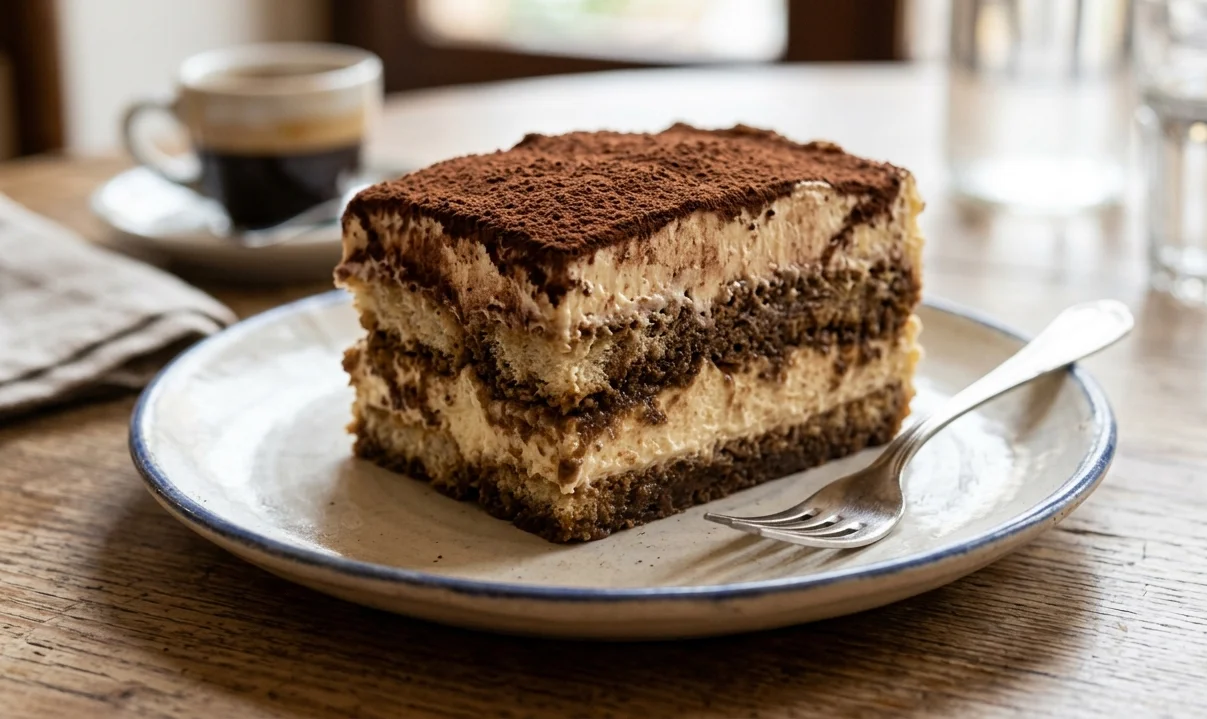
There are few culinary finales that evoke as much pure, unadulterated joy as a perfectly layered slice of Tiramisu. The bitter punch of espresso, the cloud-like velvet of whipped mascarpone, and the subtle dust of cocoa powder combine to create a dessert that feels simultaneously light and profoundly decadent. Yet, while classics like cannoli or panna cotta trace their lineages back through centuries of ancestral Italian kitchens, Tiramisu is surprisingly modern. It is a dessert wrapped in mystery, fierce regional rivalries, and a bit of scandalous folklore. At Panorama, we treat this iconic dolci with the reverence it deserves, crafting it fresh daily to give you the perfect sweet ending at the Best Italian Restaurant in Philadelphia.
The Literal "Pick-Me-Up"
To understand the dessert, you have to look at the name itself. In the Trevisan dialect (and later standard Italian), tirami su literally translates to "pick me up," "pull me up," or "cheer me up."
It isn't a poetic exaggeration; it’s a direct description of the dish's ingredients. High-octane espresso and sugar provide an immediate rush of energy, while the rich fats of mascarpone and egg yolks offer a sustaining culinary hug. It was designed from its very inception to be a restorative indulgence.
The Modern Birthplace: Treviso and Le Beccherie
While multiple regions in Italy claim ownership over the recipe, the most widely accepted and historically documented origin story takes us to the town of Treviso in the Veneto region during the late 1960s or early 1970s.
The Lucky Accident
According to local history, the dessert was born at a restaurant called Le Beccherie. The owner, Alba Campeol, and her chef, Roberto Linguanotto, were experimenting with vanilla ice cream when a scoop of fresh mascarpone cheese accidentally fell into a bowl of egg yolks and sugar.
Instead of discarding the mixture, they tasted it and realized they had stumbled upon something magical. Alba, who was nursing a child at the time and looking for a flavorful energy boost, suggested adding ladyfingers soaked in strong espresso. They put it on the menu in 1972, and a global phenomenon was born.
The Scandalous Folklore: The Brothels of Veneto
Of course, Italians love a good story, and the alternative legend of Tiramisu is far more colorful. A persistent piece of folklore claims that Tiramisu was actually invented much earlier, in the 19th century, by a clever maîtresse running a house of ill repute in Treviso.
The story goes that she created this high-energy, aphrodisiac-laden treat to offer to patrons at the end of the evening to revive their strength before they returned home to their unsuspecting wives. While food historians view this story with a healthy dose of skepticism, it certainly adds a layer of naughty charm to the dessert's history.
The Architecture of a Legend
The genius of Tiramisu lies in its restraint. The traditional recipe requires no baking and relies on just a handful of exceptional components working in perfect harmony:
- Savoiardi (Ladyfingers): These light, spongy biscuits act as the structural spine of the dessert. They must be dipped in espresso with precision long enough to absorb the rich coffee flavor, but brief enough to avoid turning into soggy mush.
- Mascarpone Cheese: Hailing from Lombardy, this ultra-rich, buttery cheese is folded gently with whipped egg yolks and sugar to create a luxurious cream that balances the bitterness of the coffee.
- The Espresso: No weak drip coffee allowed. A true Tiramisu demands high-quality, dark-roast Italian espresso.
- The Cocoa Dusting: A final, bitter canopy of cocoa powder that cuts through the intense sweetness of the cream underneath.
A Note on Alcohol: While the original recipe from Le Beccherie contained no alcohol, modern adaptations often include a splash of Marsala wine, dark rum, or Amaretto mixed into the espresso to add warmth and complexity.
The Sweetest Conclusion
Tiramisu taught the world that a dessert doesn’t need to be overly complicated or baked for hours to be completely unforgettable. It is a celebration of texture, temperature, and bold contrasting flavors.
The next time you join us for a meal, make sure to save a little room after your handmade pasta. Let our team pour you a glass of sweet Vin Santo or a digestif from our extensive bar, and experience a flawlessly executed piece of culinary history for yourself. End your night on a high note at the Best Italian Restaurant in Philadelphia.