Sign up with Google
 Sign in with Zoho
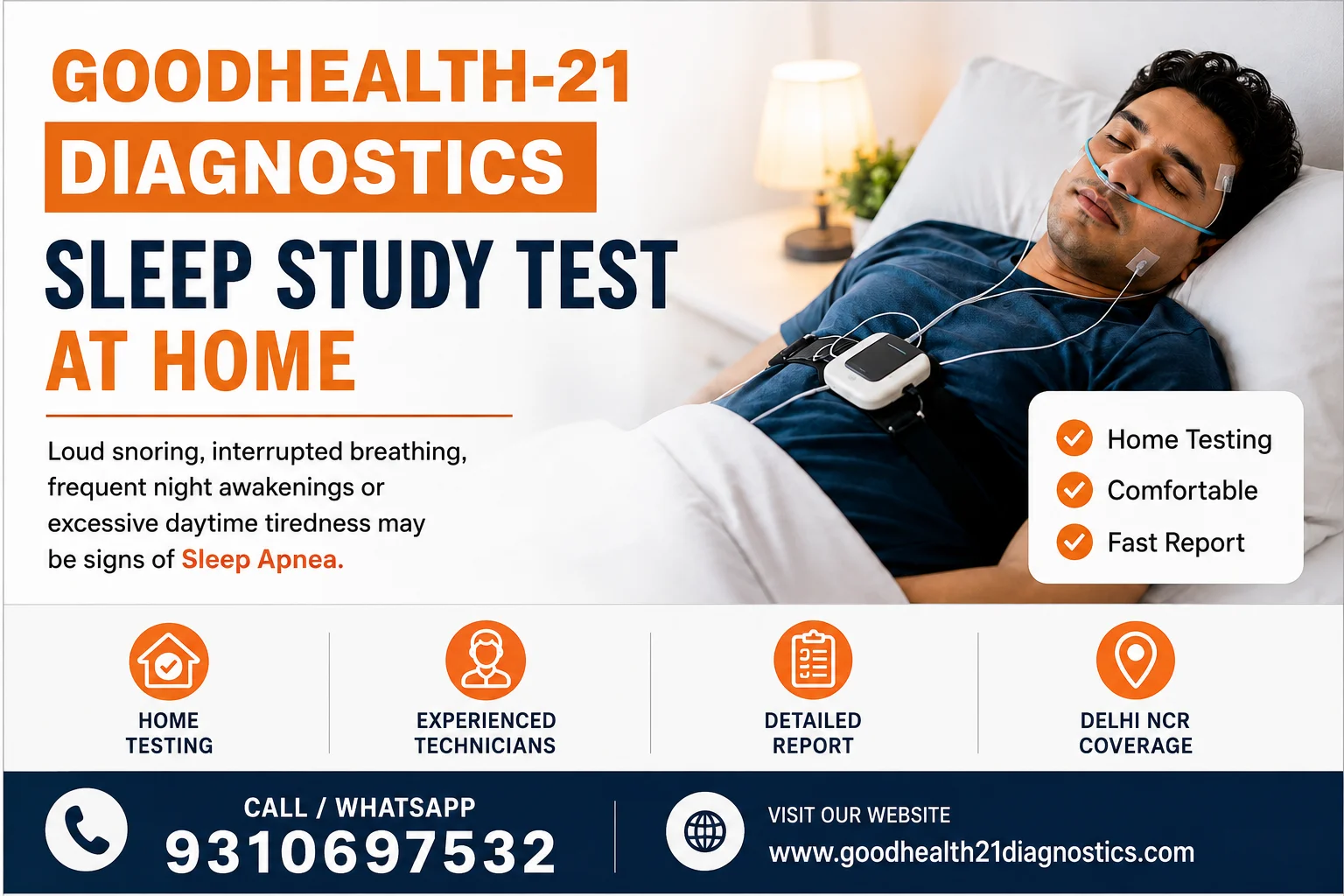
A sleep study test cost in Delhi (polysomnography) typically costs between ₹4,000 and ₹6,000 for a Home Sleep Apnea Test (Level 3), and ₹8,000 to ₹15,000 for a more comprehensive at-home sleep study (Level 2), depending on the number of channels monitored and the device type used.
GoodHealth21 Diagnostics provides at-home sleep study services across Delhi, bringing this test to your doorstep with trained technicians. We offer a competitive sleep test price in Delhi, ensuring accessible and affordable sleep monitoring for everyone. Our pricing is transparent, with no hidden costs, so you can prioritize your health without financial worries.
What Is a Sleep Study Test?
A sleep study, medically known as polysomnography (PSG), is a diagnostic test that records what happens in your body while you sleep — breathing patterns, oxygen levels, heart rate, snoring, and body movement. It’s most commonly used to diagnose obstructive sleep apnea (OSA), a condition where breathing repeatedly stops and starts during sleep.
Doctors may also use it to evaluate insomnia, restless leg syndrome, periodic limb movement disorder, or unusual behaviors during sleep.
Sleep Study Test Cost in Delhi: Price Breakdown
We offer two types of at-home sleep studies, based on the clinical classification of how many body signals are monitored during the test.
Final pricing depends on the number of channels monitored and the device type used. Contact our team for an exact quote based on your doctor’s recommendation.
Level 2 vs. Level 3: Which One Do You Need?
- Level 3 is generally recommended when a doctor suspects straightforward obstructive sleep apnea and wants a focused screening of breathing, oxygen levels, and snoring.
- Level 2 is recommended when a more detailed picture is needed — for example, if there’s suspicion of other sleep disorders alongside apnea, such as periodic limb movements, REM-related issues, or when brain activity needs to be recorded.
Your doctor’s recommendation should guide which level is right for you, since the two tests are designed to answer different clinical questions.
Who Needs a Sleep Study Test?
You may benefit from a sleep study if you experience:
- Loud, frequent snoring
- Gasping or choking sensations during sleep
- Long pauses in breathing noticed by a partner
- Excessive daytime sleepiness despite a full night’s sleep
- Morning headaches
- Difficulty concentrating or memory issues
- Unexplained high blood pressure
- Waking up frequently through the night
If two or more of these apply to you regularly, it’s worth discussing a sleep study with your doctor rather than self-diagnosing based on symptoms alone.
Do You Need a Doctor’s Prescription?
In most cases, a physician’s referral is recommended before undergoing a sleep study, particularly since the results guide treatment decisions such as CPAP therapy. If sleep apnea is suspected, a pulmonologist or ENT specialist should ideally review your symptoms first and interpret the final report.
How the At-Home Sleep Study Works
- Booking – You schedule a home visit with our team.
- Device setup – A trained technician visits your home and fits sensors (nasal cannula, chest/abdomen belts, finger oximeter, and for Level 2 studies, scalp electrodes).
- Overnight recording – You sleep normally at home while the device records data through the night.
- Device return – The device is collected the next morning.
- Scoring and physician review – A sleep technologist scores the raw data, and a doctor reviews and signs the report.
- Report delivery – Reports are typically shared digitally within 24–48 hours.
Preparation for the Test
Most home sleep studies require no special preparation:
- Fasting is not required.
- Continue your regular medications unless your doctor advises otherwise.
- Avoid alcohol and heavy caffeine on the test night, as they can affect sleep patterns and result accuracy.
- Try to follow your usual bedtime routine so the recording reflects a typical night.
Understanding Your Sleep Study Report
The report will usually highlight a few key numbers:
- AHI (Apnea-Hypopnea Index) — the average number of breathing pauses per hour of sleep. Higher numbers indicate more severe sleep apnea.
- Oxygen saturation (SpO2) — how much your blood oxygen dipped during breathing pauses.
- Snoring index and heart rate patterns
General AHI ranges used for classification: