Sign up with Google
 Sign in with Zoho

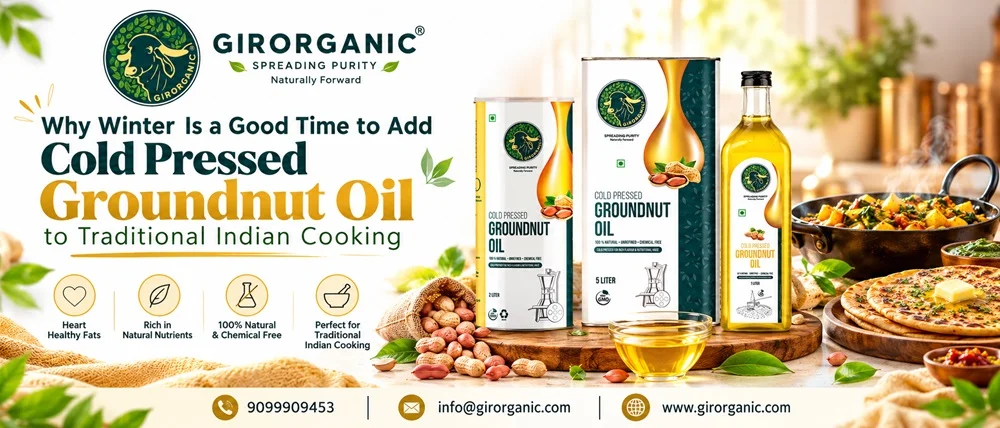
Winter is a natural time for many Indian households to return to richer, slower-cooked, seasonal foods such as stuffed parathas, bajra rotla, methi dishes, undhiyu, roasted vegetables, chutneys, farsan and traditional snacks. Cold pressed groundnut oil fits well into this style of cooking because its nutty flavour complements roasted spices, grains, legumes and winter vegetables.
Choosing the best cold pressed groundnut oil, however, is not simply about buying the darkest oil or the most expensive bottle. Seed quality, extraction method, freshness, packaging, filtration and storage all matter.
Groundnut oil can be part of a balanced diet, but quantity still matters. ICMR-NIN advises moderation with visible fats and also encourages variety or rotation among cooking oils rather than depending entirely on one oil.
Why Use Cold Pressed Groundnut Oil in Winter Cooking?
Cold pressed groundnut oil works particularly well in winter recipes because its characteristic peanut aroma pairs naturally with roasted grains, seasonal vegetables, spices, dals, chutneys and traditional snacks.
It is also relatively rich in monounsaturated fatty acids, but it should still be used in moderate quantities like any other edible oil. Groundnut oil can be especially useful when you want more flavour than a highly neutral refined oil provides.
Key Takeaways
- Cold pressed groundnut oil adds a noticeable nutty character to traditional dishes.
- It works well with many winter foods such as methi, bajra, sesame, peanuts, root vegetables and legumes.
- Groundnut oil is naturally rich in monounsaturated fat.
- Cold pressed does not automatically mean organic or superior in every situation.
- Freshness, seed quality and proper storage matter.
- Oil quantity remains important even when the oil is traditionally processed.
- Using a mix or rotation of oils can provide a broader fatty-acid profile.
This guide explains where groundnut cold pressed oil fits into winter cooking, how to use it sensibly and what to check before buying.
What Is Cold Pressed Groundnut Oil?
Cold pressed groundnut oil is edible oil mechanically extracted from groundnuts with limited heat treatment compared with conventional refining.
Groundnut oil is made from Arachis hypogaea, commonly known as peanuts or groundnuts. FSSAI defines groundnut oil as oil expressed from clean and sound groundnuts and sets compositional and quality requirements for the oil.
Depending on the producer, the oil may also be marketed as:
- Cold Pressed Peanut Oil
- Kachi ghani groundnut oil
- Groundnut cold pressed oil
- Filtered groundnut oil
- Traditional groundnut oil
These expressions are related, but they should not automatically be treated as identical.
Why Does Groundnut Oil Suit Traditional Winter Foods?
Winter recipes in India often rely on roasting, sautéing and slow cooking. Many also use stronger ingredients such as garlic, ginger, sesame, peanuts, ajwain, methi, jaggery and coarse grains.
The mild-to-nutty flavour of cold pressed groundnut oil can complement these ingredients rather than disappearing completely into the dish.
It works especially well where the recipe benefits from a traditional, roasted flavour rather than a completely neutral cooking medium.
Which Winter Dishes Work Well With Cold Pressed Groundnut Oil?
Methi-Based Sabzis and Parathas
Fresh fenugreek becomes widely used in winter cooking.
Groundnut oil works well when sautéing methi with garlic, potatoes, peas or spices because its nutty flavour pairs naturally with the slightly bitter character of the leaves.
You can also use a small amount while preparing fillings for methi paratha or thepla.
Undhiyu and Mixed Winter Vegetables
Gujarati winter cooking is a strong match for groundnut oil.
Undhiyu combines vegetables such as surti papdi, brinjal, potatoes and yam with coconut, peanuts, sesame and spices. A flavourful kachi ghani groundnut oil can support these roasted and nutty flavours without dominating the dish.
Bajra and Millet Preparations
Bajra rotla, millet khichdi, thalipeeth and other coarse-grain dishes are common winter choices.
Groundnut oil can be used for:
- Tempering
- Light roasting
- Cooking accompaniments
- Brushing rotis
- Preparing garlic or peanut chutneys
Its flavour works particularly well with earthy grains.
Seasonal Sabzis
Try it with:
- Carrot
- Green peas
- Cauliflower
- Brinjal
- Sweet potato
- Beans
- Fresh tuvar
- Methi
- Spinach
- Mustard greens
Not every dish requires strongly flavoured oil, so start with recipes where a nutty note is welcome.
Is Groundnut Oil a Healthy Choice?
Groundnut oil can be part of a balanced diet.
ICMR-NIN identifies groundnut oil as one of the commonly used oils with a relatively favourable monounsaturated-fat profile. It also recommends using cooking fats in moderation and suggests using different oils in rotation or combination rather than depending entirely on a single oil.
This is an important distinction.
Calling one product the best cold pressed groundnut oil does not mean it should be used without limit.
Cooking oil remains a concentrated source of calories.
How Much Oil Should You Use?
ICMR-NIN's dietary guidance states that visible fats such as cooking oil should be limited according to energy needs. For a roughly 2,000-kcal diet, around 27–30 grams of visible fat per day is cited as an illustrative level, with individual requirements varying by activity and physiological status.
So winter cooking should not become an excuse to dramatically increase oil intake.
Use enough for proper cooking and flavour, but avoid equating “cold pressed” with “unlimited.”
Cold Pressed vs Refined Groundnut Oil
Both can be used for cooking, but the experience is different.
Refining removes unwanted materials and odours and can extend shelf life. ICMR-NIN also notes that refining may remove some minor components while generally leaving the fatty-acid composition largely unchanged.
This is why the choice should be based on cooking needs rather than assuming one category is automatically good and the other bad.
Is Filtered Groundnut Oil the Same as Cold Pressed Oil?
Not always.
Filtered Groundnut Oil generally refers to oil that has been mechanically filtered after extraction, while “cold pressed” primarily describes how the oil was extracted.
A product can potentially be both cold pressed and filtered.
The exact meaning depends on the manufacturer's process, so read the product information carefully instead of relying only on one term on the front label.
What Does Kachi Ghani Groundnut Oil Mean?
“Kachi ghani” generally refers to traditional mechanical pressing associated with ghani-style extraction.
It is often marketed alongside cold pressed oils because both emphasise mechanical extraction and limited processing.
However, the terms should not be treated as perfect synonyms unless the producer clearly explains the method.
If the process matters to you, check:
- Type of press used
- Heat control
- Filtration method
- Whether refining is involved
- Seed sourcing information
Can Cold Pressed Peanut Oil Be Used for Everyday Indian Cooking?
Yes.
Cold Pressed Peanut Oil can work well for many everyday recipes, especially those where a slightly nutty flavour is desirable.
Good applications include:
- Sabzi
- Dal tadka
- Poha
- Upma
- Paratha fillings
- Thepla
- Chutneys
- Stir-fried vegetables
- Traditional Gujarati food
- Maharashtrian preparations
- Roasted masalas
For recipes where you want a completely neutral oil flavour, you may prefer another cooking oil.
How to Introduce Cold Pressed Groundnut Oil Into Your Winter Kitchen
You do not need to replace every oil overnight.
A gradual approach works better.
Step 1: Start With Familiar Dishes
Use it first in recipes that already contain peanuts, sesame, garlic or roasted spices.
Step 2: Notice the Flavour
Compare the dish with your usual oil.
Cold pressed oil may have a more pronounced aroma.
Step 3: Adjust the Quantity
Strong-flavoured oils sometimes need less for sensory impact.
Do not automatically pour the same amount you would use with neutral refined oil.
Step 4: Use It in Selected Recipes
Keep another oil available if your household follows oil rotation.
Step 5: Store It Properly
Keep the bottle tightly closed and away from direct sunlight and heat.
What Should You Check Before Buying the Best Cold Pressed Groundnut Oil?
1. Ingredient Information
The oil source should be clearly identified as groundnut or peanut oil.
2. FSSAI Details
Check applicable licence and packaged-food information.
FSSAI's standards require groundnut oil to meet defined quality parameters and be free from rancidity, foreign matter, separated water and inappropriate added substances.
3. Extraction Method
Look for clear information explaining how the oil is pressed.
4. Manufacturing Date
Freshness is important with minimally processed oils.
5. Best-Before Period
Avoid buying quantities that your household cannot finish comfortably.
6. Packaging
Choose properly sealed containers without leakage or visible damage.
7. Aroma and Freshness
Fresh groundnut oil should have a pleasant characteristic smell. A stale or paint-like odour may indicate deterioration.
8. Brand Transparency
Good product information should explain sourcing, extraction and storage without making exaggerated health promises.
How Should Cold Pressed Groundnut Oil Be Stored in Winter?
Winter temperatures may reduce heat exposure, but good storage practices still matter.
Store the oil:
- Away from direct sunlight
- Away from the cooking flame
- In a tightly closed container
- In a cool, dry place
- Without introducing moisture into the bottle
You generally do not need to refrigerate groundnut oil unless the manufacturer specifically recommends it.
The objective is to limit unnecessary exposure to air, light and heat.
Common Mistakes When Switching to Groundnut Oil
Families often make one of two mistakes: using too much because the oil is marketed as “natural,” or rejecting the oil because its flavour is stronger than refined oil.
Other common mistakes include:
- Treating cold pressed as automatically organic
- Buying oversized bottles
- Ignoring freshness
- Keeping the bottle next to a hot stove
- Choosing by colour alone
- Assuming sediment proves purity
- Reusing oil repeatedly
- Depending entirely on one cooking oil
- Treating premium price as proof of better quality
A better approach is to judge the product by processing transparency, freshness and how well it suits your cooking.
Winter Cooking Checklist
Before adding groundnut cold pressed oil to your kitchen, ask:
- Does my family enjoy peanut flavour?
- Which winter dishes would benefit from it?
- Is the oil clearly labelled?
- Does the manufacturer explain the extraction method?
- Are batch and date details easy to find?
- Is the bottle properly sealed?
- Am I storing it away from heat and light?
- Am I using oil in moderation?
- Do I already use other oils that could be rotated with it?
These questions are more useful than choosing solely from marketing claims.
FAQs About Cold Pressed Groundnut Oil in Winter
1. Why is cold pressed groundnut oil suitable for winter cooking?
Its naturally nutty flavour pairs well with seasonal vegetables, millet dishes, methi, peanuts, sesame, garlic and roasted spices commonly used in winter recipes. The seasonal connection is mainly culinary rather than a requirement that groundnut oil should only be consumed during winter.
2. Can I use cold pressed groundnut oil every day?
Yes, it can be used for everyday cooking in moderate amounts. Indian dietary guidance recommends moderation with visible fats and also supports using a variety or rotation of oils rather than depending completely on one cooking oil.
3. Which is better: cold pressed or filtered groundnut oil?
Neither term alone determines quality. Cold pressed describes extraction, while filtered generally describes a post-extraction cleaning step. A high-quality product can be both cold pressed and filtered. Check freshness, processing transparency, packaging and manufacturer information before choosing.
4. Is kachi ghani groundnut oil good for traditional Indian food?
Yes. Kachi ghani groundnut oil can suit traditional dishes because its characteristic peanut aroma works well with sabzis, chutneys, millet dishes and spice-heavy preparations. The final taste depends on the specific extraction process and freshness of the oil.
5. Is cold pressed peanut oil healthier than refined groundnut oil?
It is more accurate to describe them as differently processed. Cold pressing may retain more natural flavour and some minor compounds, while refining removes unwanted materials and improves consistency and shelf life. Your overall diet and total oil intake matter more than one label.
6. How can I identify the best cold pressed groundnut oil?
Check the ingredient declaration, FSSAI information, extraction details, manufacturing date, batch number, packaging and storage guidance. The oil should smell fresh and should not be rancid. Do not rely on colour, sediment or premium pricing alone as proof of quality.
7. Does cold pressed groundnut oil need refrigeration in winter?
Usually not. Store it tightly closed in a cool, dry location away from sunlight and heat, unless the manufacturer's label gives different instructions. Buying a reasonable quantity and using it while fresh is often more practical than unnecessary refrigeration.
Final Thoughts
Winter is a good time to explore cold pressed groundnut oil because many traditional Indian seasonal recipes naturally pair with its nutty flavour. It can work especially well with methi, millet dishes, roasted vegetables, peanuts, sesame, dals and regional winter preparations.
The best cold pressed groundnut oil is not simply the strongest-smelling or costliest product. Look for fresh oil, clear extraction information, reliable packaging, FSSAI details and sensible storage guidance.
If you want to explore traditionally processed groundnut oil for your winter kitchen, you can review GirOrganic's groundnut oil range and its sourcing and processing information before choosing the option that fits your everyday cooking style.