Sign up with Google
 Sign in with Zoho
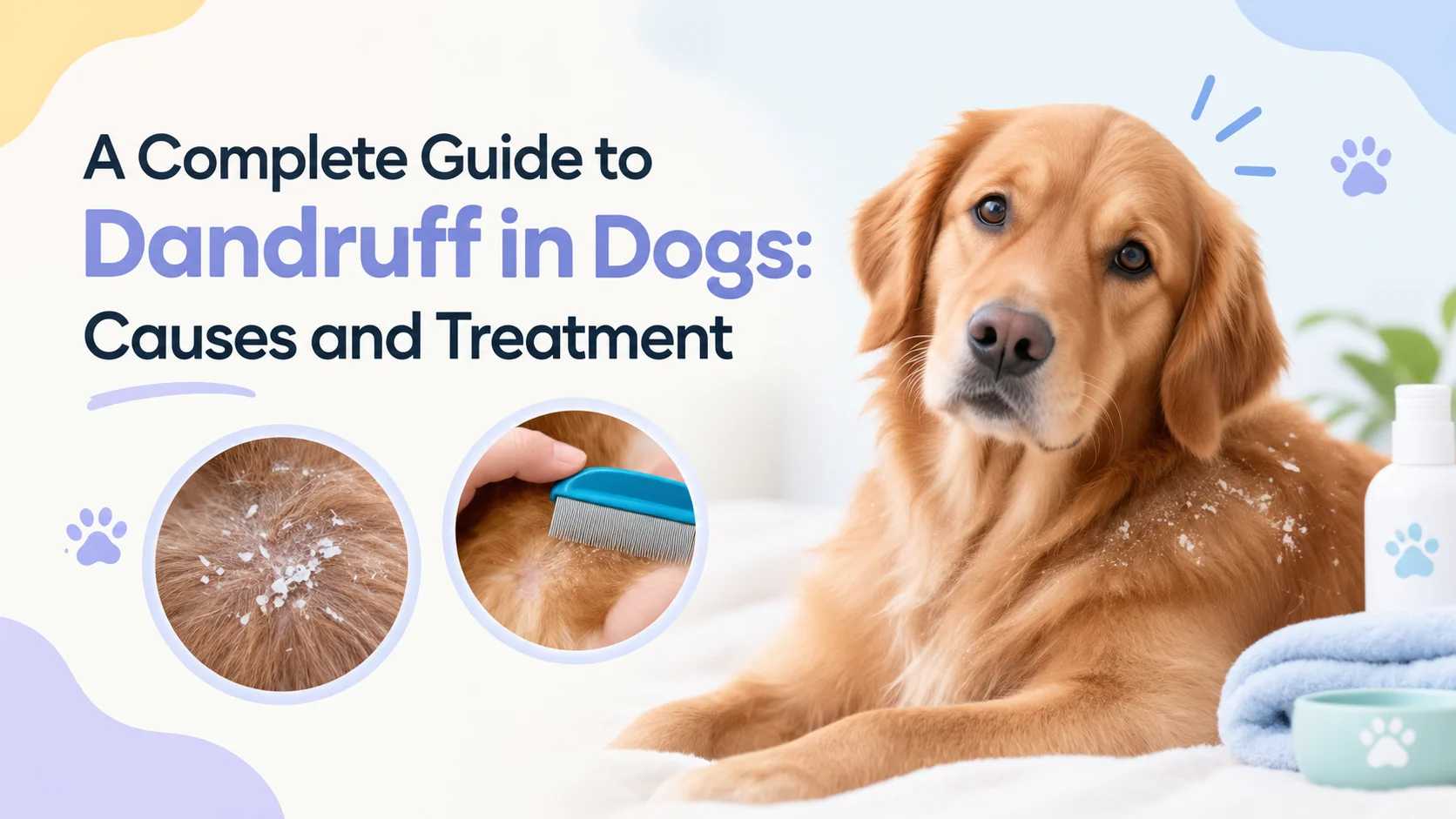
Dandruff in dogs is fairly common. Can happen for many different reasons. Sometimes dandruff is linked to skin or to changes in the environment. In cases excessive flakes may show that the dog has allergies, parasites, a skin infection or another hidden problem.
The good news is that most causes of dandruff can be managed when you know what is triggering the problem. In this guide we will look at the causes of dandruff in dogs the signs to watch for and ways you can help your dog keep its skin healthy and its coat clean.
What Does Dandruff Look Like in Dogs?
Dog dandruff usually shows as white or greyish flakes in the fur. You may notice them easily when you brush your dog or when the dog lies on a dark‑coloured bed or blanket.
Some dogs with dandruff may also have:
Dry or flaky skin
Increased scratching
Red or irritated skin
Excessive shedding
A dull‑looking coat
Small scabs or bumps
An unusual skin or coat odour
Not every dog with flakes has a skin problem. However if dandruff is persistent or if the dog has itching, redness, hair loss or sores it is worth looking into what is causing the problem.
Common Causes of Dandruff in Dogs
1. Dry Skin
One of the explanations for dandruff is dry skin. Weather changes, low humidity, frequent bathing or unsuitable grooming products can sometimes take away much of the skins natural moisture.
Dogs living in dry environments may also see changes in their skin and coat.
Keeping the dog’s skin moisturised naturally through a diet, suitable grooming and proper hydration can help keep the skin healthy.
2. Allergies
Dogs can develop allergies to things in their environment or in their diet. Pollen, dust certain foods, cleaning products and other irritants can sometimes cause skin problems.
If the dog is constantly scratching, licking its paws rubbing its face or developing patches along with dandruff allergies could be a possible reason.
A veterinarian can help determine what is triggering the reaction.
3. Parasites
Fleas, mites and other external parasites can irritate the dog’s skin. The irritation may lead to scratching, inflammation, hair loss and visible flakes.
Some types of mites can cause noticeable scaling and itching. If you suspect parasites avoid trying treatments without professional advice. The right treatment depends on the parasite involved.
4. Diet
The dog’s skin and coat need adequate nutrition to stay healthy. A diet that does not provide essential nutrients can sometimes make the coat dry and dull.
If the dog’s coat has suddenly changed speak with a veterinarian about whether the current diet's suitable for the dog’s age, size, breed and health needs.
5. Skin Infections
Bacterial or fungal infections can cause scaling and other skin changes. These problems may also produce redness, an odour, itching or areas where the dog loses hair.
If the dog’s dandruff is accompanied by these symptoms, a professional veterinary assessment is important. Treating the underlying infection is more useful than trying to remove the flakes.
6. Seborrhea
Some dogs develop a condition called seborrhea, where the skin produces much oil or sheds skin cells too much.
Seborrhea can make the coat look flaky or greasy. May sometimes have an unpleasant smell. It can happen as a skin condition or develop because of another health issue.
A veterinarian can help determine the cause and recommend management.
How Can Dandruff in Dogs Be Treated?
The right treatment depends entirely on why the dog has dandruff. There is no treatment that works for every dog.
Use the Right Grooming Products
Avoid using shampoos on the dog unless a veterinarian specifically recommends one. Human skin and dog skin have needs and some products can irritate the dog.
A gentle dog‑specific shampoo may be suitable for some cases of skin while medicated shampoos may be recommended for specific skin conditions.
Brush Your Dog Regularly
Regular brushing can help remove hair and flakes while keeping the coat in better condition.
The right brush depends on the dog’s coat type. Long‑haired dogs may need frequent brushing, than short‑haired breeds.
Brushing should always be gentle especially if the dog’s skin is already irritated.
Do Not Over-Bathe Your Dog
Bathing often can sometimes make the skin dry or irritated especially if unsuitable products are used.
The best bathing schedule for your dog depends on your dog’s breed, coat type, daily life and skin health. If your dog has a skin issue, your veterinarian or a professional groomer can give you a routine.
Maintain a Balanced Diet
nutrition is very important for your dog’s skin and coat. Be sure your dog receives an balanced diet that fits your dog’s life stage.
If you think about giving your dog supplements, oils or vitamins talk with your veterinarian first. More is not always better and extra supplements can sometimes create problems for your dog.
Keep Flea and Parasite Prevention Up to Date
parasite prevention can lower the chance of flea and mite skin irritation for your dog.
If you see itching, strange flakes, hair loss or visible parasites on your dog call your veterinarian instead of using only grooming products.
When Should You Visit a Veterinarian?
- Severe or persistent itching
- Red or inflamed skin
- patches or significant hair loss
- Open sores or scabs
- A strong or unusual skin odour
- Greasy or thickened skin
- Repeated ear or skin problems
- Sudden changes in their coat or skin
If your dog shows any of these signs it is time to see a vet.
Can Professional Grooming Help With Dog Dandruff?
Professional grooming can help as part of your dog’s coat care. A groomer can pull out hair, dirt and flakes and keep the coat neat for your dog.
Grooming does not replace a vet visit when your dog may have a skin disease, infection, parasite or lasting irritation.
If your dog has skin always tell the groomer about any skin problems before your dog goes in.
How to Help Prevent Dandruff in Dogs
- Feed your dog a balanced diet.
- Keep water ready for your dog.
- Brush your dog’s coat often.
- Use grooming products made for dogs.
- Do not bathe your dog often or without need.
- Keep parasite prevention current for your dog.
- Wash your dog’s bed often.
- Watch for changes in your dog’s skin and coat.
- Schedule vet visits if worries stay.
Final Thoughts
Dandruff in dogs can come from causes from simple dry skin, to allergies, parasites, infections or other skin problems. The main idea is to look past the flakes and notice what else is going on with your dog’s skin and behaviour.
Brushing often, grooming, good food and good parasite care all help keep your dog’s skin healthy.. If dandruff stays or shows up with itching, redness, hair loss, sores or a strange smell it is safest to ask a veterinarian.
A healthy coat comes from skin and spotting small changes early makes it easier to give your dog the right care.