Sign up with Google
 Sign in with Zoho

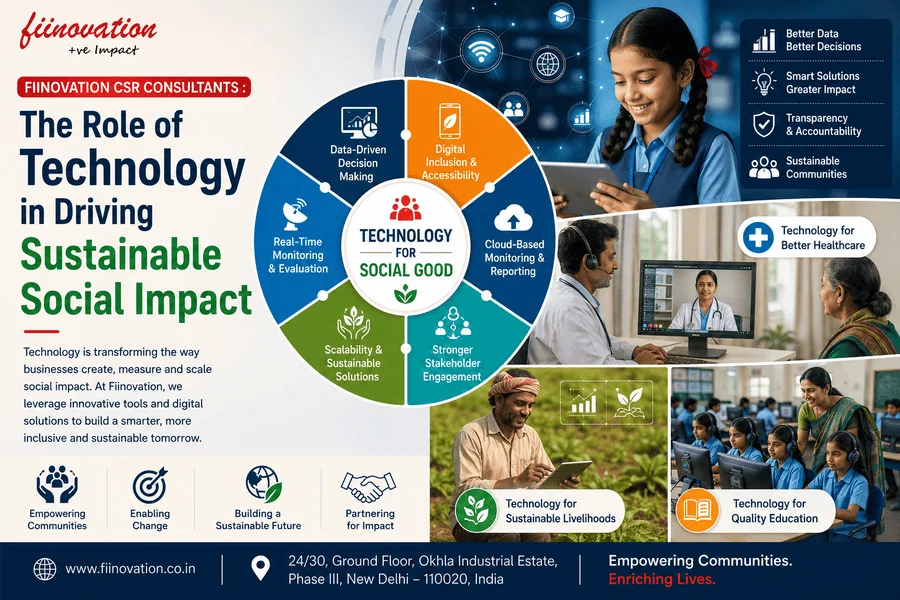
Corporate Social Responsibility (CSR) has evolved significantly in recent years, moving beyond philanthropic donations to become a strategic tool for creating measurable and sustainable social impact. As businesses seek innovative ways to maximize the effectiveness of their CSR initiatives, technology has emerged as a powerful enabler. From data-driven decision-making to digital monitoring and transparent reporting, technology is reshaping how companies plan, implement, and evaluate their CSR programs.
As highlighted by Fiinovation CSR Consultants , integrating technology into CSR strategies allows organizations to improve efficiency, enhance accountability, and deliver long-term value to communities. By leveraging digital innovation, companies can address complex social challenges while contributing to India's sustainable development goals.
Technology is Transforming the CSR Landscape
Traditional CSR projects often faced challenges such as limited transparency, delayed reporting, and difficulties in measuring outcomes. Today, digital technologies are helping organizations overcome these barriers by enabling real-time project management and evidence-based decision-making.
Modern CSR initiatives increasingly rely on :
Digital project management platforms
Geographic Information Systems (GIS)
Mobile data collection applications
Cloud-based collaboration tools
Artificial Intelligence (AI) for data analysis
Dashboards for impact monitoring
Online beneficiary feedback systems
These solutions help organizations make informed decisions while ensuring that CSR investments reach the intended beneficiaries efficiently.
Data-Driven CSR Planning
One of the biggest advantages of technology is its ability to support data-driven CSR planning. Before launching a project, companies need a clear understanding of community needs and local development priorities.
Advanced data collection tools enable organizations to :
Conduct comprehensive need assessments
Identify priority intervention areas
Analyze demographic trends
Map available community resources
Measure baseline conditions
Reliable data ensures that CSR projects are designed around actual community requirements rather than assumptions, resulting in higher impact and better resource utilization.
Experienced organizations like Fiinovation CSR Consultants emphasize evidence-based planning to ensure that CSR investments generate meaningful and sustainable outcomes.
Improving Project Monitoring and Evaluation
Monitoring is essential for determining whether CSR projects are achieving their intended objectives. Technology simplifies this process by providing real-time access to project data and performance indicators.
Digital monitoring tools allow organizations to:
Track project progress
Monitor budget utilization
Record beneficiary participation
Generate automated reports
Identify implementation challenges early
Improve decision-making
Real-time monitoring enables timely corrective actions, ensuring that projects remain aligned with their objectives while maximizing social impact.
Enhancing Transparency and Accountability
Transparency is one of the most important aspects of successful CSR implementation. Stakeholders—including companies, NGOs, government agencies, and communities—expect accurate reporting and responsible use of CSR funds.
Technology enhances transparency through :
Digital documentation
Online reporting systems
Secure cloud storage
GPS-enabled project verification
Photo and video evidence
Automated compliance reports
These tools strengthen stakeholder confidence while improving corporate governance and regulatory compliance.
Technology Supports Better Collaboration
Successful CSR projects often involve partnerships between corporates, NGOs, educational institutions, healthcare providers, local governments, and community organizations.
Digital collaboration platforms facilitate:
Faster communication
Document sharing
Joint project planning
Virtual meetings
Progress tracking
Stakeholder coordination
Improved collaboration reduces operational delays while increasing the effectiveness of CSR implementation.
Digital Innovation Expands Access to Social Services
Technology has significantly improved the reach of CSR programs across multiple sectors.
Education
Digital classrooms, online learning platforms, smart devices, and virtual teacher training have expanded educational opportunities, particularly in rural and underserved communities.
Healthcare
Telemedicine, digital health records, online consultations, and mobile health applications have improved access to healthcare services for remote populations.
Skill Development
E-learning platforms enable students, women, and young professionals to access vocational training and employment-oriented courses regardless of their location.
Agriculture
Digital advisory platforms, weather forecasting tools, and mobile applications help farmers improve productivity, optimize resources, and adopt sustainable agricultural practices.
These technology-enabled interventions increase the scalability and long-term sustainability of CSR initiatives.
Measuring Social Impact More Effectively
Impact assessment is becoming an essential component of modern CSR strategies. Technology enables organizations to collect accurate data, compare baseline and end-line indicators, and measure long-term outcomes.
Advanced analytical tools help organizations evaluate:
Educational improvements
Health outcomes
Livelihood enhancement
Women's participation
Environmental conservation
Community engagement
Return on social investment (SROI)
Reliable impact measurement helps companies refine future CSR strategies while demonstrating accountability to stakeholders.
Artificial Intelligence and Emerging Technologies
Artificial Intelligence (AI), predictive analytics, and machine learning are opening new possibilities for CSR management.
These technologies can assist organizations in :
Identifying high-priority development areas
Forecasting project outcomes
Analyzing large datasets
Detecting implementation risks
Improving resource allocation
Personalizing beneficiary support
While human expertise remains essential, emerging technologies are making CSR programs more efficient, data-driven, and responsive to community needs.
The Role of CSR Consultants in Technology Integration
Technology delivers maximum value when supported by strategic planning and professional execution. This is where experienced CSR consultants play a critical role.
Organizations such as Fiinovation CSR Consultants support businesses throughout the CSR lifecycle by offering services including :
CSR strategy development
Community need assessments
NGO partner identification
Project design and implementation support
Monitoring and evaluation
Social impact assessment
CSR reporting and compliance guidance
By integrating technology with robust project management practices, CSR consultants help companies maximize the effectiveness and sustainability of their social investments.
Conclusion
Technology is redefining the future of Corporate Social Responsibility by making projects more transparent, measurable, collaborative, and impactful. From digital data collection and real-time monitoring to AI-powered analytics and online stakeholder engagement, technological innovation enables businesses to create sustainable solutions for complex social challenges.
As emphasized by Fiinovation CSR Consultants , the successful integration of technology into CSR is not merely about adopting digital tools—it is about using innovation strategically to improve lives, strengthen communities, and generate lasting social value. Companies that embrace technology-driven CSR are better equipped to deliver measurable outcomes while contributing to India's inclusive and sustainable development journey.






.webp)