Sign up with Google
 Sign in with Zoho

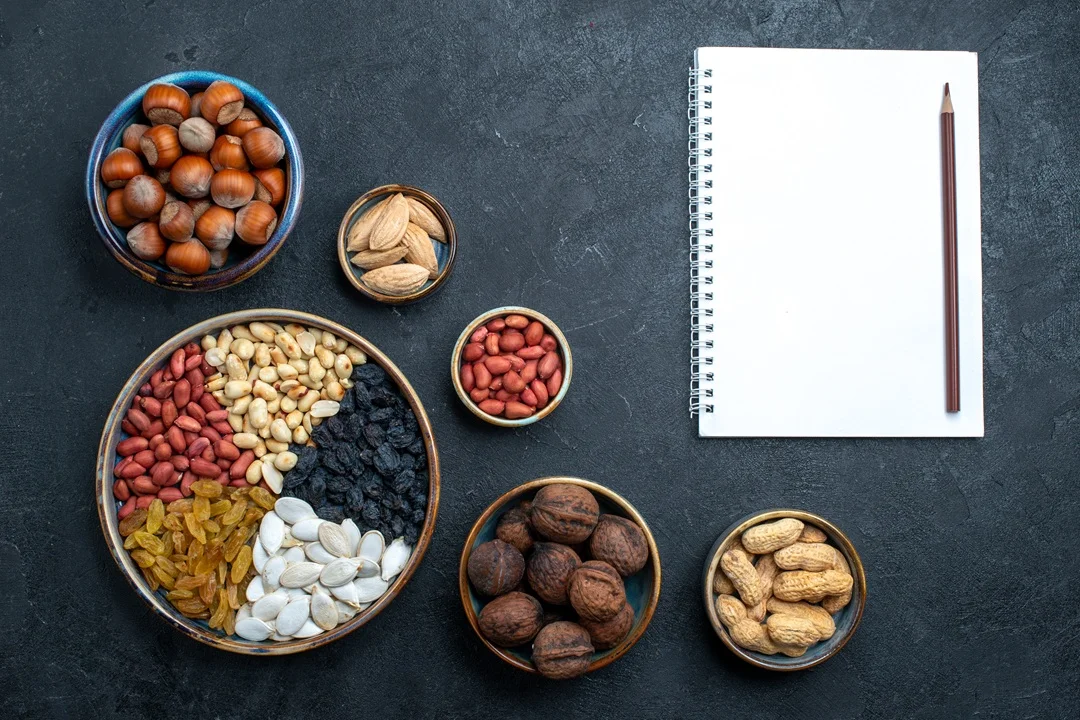
Every nutrition conversation around eye health eventually circles back to the same question: which dry fruit is best for eyes? It's a reasonable thing to wonder — dry fruits are nutrient-dense, affordable, shelf-stable, and deeply woven into Indian daily eating habits. And several of them genuinely do support eye health through specific vitamins, minerals, and antioxidants.
The important caveat upfront: no dry fruit corrects a refractive error, reverses a cataract, or cures a retinal condition. What the right dry fruits do is supply nutrients that support the health of the structures your vision depends on — the retina, the lens, the tear film, and the macular cells. Think of it as long-term maintenance, not short-term medicine.
Here are the ten best options, with the specific reason each one earns its place.
Which Dry Fruit Is Best for Eyes? The Top 10 Ranked
1. Almonds (Badam)
The classic morning ritual has genuine science behind it. Almonds are one of the richest plant sources of Vitamin E — an antioxidant that protects the lens from oxidative damage and is directly linked to reduced cataract risk. Eight to ten soaked almonds daily is the amount most commonly recommended.
Key nutrient: Vitamin E, zinc, healthy fats
2. Walnuts (Akhrot)
The only nut with meaningful plant-based omega-3 (ALA), walnuts support the oily layer of the tear film — the layer that keeps eyes from drying out. For heavy screen users or air-conditioned office workers, four to five walnut halves daily can meaningfully support tear stability over time.
Key nutrient: ALA omega-3, Vitamin E, polyphenols
3. Pistachios (Pista)
This is the standout choice for lutein and zeaxanthin — the two carotenoids that concentrate in the macula and act as a natural filter for blue light from screens and sunlight. Among all nuts and dry fruits, pistachios are consistently among the highest in these compounds.
Key nutrient: Lutein, zeaxanthin, Vitamin B6
4. Dried Apricots (Khubani)
Dried apricots are rich in beta-carotene, which the body converts to Vitamin A — a direct building block of rhodopsin, the pigment in rod cells that enables low-light and night vision. Vitamin A deficiency is a genuine cause of night blindness, and dried apricots are one of the tastiest ways to address it.
Key nutrient: Beta-carotene (Vitamin A precursor), iron
5. Raisins (Kishmish)
Raisins contain resveratrol and other polyphenols that protect retinal cells from oxidative stress. They also provide iron, which supports healthy blood flow to the tiny vessels supplying the retina and optic nerve. A small handful (20–25 raisins) paired with nuts is the practical daily amount.
Key nutrient: Polyphenols, iron, potassium
6. Cashews (Kaju)
Cashews are one of the better plant-based sources of zinc — a mineral that transports Vitamin A from the liver to the retina and forms part of the antioxidant enzyme system protecting retinal cells. Ten to twelve cashews daily covers a meaningful portion of the daily zinc requirement.
Key nutrient: Zinc, magnesium, healthy fats
7. Dates (Khajoor)
Dates contain flavonoids including quercetin and kaempferol, which have anti-inflammatory properties relevant to eye health. Chronic low-grade inflammation underlies several eye conditions including dry eye and early macular changes. One to two dates daily — not more, given their sugar content — is a reasonable inclusion.
Key nutrient: Flavonoids, Vitamin A, iron
8. Figs (Anjeer)
Figs bring a combination of Vitamin A, Vitamin C, and zinc in one food — a useful range for eye health. Vitamin C, in particular, supports the antioxidant environment of the aqueous humour (the fluid bathing the lens), which over years contributes to lens protection.
Key nutrient: Vitamin A, Vitamin C, zinc, calcium
9. Prunes (Dried Plums)
Prunes are high in Vitamin K, beta-carotene, and lutein. They also support healthy blood circulation through their potassium content — relevant for the microvasculature of the retina. Less commonly discussed than almonds or walnuts, but nutritionally well-rounded for eye support.
Key nutrient: Beta-carotene, lutein, Vitamin K
10. Dried Mulberries (Shahtoot)
Dried mulberries are one of the richest sources of resveratrol and anthocyanins among dried fruits. Anthocyanins have been studied for their role in supporting rhodopsin regeneration in rod cells — the mechanism involved in visual adaptation to dim light. They're less common in Indian households but increasingly available in cities and online.
Key nutrient: Anthocyanins, resveratrol, Vitamin C
Quick Reference Table
Expert Tips for Getting the Most From Dry Fruits
- Soak almonds and walnuts overnight. Soaking reduces phytic acid, which blocks mineral absorption. You'll absorb significantly more zinc and Vitamin E from soaked nuts than dry ones.
- Combine with a fat source. Lutein (pistachios), beta-carotene (dried apricots), and Vitamin A (figs) are all fat-soluble — they absorb far better when eaten with a small amount of healthy fat like ghee, coconut, or another nut.
- Rotate, don't fixate. Eating only almonds every day misses the broader nutritional range that multiple dry fruits provide. A mixed handful covering 3–4 types gives broader coverage across the nutrients eye health depends on.
- Portion matters. Dry fruits are calorie-dense. A useful daily amount is one small mixed handful — roughly 25–30 grams total — not a large bowl.
Common Mistakes to Avoid
- Buying salted or heavily roasted versions. High-heat roasting degrades omega-3 fatty acids in walnuts and some antioxidants in other nuts. Opt for plain, minimally processed varieties.
- Treating dry fruits as a substitute for medical care. If you have diagnosed macular degeneration, glaucoma, or diabetic retinopathy, dry fruits support general eye health but do not treat these conditions.
- Ignoring portion size for people with diabetes. Dates, raisins, and dried apricots are high in natural sugars. Diabetic patients should prioritise the lower-sugar options — almonds, walnuts, pistachios, cashews — and limit high-sugar dried fruits.
- Expecting quick results. Nutrients like lutein build up protective macular pigment density over months, not days. Consistency across weeks and months is what matters, not large amounts eaten occasionally.
Wrapping Up
Which dry fruit is best for eyes? Honestly, no single one covers everything. Almonds lead on Vitamin E, pistachios on lutein and zeaxanthin, walnuts on omega-3, and dried apricots on beta-carotene. A daily mixed handful across three or four of these covers the full nutritional range your eyes benefit from.
Good nutrition is one piece of the picture the other is regular eye examination. Conditions like early macular degeneration, diabetic retinopathy, and glaucoma develop without obvious symptoms for months or years.
Book a comprehensive eye check-up at Eye-Q Eye Hospitals to get a complete picture of your eye health because good habits and early detection together do far more than either one alone.