Sign up with Google
 Sign in with Zoho

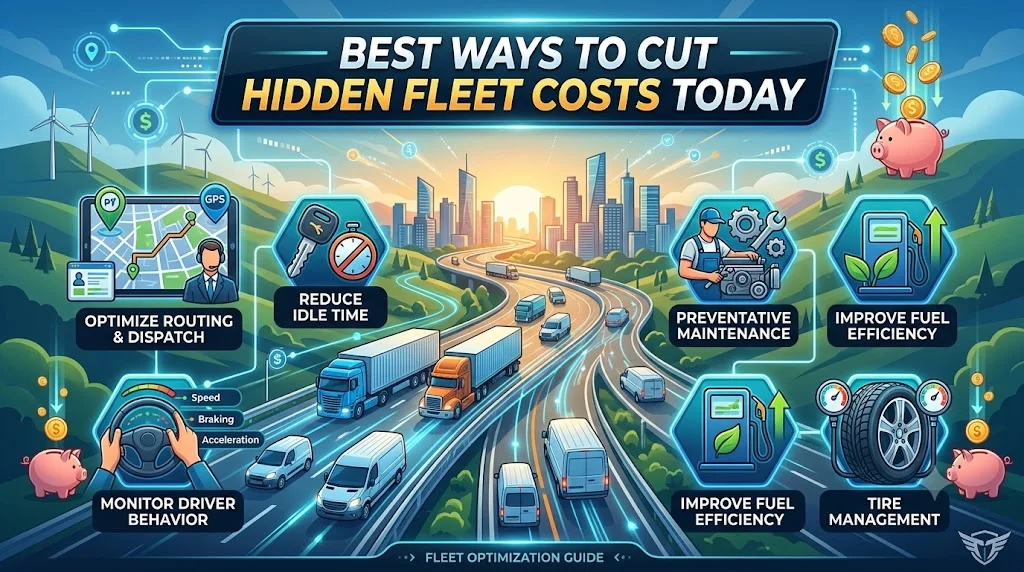
A truck that looks perfectly fine on the balance sheet, insured, maintained, sitting in the yard, can still be costing a fleet owner real money every single day it isn't moving freight. Most businesses track the obvious expenses closely: fuel, insurance premiums, loan payments, tyres. What quietly erodes profitability far more is the category of expense that never shows up as its own line item on any invoice. Understanding hidden fleet costs is often the difference between a fleet that looks profitable on paper and one that actually is.
In this guide, we'll break down exactly where these hidden costs typically live, why they're so easy to miss even for experienced fleet managers, and what it actually takes to bring them into visibility.
Why Hidden Costs Stay Hidden in the First Place
The obvious fleet expenses come with a receipt, an invoice, or a monthly statement attached, making them easy to track by default. The harder costs are the ones buried inside everyday operations rather than appearing as a single, clear charge.
Data Lives in Disconnected Places
Fuel reports sit in one system, maintenance records live in a spreadsheet, driver inspection forms stay on paper, and vendor invoices sit scattered across email threads. When hidden fleet costs are spread across this many disconnected sources, no single report ever shows the full financial picture, which is exactly why they stay invisible until they've already accumulated significantly.
Small Amounts Feel Insignificant in Isolation
A truck idling for two hours doesn't feel like a real cost at the moment. Neither does one miss preventive service, or twenty minutes a dispatcher spends manually filling out a form instead of dispatching the next load. Individually, none of these register as a problem worth addressing, but they compound relentlessly across a full fleet and a full year.
Nobody Owns the Problem of Finding Them
Since these costs don't appear as a distinct budget category, no single person in most organizations is specifically responsible for hunting them down, which means they simply persist until someone finally decides to look closely enough to notice.
Idle Time and Excessive Idling: A Bigger Cost Than It Looks
Idling is one of the most common hidden costs, and the maths behind it is more significant than most fleet owners assume.
The Fuel Waste Adds Up Quickly
A diesel engine can burn a meaningful amount of fuel per hour just idling without moving an inch, and once you multiply that across a fleet of vehicles idling for even a couple of hours daily, the monthly cost becomes substantial, often running into tens of thousands of rupees across a modest fleet before anyone notices the pattern.
Idling Also Accelerates Engine Wear
Beyond wasted fuel, excessive idling contributes to engine wear over time, meaning the true cost isn't just the fuel burned in the moment but also the maintenance and component lifespan that quietly gets shortened.
Cutting Idle Time Delivers Fast, Measurable Savings
Reducing idle time by even a modest amount per vehicle per day can save a meaningful amount per truck annually in fuel costs alone, making this one of the more immediately actionable hidden costs once it's actually being tracked.
Idle and Underutilized Assets: Paying for Vehicles That Aren't Working
Beyond idling engines, entire vehicles or trailers sitting unused still generate real, ongoing expense.
Depreciation Doesn't Pause When a Vehicle Sits Still
A vehicle loses value over time regardless of whether it's actually being driven, which means a parked truck is quietly losing worth every month even while contributing nothing to revenue.
Insurance and Registration Costs Continue Regardless
Since insurance premiums generally don't decrease for an underused vehicle, fleets can end up effectively overpaying to insure assets that spend most of their time sitting idle rather than earning their keep.
Right-Sizing a Fleet Can Free Up Significant Capital
Businesses that carefully review utilization data often discover a meaningful share of their fleet operates well below any reasonable efficiency threshold, and even a modest reduction in fleet size through retiring or redeploying underused vehicles can free up substantial annual operating costs.
Administrative Waste: The Cost of Paperwork and Manual Processes
Time spent on manual administrative tasks represents another category of cost that rarely gets tracked as its own expense.
Manual Forms and Data Entry Consume Real Labor Hours
Every extra minute a dispatcher or driver spends filling out paper forms, manually logging trip details, or chasing down a status update is time not spent moving freight or coordinating the next load efficiently.
Repeated or Duplicate Work Compounds the Waste
When records aren't centralized, the same information sometimes gets entered multiple times across different systems, or a service that was already completed gets scheduled again unnecessarily, both of which quietly waste both time and money.
Digitizing These Processes Pays for Itself Quickly
Replacing manual forms and disconnected spreadsheets with digital, centralized records typically eliminates a meaningful share of this administrative waste almost immediately once implemented properly.
Compliance and Documentation Gaps: Costs That Surface Unexpectedly
Some hidden costs stay invisible right up until they surface as a sudden, unavoidable expense.
Missed Renewal Deadlines Create Real Penalties
Since Indian commercial vehicles require multiple ongoing compliance documents, fitness certificates, permits, insurance, PUC, a missed renewal deadline can result in vehicle detention or penalties that dwarf the cost of simply tracking the deadline properly in the first place.
Delayed Maintenance Turns Small Problems Into Big Ones
Skipping or delaying a scheduled service to save money in the short term often leads to a far more expensive breakdown repair later, since reactive repairs typically cost several times more than the preventive service that would have avoided them.
How to Actually Bring Hidden Costs Into Visibility
Finding these costs requires centralizing data that's currently scattered across disconnected systems and manual processes.
Consolidate Fuel, Maintenance, and Utilization Data
Bringing fuel consumption, maintenance records, and vehicle utilization into one connected system, rather than three separate spreadsheets, is the foundational step that makes hidden patterns visible in the first place.
Calculate True Cost Per Vehicle, Not Just Obvious Expenses
A vehicle that looks like it costs a certain amount annually when only counting fuel, insurance, and repairs often costs significantly more once downtime, idle fuel waste, and administrative labor get properly factored in.
Review Utilization Regularly, Not Just Once
Since utilization patterns shift over time as routes and demand change, a one-time review misses costs that develop gradually, making ongoing monitoring far more valuable than an annual audit alone.
How Fleet Management Software Surfaces These Hidden Costs
A properly connected fleet management system brings fuel monitoring, maintenance scheduling, and compliance tracking into one platform, making the patterns behind hidden costs visible rather than scattered across disconnected records. Tying that data into automated billing through tools like LogiVite also ensures cost tracking stays accurate and tied to actual trip and vehicle activity rather than reconstructed manually after the fact. And when analysis reveals a fleet is carrying more vehicles than it actually needs, auction management software offers a way to access additional capacity on demand rather than owning underutilized vehicles year-round just in case.
Getting Started With Identifying Your Own Hidden Fleet Costs
If your fleet budget currently tracks only the obvious line items, fuel, insurance, and repairs, there's a strong chance meaningful costs are hiding in idle time, underutilized assets, and administrative waste that nobody has specifically measured yet. You can explore Logibrisk's fleet management system, or look at the complete transportation management platform covering fleet, billing, and freight operations together.
For a detailed breakdown of specific hidden fleet expense categories and how to start tracking them, this guide to hidden fleet expenses covers the calculations and patterns in more depth.
Final Thoughts
Hidden fleet costs don't announce themselves the way a repair bill or an insurance premium does, which is exactly why they're so easy to overlook even in an otherwise well-managed fleet. Idle time, underutilized vehicles, administrative waste, and compliance gaps all quietly compound month after month, and the businesses that actually improve their fleet economics are the ones that stop assuming their obvious expense categories tell the whole story. Bringing scattered fuel, maintenance, and utilization data into one connected view is what finally makes these costs visible, and visibility is the first real step toward controlling them.
Frequently Asked Questions
What exactly are hidden fleet costs?
They're expenses that don't appear as a distinct line item on an invoice or statement, such as idle time fuel waste, depreciation on underused vehicles, and administrative labor spent on manual processes, all of which accumulate significantly over time despite feeling minor individually.
How much does vehicle idling actually cost?
Even modest daily idling across a fleet of vehicles can add up to a substantial monthly fuel cost, and cutting idle time meaningfully can save a significant amount per truck annually.
Why does an idle or underused vehicle still cost money?
Depreciation, insurance, and registration costs continue regardless of whether a vehicle is actually being driven, meaning an idle asset quietly loses value and generates expense without contributing any revenue.
Can administrative processes really be a significant hidden cost?
Yes, manual data entry, paperwork, and duplicated work across disconnected systems consume real labor hours that add up across a team and a full year, even though each individual instance feels minor.
How can a business actually find its hidden fleet costs?
Consolidating fuel, maintenance, and utilization data into one connected system, then calculating true cost per vehicle rather than just obvious expenses, is the most direct way to surface patterns that stay invisible in fragmented records.
Does fleet management software help specifically with hidden costs?
Yes, by centralizing data that's otherwise scattered across separate systems and spreadsheets, proper fleet management software makes patterns like excessive idling or underutilized vehicles visible in a way manual tracking rarely achieves.