Sign up with Google
 Sign in with Zoho

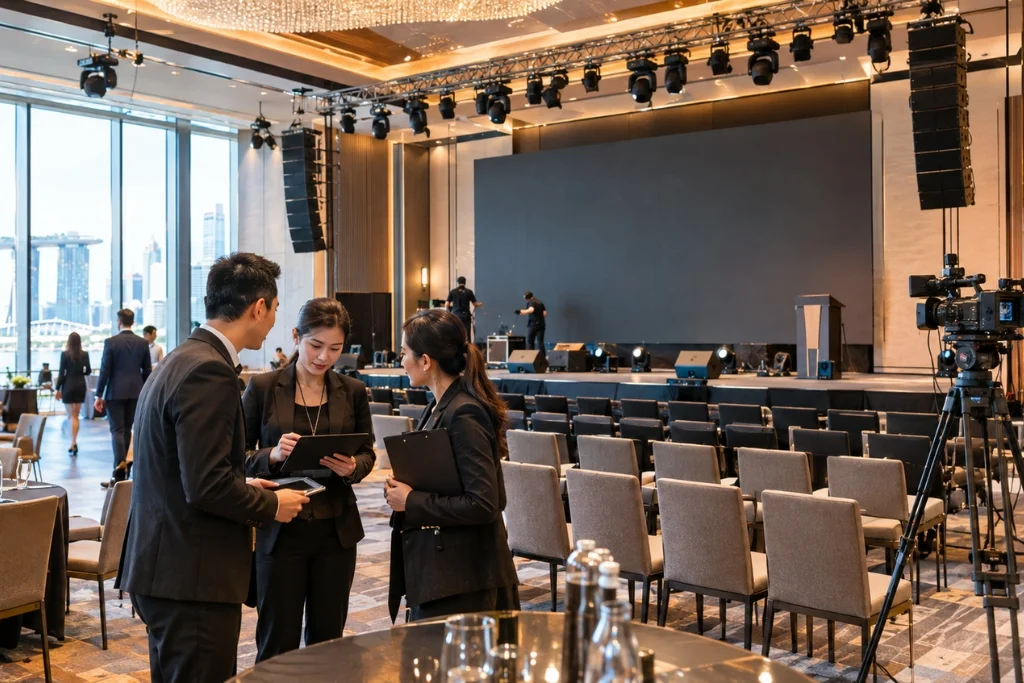
Planning a corporate gathering in a city as fast-moving as Singapore takes more than a booked venue and a catering menu. The right Event Services Singapore partner can turn a long checklist of moving parts into one coordinated experience, from the first concept call to the final teardown. This guide explains what to look for, what to ask, and how to avoid the most common planning mistakes.
What Event Services in Singapore Usually Cover
Event services range from full-scale event management to specialist support for one part of the programme. Most corporate organisers need a mix of the following.
- Event management and planning, including conferences, gala dinners, product launches, award ceremonies and team building days.
- Event production, such as staging, sound, lighting, LED walls and livestreaming for hybrid audiences.
- Entertainment and hosting, including emcees, live bands, DJs and cultural performances.
- Event communication, from invitations and social media promotion to post-event reporting.
Knowing which of these you actually need makes it far easier to compare proposals fairly.
Start With Clear Objectives
Before you contact any provider, decide what the event must achieve. A product launch is judged on attention and leads. A staff appreciation dinner is judged on morale. A conference is judged on content and networking. Write down your goals, expected headcount, budget range, preferred dates and any must-have elements. A clear brief helps an agency respond with a realistic plan instead of a generic package.
How to Evaluate an Event Company
Look at Relevant Experience
Ask for examples of events similar in size and format to yours. An agency that regularly delivers large corporate programmes will understand permits, venue logistics, vendor schedules and run-of-show timing in a way that a newcomer may not.
Check In-House Capabilities
Providers that handle production, audio-visual equipment and entertainment under one roof usually coordinate more smoothly than those who subcontract everything. Fewer handovers mean fewer misunderstandings on the day.
Ask About Contingency Planning
Outdoor weather, equipment faults and late speakers are all realities of live events. A reliable team will explain its backup plans for power, audio, staffing and programme changes without being asked twice.
Review the Proposal Carefully
A good proposal itemises costs, lists what is included and excluded, and sets out timelines and responsibilities. Be cautious of vague quotes that make comparison difficult.
Build a Realistic Timeline
Popular Singapore venues and suppliers can book up well ahead of peak periods such as year-end. As a general guide, begin planning large events several months in advance, confirm the venue and date first, then lock in production, entertainment and guest communication. Schedule a full technical rehearsal before doors open so that speakers, lighting cues and audio are tested together.
Think About the Guest Experience
The best events feel effortless to attendees. Consider arrival and registration flow, signage, seating, sightlines to the stage, accessibility, dietary needs and the pacing of the programme. Small details, such as clear audio in every corner of the room, shape how guests remember the event long after it ends.
Measure Results After the Event
Close the loop with attendee feedback, attendance data and, where relevant, lead or engagement figures. A professional provider will help you review what worked and what to improve, which makes the next event stronger.
Final Thoughts
Choosing the right partner is the single biggest factor in how smoothly an event runs. Define your goals, compare proposals on substance rather than price alone, and look for a team with proven production and management experience. To explore what a full-service team can offer, visit the Event Services Singapore specialists at Executive Group.