Sign up with Google
 Sign in with Zoho

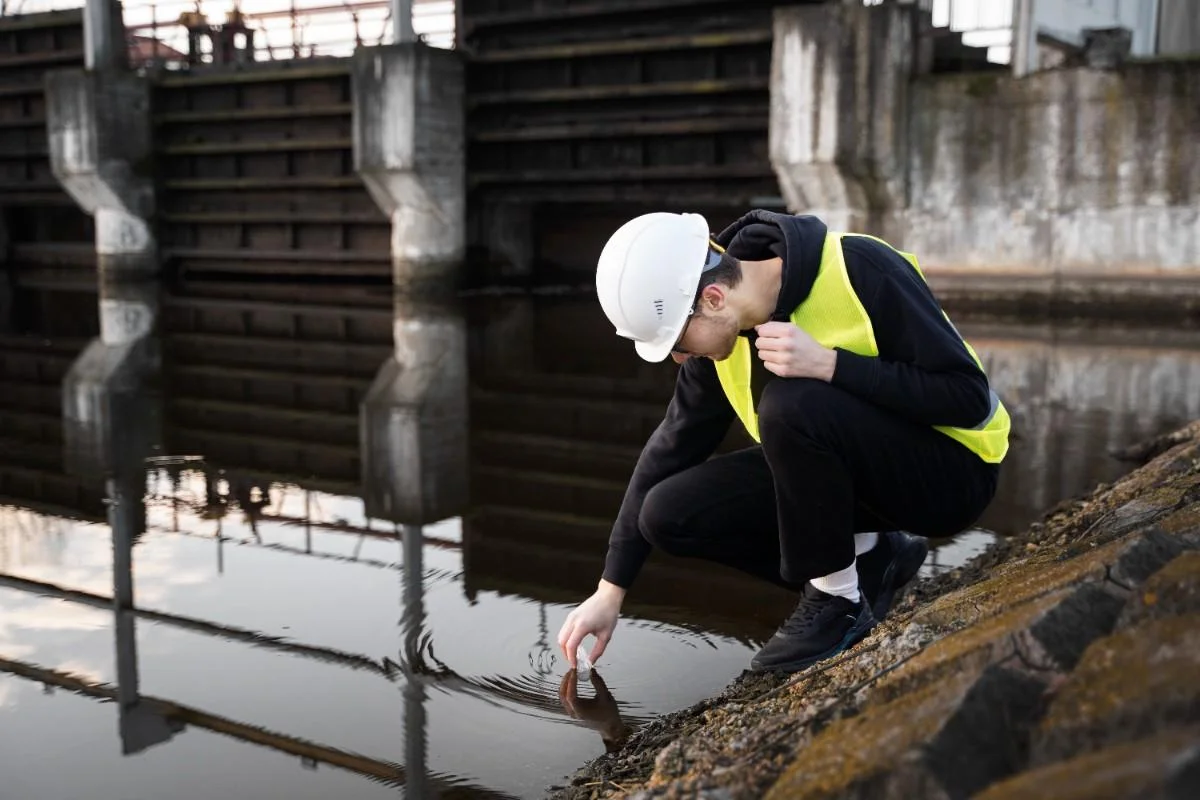
Malaysia has strict laws and regulations for the environment, such as scheduled waste regulation, effluent discharge limit and ambient air quality guideline, enforced by the Department of Environment (DOE). Compounds may be fined, operations may be suspended or a license may be revoked for non-compliance.
Aside from compliance, a good monitoring program can allow environmental monitoring and assessment and safety staff and consultants to identify issues before they reach a crisis level, while keeping the employees, neighboring communities and company reputation safe at the same time.
Why Environmental Monitoring Programs Matter for Malaysian Industries
1. Ambient Air Quality Monitoring
Air monitoring measures air pollutants like particulate matter (PM10, PM2.5), sulfur dioxide (SO₂), nitrogen dioxide (NO₂), carbon monoxide (CO) and ozone. The Recommended Malaysian Air Quality Guidelines (RM AQG) in Malaysia have established acceptable limits for these parameters.
Residential areas and sensitive ecosystems should be monitored continuously or periodically with calibrated equipment at appropriate receptor points by industries in and around them. The data gathered is added directly to compliance reports and Environmental Impact Assessments.
2. Stack Emissions Monitoring
For facilities with combustion processes, boilers, or industrial furnaces, stack emission testing is mandatory. This measures pollutants released directly from exhaust stacks — including dust, heavy metals, dioxins, and greenhouse gases.
Stack testing must follow DOE-approved methods and be conducted at the required frequency depending on the industry category. Results are submitted as part of the facility's periodic compliance reporting obligations.
3. Effluent Water Testing and Discharge Monitoring
Any facility that discharges wastewater into waterways or public sewers must conduct regular effluent water testing. The Environmental Quality (Industrial Effluents) Regulations 2009 specify Standard A and Standard B discharge parameters, covering biochemical oxygen demand (BOD), chemical oxygen demand (COD), suspended solids, heavy metals, and pH levels.
Sampling must be done at designated discharge points, with results submitted to the DOE at required intervals. Inadequate effluent monitoring is one of the most common causes of regulatory notices issued to industrial operators in Malaysia.
4. Noise Monitoring
Occupational and environmental noise monitoring serve two distinct purposes. Environmental noise monitoring assesses impact on surrounding communities, while occupational noise monitoring protects workers from hearing damage.
Under the Factories and Machinery (Noise Exposure) Regulations 1989, noise levels at the workplace must not exceed 90 dB(A) as an 8-hour time-weighted average. For facilities near residential areas, DOE guidelines on permissible noise levels must also be followed. Monitoring should cover both daytime and nighttime periods where relevant.
5. Chemical Health Risk Assessment (CHRA)
CHRA assessment in Malaysia is a legal requirement under the Occupational Safety and Health (Use and Standards of Exposure of Chemicals Hazardous to Health) Regulations 2000, commonly known as USECHH Regulations. A CHRA identifies chemical hazards in the workplace, evaluates worker exposure levels, and recommends control measures.
It must be conducted by a registered CHRA assessor and reviewed every five years, or immediately after any significant change in work processes or chemicals used. For EHS professionals, CHRA forms a critical input into the broader occupational health component of an environmental monitoring program.
6. Groundwater and Soil Monitoring
Industries handling chemicals, fuels, or scheduled wastes must periodically assess soil and groundwater quality. Contaminants can migrate below ground undetected for years before surfacing as major liabilities — both environmental and financial.
Monitoring wells are typically installed at strategic locations upgradient and downgradient of potential contamination sources. Sampling frequency depends on the risk profile of the facility and any remediation activities already underway.
7. Biodiversity and Ecological Monitoring
For projects near sensitive habitats, forested areas, or water catchments, ecological monitoring tracks changes in flora, fauna, and aquatic biodiversity. This is especially relevant during and after construction phases of large infrastructure or plantation projects in Malaysia.
Baseline surveys establish reference conditions, and subsequent monitoring identifies deviations that may indicate environmental stress. This component is increasingly required under Environmental Impact Assessment (EIA) conditions imposed by the DOE.
Common Gaps That Undermine Monitoring Programs
Even well-intentioned programs fall short when execution is inconsistent. These are the gaps environmental consultants most frequently identify during site audits:
- Using uncalibrated equipment — Results from poorly maintained instruments are unreliable and may not hold up under regulatory scrutiny.
- Incorrect sampling locations — Sampling at non-representative points skews data and misses actual exposure conditions.
- Gaps in recordkeeping — DOE inspections require complete documentation chains. Missing logs can trigger enforcement action even when actual conditions are compliant.
- Failure to update programs after process changes — A monitoring program designed for one set of operations becomes inadequate when new chemicals, equipment, or production volumes are introduced.
- Treating monitoring as a compliance checkbox — Programs run purely to satisfy regulators often miss actionable trends that could prevent incidents or reduce environmental liability.
How Environmental Monitoring Supports Broader EHS Strategy
Monitoring data is only as useful as what you do with it. Leading EHS programs use monitoring outputs to feed into risk assessments, update standard operating procedures, and justify capital investment in pollution control equipment.
For example, a sustained upward trend in stack particulate readings may indicate filter degradation long before it reaches a reportable threshold. Acting on that early signal avoids both regulatory exposure and unplanned maintenance costs.
In Malaysia, industries that integrate monitoring into their ISO 14001 Environmental Management System (EMS) framework tend to report fewer non-conformances during third-party audits. The monitoring program becomes a live feedback loop rather than a periodic reporting task.
Choosing the Right Environmental Monitoring Partner
Not all environmental service providers operate to the same standard. When selecting a monitoring partner, look for:
- DOE-accredited laboratory for sample analysis
- Registered assessors for specialised assessments such as CHRA
- Experience across your specific industry sector
- Clear reporting formats aligned with DOE submission requirements
- Ability to integrate monitoring data into broader environmental management reports
Environment.com.my provides comprehensive environmental sampling and monitoring services across these critical areas, supporting industries and EHS professionals in Malaysia to meet their compliance obligations with precision and confidence. Visit the Environment.com.my homepage to learn more about their full range of environmental consultancy services.
Frequently Asked Questions
Explain environmental monitoring and assessment.
Environmental monitoring and assessment refers to the systematic process of measuring, analysing and evaluating environmental conditions (air, water, soil, noise etc.) to track adherence to environmental regulations, to locate sources of pollution and to support decisions about environmental management.
Should CHRA assessment be compulsory in Malaysia?
Yes. In Malaysia, the use of chemicals hazardous to health in workplaces are legally required for CHRA assessment in accordance with USECHH Regulations 2000. Must be performed by registered assessor and reviewed every 5 years or when there are substantial changes in work processes.
How many times do you need to test effluent water?
For effluent water testing, each industrial effluent category and effluent volume is subject to a different testing frequency; most of the industrial substance in Malaysia are required to test their effluent water every month or every quarter as stipulated in the Environmental Quality (Industrial Effluents) Regulations 2009 and submit to DOE.
Which factors should be measured in an ambient air quality monitoring programme?
The ambient air monitoring usually includes the measurement of PM10, PM2.5, SO₂, NO₂, CO and O3. The parameters used will be chosen based on the type of industrial activity, location of sensitive receptors and any conditions imposed on the facility's environmental approval or EIA.
What are the penalties for businesses that don't meet environmental monitoring standards in Malaysia?
Notice, compound fines, suspension of licence or prosecution may occur for failure to comply with the Environmental Quality Act 1974. Failure to comply with regulations or repeat offences can result in closure of the facility and a strong and documented monitoring programme is crucial for industrial operations.
Is it possible for one environmental consultant to undertake all the aspects of monitoring?
Yes, the consultant/firm must have the appropriate accreditations and registered staff for each service. All these monitoring tasks could be managed by a single program, through a full-service environmental consultancy that would provide consistency of methodology, reporting and regulatory submission.