Sign up with Google
 Sign in with Zoho


Radon is an invisible health risk that many Canadian homeowners overlook. This naturally occurring radioactive gas can enter homes through foundation cracks, construction joints, and openings around pipes. Because it has no smell, colour, or taste, you cannot identify dangerous radon levels without testing.
November is an important time to raise awareness through Canada's Radon Action Month and Lung Cancer Awareness Month, alongside the “Knowvember” initiative. These campaigns encourage Canadians to understand their health risks and take practical steps toward prevention.
At Ecosense, we believe awareness should lead to action. Radon is the leading cause of lung cancer among non-smokers in Canada, according to Health Canada. The good news is that testing, appropriate mitigation, and ongoing monitoring can help homeowners manage this preventable exposure risk.
Why Is Radon a Serious Lung Cancer Risk in Canada?
Radon forms naturally through the breakdown of uranium in soil and rock. It can enter buildings through small openings in foundations and accumulate indoors, particularly in basements and lower living areas.
When people breathe in radon decay products, radioactive particles can damage lung tissue and increase the risk of lung cancer. The risk depends on the concentration of radon and the duration of exposure.
Health Canada estimates that radon exposure causes thousands of lung cancer deaths in Canada each year. Importantly, smokers and non-smokers can both be affected, although smoking combined with radon exposure increases the risk.
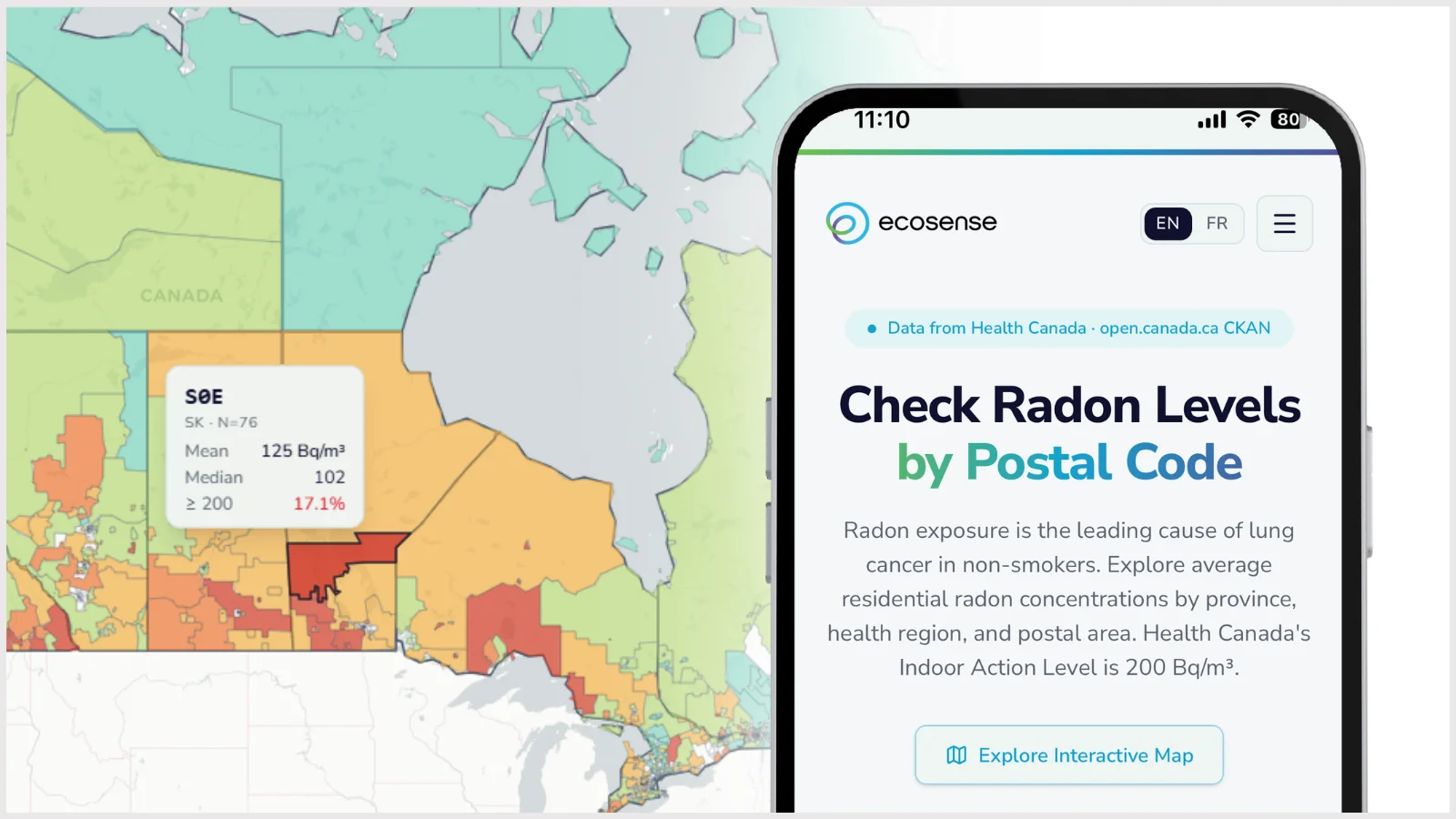
Canada's guideline for indoor radon is 200 Bq/m³. If a long-term test indicates levels above this guideline, homeowners should arrange mitigation through a qualified professional.
Real Stories That Show Why Radon Awareness Matters
Statistics explain the scale of the problem, but personal experiences demonstrate why testing should never be overlooked.
1. Bill Johnson: A Homeowner Who Wishes He Had Tested Earlier
Bill Johnson was a healthy, active non-smoker who was diagnosed with advanced lung cancer without experiencing the typical warning signs. He later discovered that prolonged exposure to high radon levels in his home was a contributing cause.
His experience made him an advocate for continuous radon monitoring. Today, he uses an EcoQube radon monitor and encourages homeowners to understand their indoor radon levels before exposure becomes a serious concern.
2. Kerri Robbins: Why Monitoring Must Continue After Mitigation
Kerri Robbins received a Stage 4 lung cancer diagnosis despite never having smoked. Her home had dangerously elevated radon levels.
3. Jackie Nixon: Turning a Personal Experience into Community Awareness
After being diagnosed with lung cancer in 2015, Jackie Nixon learned about the dangers of radon and began educating others.
She arranged testing in her apartment building and discovered that one neighbouring unit had a reading of 18 pCi/L. Her experience motivated her to advocate for greater awareness through Citizens for Radioactive Radon Reduction (CR3).
Her message is simple: you do not need symptoms to have a radon problem. Testing is the only way to know.
4. A Family Pet's Story: An Unexpected Warning
An episode of This Old House highlighted a homeowner who decided to investigate radon after his family dog died from lung cancer.
The story brought attention to an often-overlooked concern: radon exposure affects the indoor environment shared by people and their pets. It is another reminder that testing should be a household priority.
Why C-NRPP Approval Matters When Choosing a Radon Monitor in Canada
Choosing a reliable electronic radon monitor is an important part of understanding your home's indoor air quality.
The Canadian National Radon Proficiency Program (C-NRPP) conducts performance testing of consumer-grade electronic radon monitors to help Canadians make informed purchasing decisions.
Several Ecosense models appear on its published consumer-grade list, including:
- EcoQube: Smart monitoring with Wi-Fi connectivity and app-based historical trends.
- RadonEye: Electronic radon monitoring with an OLED display and mobile app.
- EcoBlu: A digital monitor with an LED display for tracking radon levels.
- EcoQube Flex: Portable monitoring with Bluetooth connectivity and app-based readings.
This recognition provides additional confidence because these devices have undergone independent performance evaluation.
However, C-NRPP consumer-grade recognition should not be confused with approval for professional radon measurement services. Always check the latest C-NRPP consumer-grade electronic radon monitor list to confirm the status of a particular model.
How to Test Your Home for Radon Properly
Getting an initial reading is useful, but understanding your home's long-term radon exposure requires an appropriate testing period.
Follow these recommendations:
- Choose a suitable monitor: Select an electronic radon monitor that has passed C-NRPP performance testing or use a recognized long-term test kit.
- Place it correctly: Position the device on the lowest lived-in level of your home, away from windows, exterior walls, and ventilation sources.
- Monitor for at least three months: Radon levels fluctuate daily and seasonally. A longer measurement provides a more representative average.
- Understand your results: Compare your long-term average with Canada's guideline of 200 Bq/m³.
- Arrange mitigation if necessary: If your results exceed the guideline, contact a qualified radon mitigation professional.
- Continue monitoring: After mitigation, keep checking your readings to understand whether radon levels remain controlled.
Electronic monitors can provide readings much sooner than traditional laboratory-based test kits, allowing homeowners to observe changing conditions. However, early readings should not replace the recommended long-term assessment.
Protect Your Home with Smarter Radon Monitoring
Radon awareness should not end after November. Understanding your home's radon levels is an ongoing responsibility.
Ecosense develops intelligent radon monitoring solutions that combine patented ion-chamber detection technology with advanced data analysis. Its devices help homeowners observe radon readings, understand trends, and stay informed about indoor conditions.
Whether you choose EcoQube, EcoBlu, RadonEye, or EcoQube Flex, selecting a model listed by C-NRPP adds an important layer of confidence when choosing an electronic monitor for your Canadian home.
Ready to take control of your home's radon monitoring?
Explore the Ecosense radon monitoring collection and find a monitoring solution that fits your home and needs.
Frequently Asked Questions About Radon and Lung Cancer
1. Is radon the leading cause of lung cancer among non-smokers in Canada?
Yes. Health Canada identifies radon as the leading cause of lung cancer among non-smokers. Long-term exposure increases the risk of developing the disease.
2. What is the acceptable radon level in Canadian homes?
Health Canada's guideline is 200 Bq/m³. If a long-term test shows a higher level, homeowners should arrange mitigation.
3. Are Ecosense radon monitors C-NRPP approved?
Ecosense models including EcoQube, RadonEye, EcoBlu and EcoQube Flex appear on C-NRPP's consumer-grade electronic radon monitor list. Check the current list for model-specific information.
4. How long should I monitor radon levels in my home?
Health Canada recommends testing for at least three months to establish a representative long-term average. Electronic monitors can provide earlier readings, but these should not replace long-term testing.
5. Do I need to monitor radon after installing a mitigation system?
Yes. Continued monitoring helps homeowners understand whether mitigation remains effective and identify changes in indoor radon levels.