Sign up with Google
 Sign in with Zoho

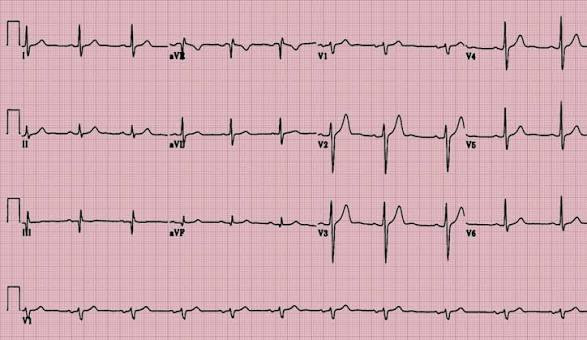
Most healthcare providers who have completed some form of EKG education would say they have been "trained" in ECG interpretation. Far fewer would say they are confident reading a complex tracing under clinical pressure without a reference guide. The gap between having taken an ekg reading class and genuinely being able to read EKGs is not a matter of intelligence or effort it is a matter of the teaching method used. This blog explains why the gap exists, how it can be closed, and what a properly designed EKG reading class does differently.
Why Standard EKG Training Produces Knowledge Without Confidence
The standard approach to EKG education is pattern recognition, memorise what atrial flutter looks like, what STEMI looks like, and what a third-degree heart block looks like. This approach has two fundamental weaknesses that create the confidence gap:
Problem 1: Pattern recognition fails on atypical presentations. Real clinical ECGs do not always look like the textbook examples. Atrial fibrillation in a patient with rate-controlling medications may look nothing like the "classic" coarse fibrillation described in training materials. A STEMI equivalent that doesn't meet traditional ST elevation criteria will be missed by a provider relying on pattern recognition. When the pattern doesn't match, the pattern-trained provider has no fallback.
Problem 2: Memorised patterns decay. Knowledge built on memorisation without the underlying conceptual framework decays rapidly once the learning context is removed. Studies on medical education consistently show that pattern-based knowledge requires constant reinforcement to maintain, whereas conceptually-grounded knowledge is retained far more durably.
ECG Academy addresses both problems through a physiologic analysis approach, where every ECG lesson session teaches the cardiac physiology that underlies the ECG appearance, creating an analytical framework that works on any tracing, including atypical ones.
What Does the ECG Academy EKG Reading Class Actually Teach?
The Level 1 course, Advanced Rhythm Strip Analysis, teaches systematic arrhythmia analysis based on cardiac physiology:
- How to evaluate rate, rhythm, P waves, PR interval, and QRS morphology as a systematic process
- Why specific arrhythmias produce the waveform patterns they do understanding the mechanism, not just the appearance
- How to work through a complex rhythm strip step by step rather than relying on gestalt pattern recognition
- How to distinguish between look-alike arrhythmias that require different clinical responses
- How to handle complex tracings with multiple concurrent findings
The Level 2 course 12-lead ECG interpretation extends this analytical approach to the full 12-lead ECG:
- Axis determination using a physiologic understanding of cardiac electrical vectors
- Bundle branch block recognition based on understanding ventricular depolarization sequence
- Ischemia, injury, and infarction patterns based on the physiology of coronary artery territory and myocardial ischemia
- Integration of multiple findings to reach a complete ECG interpretation
The weekly ECG tutorials, ChalkTalks, then apply this framework to real, unknown tracings in 6-minute practical exercises.
The Skills the Weekly ChalkTalks Build
ChalkTalks are one of the most distinctive features of ECG Academy's EKG reading class experience. Unlike a textbook review, ChalkTalks:
- Present an actual, real-world rhythm strip or 12-lead ECG with no labels or pre-identified diagnosis
- Walk through the systematic analysis of the tracing step by step
- Highlight the specific features that lead to the correct interpretation
- Demonstrate the analytical process that should be applied in clinical practice
This bridges the gap between knowing the theory and applying it in real time.
FAQs
Q1. How are the videos in the EKG reading class structured?
Each section of the ECG Academy course contains 3-5 videos, each 5-15 minutes long, covering a specific topic.
Q2. Can a complete beginner start the EKG reading class at Level 1?
ECG Academy recommends starting with the free Introductory Level, which covers the foundational anatomy and physiology needed to make Level 1 content accessible.
Q3. How does an EKG reading class from ECG Academy build confidence with complex tracings?
The combination of a physiologic analytical framework (learned in the video lessons) and regular application to real unknown tracings (in ChalkTalks) creates the specific skillset needed for confident clinical ECG reading.
Q4. Is the ECG Academy EKG reading class appropriate for EMTs and paramedics?
Yes. ECG Academy serves nurses, NPs, PAs, physicians, EMTs, paramedics, and ECG technicians. The physiologic teaching approach is equally effective regardless of clinical background.
Conclusion
An EKG reading class that teaches pattern recognition produces providers who can identify familiar rhythms. A class that teaches physiologic analysis produces providers who can interpret any rhythm. ECG Academy's approach, built by a cardiac electrophysiologist, delivered through video lessons that teach the "why," and reinforced through weekly ChalkTalk practice, produces the second type.