Sign up with Google
 Sign in with Zoho

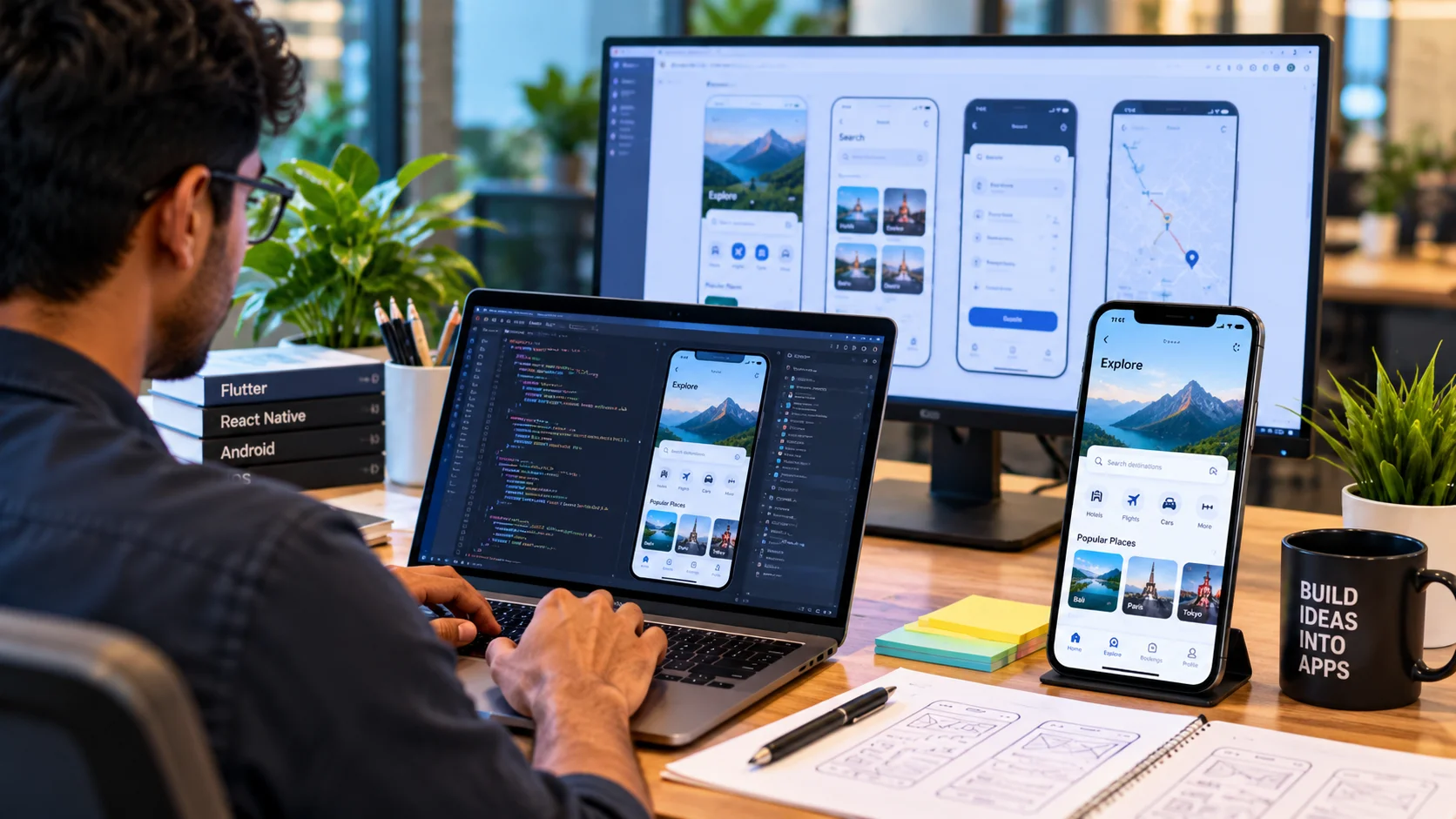
Mobile applications are now a key way businesses attract customers, manage operations, and deliver digital services. From startups launching their first product to established businesses modernising their customer experience, choosing the right mobile app developer can have a significant impact on the success of the project.
However, finding the right development partner is not simply about choosing the company with the lowest quotation. Businesses need to consider technical expertise, communication, development methodology, scalability, security, and long-term support before making a decision.
Understand Your App Requirements First
Before approaching an app development company, clearly define what you want the application to accomplish.
Start by identifying your target users, the problem your application will solve, the platforms you want to support, and the essential features required for the first version.
For example, a food delivery application may require restaurant management, customer accounts, location tracking, online payments, order management, notifications, and delivery tracking. A business application may have completely different requirements.
A well-defined requirement document helps developers provide a more accurate estimate of development time and cost.
Look for Relevant Development Experience
Not every mobile application requires the same technical expertise. When evaluating mobile app developers, look at their previous projects and determine whether they have experience building applications similar to yours.
A development company that has worked on e-commerce, healthcare, logistics, education, fintech, or food delivery applications will usually understand the challenges associated with those industries better than a company with no relevant experience.
Review their portfolio carefully. Look beyond screenshots and try to understand what functionality they actually developed.
Check the Technology Stack
Technology choices can influence the application's performance, scalability, maintenance requirements, and development cost.
Depending on the project, businesses may choose native development using technologies such as Swift or Kotlin, or cross-platform frameworks such as Flutter and React Native.
The right technology depends on factors such as:
- Required application performance
- Target devices and operating systems
- Development budget
- Project timeline
- Integration requirements
- Future scalability
- Maintenance requirements
A professional development partner should explain these options instead of simply recommending whatever technology they normally use.
Evaluate Communication and Project Management
Communication is one of the most overlooked factors when selecting an app development company in India.
A technically capable development team can still create problems if requirements are misunderstood or project updates are inconsistent.
Before starting the project, ask how the company handles:
- Requirement gathering
- UI/UX design
- Development milestones
- Testing and quality assurance
- Client feedback
- Progress reporting
- Bug fixing
- Application deployment
- Post-launch maintenance
A clearly defined development process makes it easier for both the client and development team to track progress.
Don't Choose a Company Based Only on Price
Cost is obviously important, particularly for startups and small businesses. However, choosing the cheapest developer can sometimes result in higher costs later.
Poor architecture, inadequate testing, security problems, slow performance, and difficult maintenance can require substantial redevelopment.
Instead of comparing only quotations, compare what each proposal includes. A slightly higher initial investment may provide better architecture, testing, documentation, scalability, and long-term support.
This is particularly important when comparing the best app development companies, because the value of a development partner should be evaluated based on capabilities and project outcomes rather than price alone.
Think About Scalability From the Beginning
An application that works for 1,000 users may not automatically work efficiently for 100,000 users.
Businesses should therefore discuss scalability before development begins. The development team should consider database architecture, APIs, cloud infrastructure, caching, security, performance optimization, and monitoring.
Even if the first version is an MVP, the architecture should leave room for future improvements.
Consider Local Expertise
For businesses located in Tamil Nadu, working with a development company familiar with the local business environment can sometimes make communication and collaboration easier.
Businesses searching for an app development company in Madurai may want to evaluate both local accessibility and the company's ability to serve customers across India or internationally.
Location should not be the only selection criterion, but having convenient communication and a clear understanding of the client's market can be valuable.
Ask About Post-Launch Support
App development does not end when an application is published on the Google Play Store or Apple App Store.
Applications require ongoing maintenance because operating systems change, third-party APIs are updated, security vulnerabilities emerge, and users continuously provide feedback.
Before signing a contract, ask whether the development company provides:
- Bug fixes
- Performance optimization
- Security updates
- OS compatibility updates
- Feature enhancements
- Server and API maintenance
- Technical support
Understanding these responsibilities in advance prevents confusion after launch.
Conclusion
Choosing the right mobile app development company requires more than comparing prices. Businesses should evaluate technical expertise, previous work, communication, technology choices, scalability, security, and post-launch support.
A reliable development partner should be able to understand the business problem, translate it into practical product requirements, and build an application that can evolve as the business grows.
Whether you are a startup developing an MVP or an established business planning a large-scale mobile application, taking the time to evaluate potential development partners carefully can significantly improve the chances of building a successful digital product.