Sign up with Google
 Sign in with Zoho

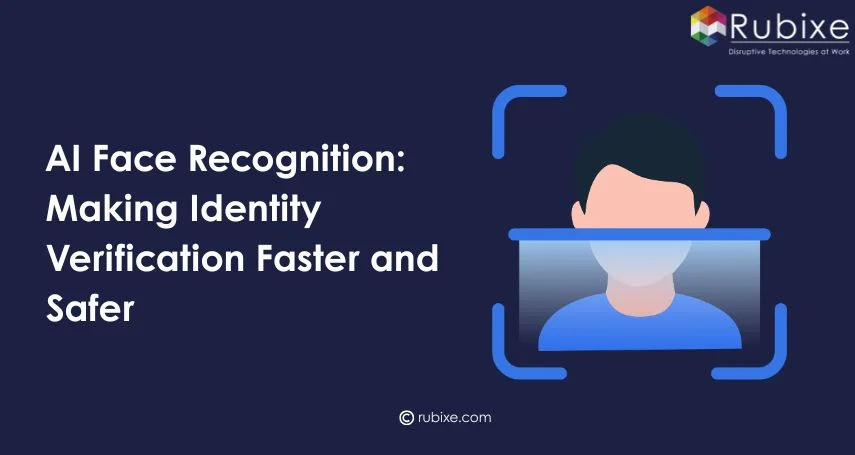
Identity verification is an important part of every business. Companies need to confirm that the right people can access their offices, systems, accounts, and services. Traditional methods like passwords, ID cards, and PINs have been used for many years, but they are not always secure. Passwords can be forgotten, ID cards can be lost, and PINs can be shared.
This is why many businesses are adopting AI face recognition. It provides a faster, safer, and more convenient way to verify identities. By using Artificial Intelligence, businesses can recognize a person's face in seconds and grant access only to authorized users.
What Is AI Face Recognition?
AI face recognition is a technology that uses Artificial Intelligence to identify or verify a person's identity by analyzing their facial features.
The system studies unique characteristics such as:
- The distance between the eyes
- The shape of the nose
- The jawline
- Facial structure
It compares this information with stored data to confirm a person's identity.
Since every face is unique, AI face recognition provides a secure and reliable method of identity verification.
Why Businesses Need AI Face Recognition
Businesses handle sensitive information, valuable assets, and customer data every day.
They need identity verification systems that are:
- Fast
- Accurate
- Secure
- Easy to use
- Scalable
Traditional verification methods often require passwords, access cards, or manual checks.
AI face recognition offers a contactless and automated solution that improves both security and user experience.
How AI Face Recognition Makes Identity Verification Faster
1. Instant Identity Verification
Instead of entering passwords or showing ID cards, users simply look at a camera.
The system verifies their identity within seconds.
This saves time and improves efficiency.
2. Contactless Authentication
People do not need to touch fingerprint scanners or keypads.
This makes the verification process faster, easier, and more convenient.
3. Faster Customer Verification
Businesses such as banks and financial institutions use AI face recognition to verify customer identities during account registration and online transactions.
This reduces waiting time while improving customer experience.
4. Quick Employee Access
Many organizations use AI face recognition for office entry.
Employees can enter the workplace without carrying access cards or remembering passwords.
This makes daily access faster and more secure.
How AI Face Recognition Improves Security
Prevents Unauthorized Access
Only registered users can access secured areas or systems.
If an unknown face is detected, access can be denied automatically.
Reduces Identity Fraud
Traditional identity documents can sometimes be copied or stolen.
AI face recognition helps verify the real person, reducing the risk of identity fraud.
Protects Sensitive Information
Businesses use AI-powered identity verification to protect confidential data and business systems.
Only authorized users can access sensitive information.
Monitors Security in Real Time
AI systems continuously monitor access points and identify unusual activities.
This allows businesses to respond quickly to potential security risks.
Industries Using AI Face Recognition
Banking and Finance
Banks use AI face recognition for customer verification, secure logins, and fraud prevention.
Healthcare
Hospitals verify healthcare professionals and protect patient records using secure identity verification.
Corporate Offices
Businesses use AI for employee access, attendance management, and visitor verification.
Retail
Retail companies use AI to improve payment verification, customer identification, and store security.
Airports and Transportation
Airports use AI face recognition to verify passenger identities, speed up check-ins, and improve security.
Benefits of AI Face Recognition
Businesses adopting AI face recognition enjoy several benefits.
Some of the most important include:
- Faster identity verification
- Improved business security
- Reduced identity fraud
- Contactless authentication
- Better customer experience
- Accurate employee verification
- Improved visitor management
- Lower manual workload
These benefits help businesses improve both security and operational efficiency.
Things Businesses Should Consider
Although AI face recognition offers many advantages, businesses should use the technology responsibly.
Before implementation, companies should:
- Protect user privacy
- Store facial data securely
- Follow data protection regulations
- Inform users about data collection
- Regularly update security systems
Responsible AI practices help businesses build customer trust while protecting sensitive information.
Frequently Asked Questions (FAQs)
1. What is AI face recognition?
AI face recognition is an Artificial Intelligence technology that identifies or verifies people by analyzing their unique facial features.
2. How does AI face recognition improve security?
It verifies identities accurately, prevents unauthorized access, reduces fraud, and protects sensitive business information.
3. Which industries use AI face recognition?
Healthcare, banking, retail, education, corporate offices, airports, manufacturing, and government organizations all use AI face recognition.
4. Is AI face recognition better than passwords?
Yes. AI face recognition provides faster and more secure identity verification because faces cannot be easily forgotten or shared like passwords.
5. Can small businesses use AI face recognition?
Yes. Many AI face recognition solutions are affordable and scalable, making them suitable for businesses of all sizes.
AI face recognition is changing the way businesses verify identities by making the process faster, safer, and more convenient. It helps organizations improve security, reduce identity fraud, protect sensitive information, and provide a better user experience. As more businesses move toward digital operations, AI face recognition is becoming an essential technology for secure identity verification. By adopting the right solution and following responsible data privacy practices, businesses can build trust while improving both security and operational efficiency.