Sign up with Google
 Sign in with Zoho
One of the most truthful words ever spoken by any patient to me were these:
“I do not want to look different… I only want my skin to look better.”
Not younger. Not “fixed.” Just healthy.
And to be honest, this is exactly the reason so many of them come asking for skin needling therapy later on.
Mostly after several months or even years of trying out various skincare products, masks, acids, serums, treatments—promised to bring a glow to their skin but unable to fix what really annoyed them.
The scars left by the acne still remained.
The pores could be easily seen under certain light.
The skin appeared to be rough, even though it looked nice at first glance.
This dissatisfaction is very real. And it sounds like that quite often.
But, in most cases, it does not mean that such products are ineffective. More precisely, they simply work on a more superficial level than the problem itself.
This is exactly why Microneedling Treatment can help.
The Part Most People Don’t Realise About Their Skin
When people look in the mirror, they usually focus on what they can see.
I tend to focus on what’s happening underneath.
For example, someone may think they have “large pores.”
But clinically, enlarged facial pores are often linked to changes in collagen fibres, oil production, skin thickness, or previous acne inflammation.
The same goes for post-acne scarring.
What looks like a surface mark is often a change in the deeper support structure of the skin.
And that’s why so many people feel disappointed with creams.
Skincare can absolutely improve skin hydration, support the barrier, and help with brightness.
But rebuilding damaged collagen?
That’s a different conversation.
So, What Actually Happens During Microneedling?
The name sounds more dramatic than the treatment usually feels.
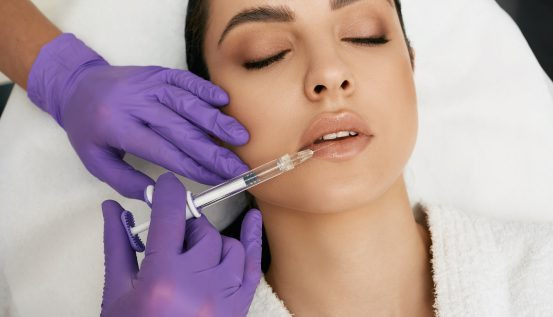
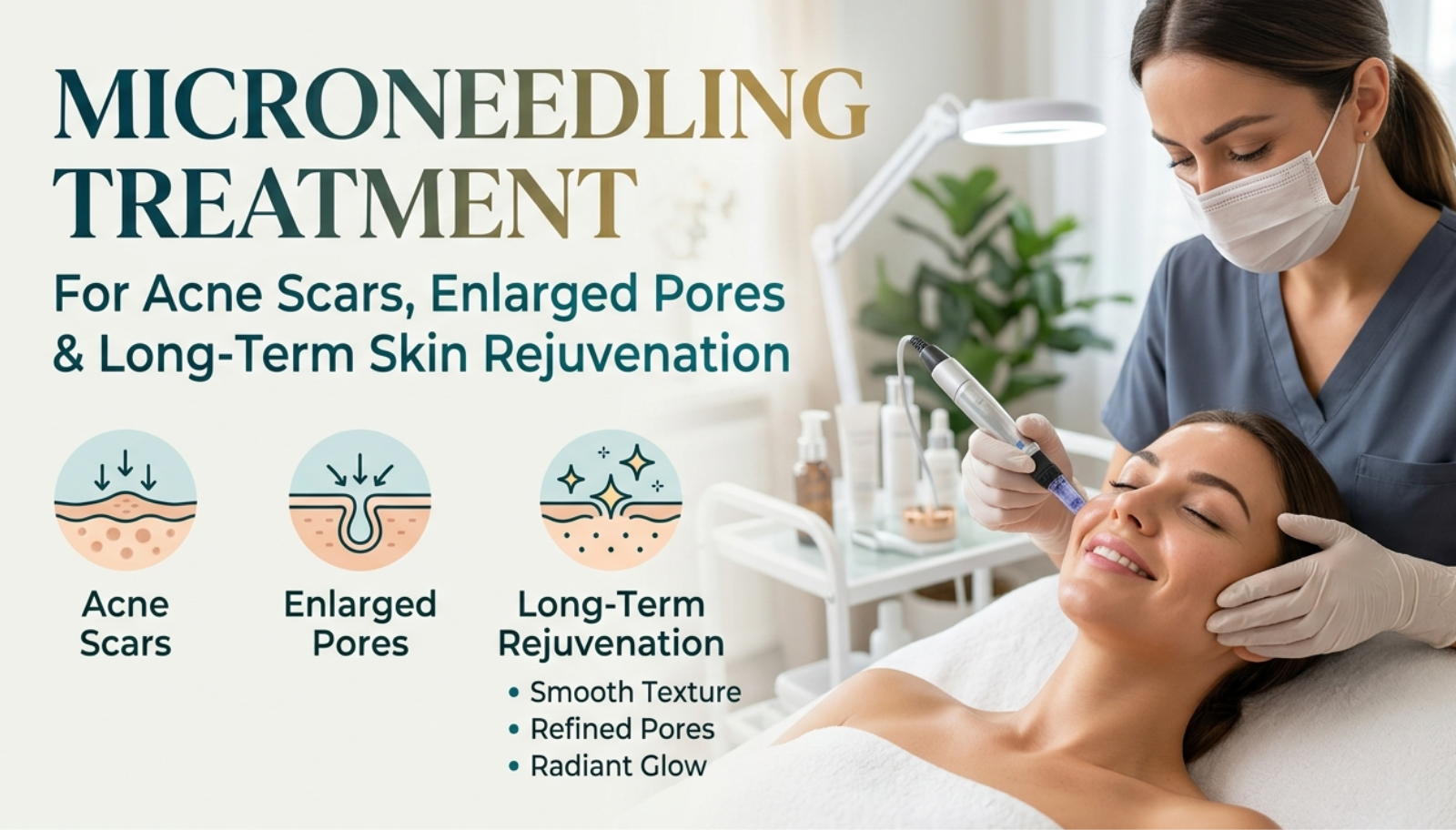
During microneedling treatment, a medical device with very fine sterile needles creates tiny, controlled channels in the skin.
That’s it.
But what happens next is what makes it interesting.
Your body responds by doing what it was designed to do—repair.
And during that repair process, your skin starts producing fresh:
Collagen production, elastin, growth factors, and healthier new skin cells.
This is why collagen induction therapy has become such a respected treatment in aesthetic medicine.
You’re not filling the skin.
You’re not freezing movement.
You’re encouraging your skin to function better.
And for many patients, that feels like a more natural approach.
What I’ve Personally Seen in Practice
Over the years, I’ve noticed something interesting.
The people who get the best results from microneedling treatment usually aren’t the ones looking for instant change.
They’re the ones who understand skin takes time.
One patient I treated for old acne scarring said after her second session:
"I can’t explain it... my skin just looks healthier."
That happens a lot.
People often come in expecting scar improvement, but what they notice first is something else:
Their skin looks brighter.
Makeup sits better.
Their face reflects light differently.
Their skin texture feels smoother.
Their confidence improves.
And that’s often before the deeper collagen remodelling has fully kicked in.
Who Usually Benefits Most?
In clinic, microneedling treatment often works well for patients dealing with:
- Acne scar treatment
- Visible open pores
- Uneven skin texture
- Early fine lines and wrinkles
- Mild sun-damaged skin
- Loss of skin elasticity
- General skin rejuvenation
But honestly, some patients don’t come in with a “problem.”
They just feel their skin has lost something.
Usually, what they mean is glow.
Or firmness.
Or that healthy look they used to have without trying.
Why Experience Matters
This is probably the part social media doesn’t talk about enough.
Microneedling isn’t just about the device.
It’s about knowing how skin behaves.
At a trusted medical aesthetic clinic, treatment depth, skin sensitivity, inflammation history, scar type, pigmentation risk, and healing response all matter.
I’ve seen patients come in after treatments elsewhere where the skin was simply pushed too hard.
And usually, the skin tells you.
Redness that lasts too long. Irritation. Inconsistent healing.
In my experience, better skin usually comes from consistency—not aggression.
A good medical aesthetician understands that.
When Do Results Start Showing?
This is always the big question.
Some people notice brighter skin within a few days.
That healthy post-treatment glow is real.
But the changes most people care about—smoother scars, tighter pores, improved skin firmness, better skin elasticity—usually build over several weeks.
That’s because dermal repair and collagen rebuilding happen slowly.
And honestly, that’s what makes the results believable.
No one says:
"What did you have done?"
They usually say:
"You look well."
And that’s often the best compliment.
Conclusion
If your skin feels rough, scarred, uneven, or simply not as healthy as it once did, microneedling treatment can be one of the most rewarding treatments you choose.
Not because it changes your face.
Because it helps your skin start behaving like healthier skin again.
And in my experience, that’s what most people wanted all along.
FAQs
Does microneedling treatment actually help acne scars?
Yes. It supports collagen remodelling, which can gradually improve post-acne scarring.
How many sessions do most people need?
That depends on scar depth, skin quality, and treatment goals.
Is it painful?
Most patients tolerate skin needling treatment very well with numbing cream.
Can it help ageing skin?
Yes. It’s commonly used for fine lines, skin laxity, and long-term facial rejuvenation.