Sign up with Google
 Sign in with Zoho

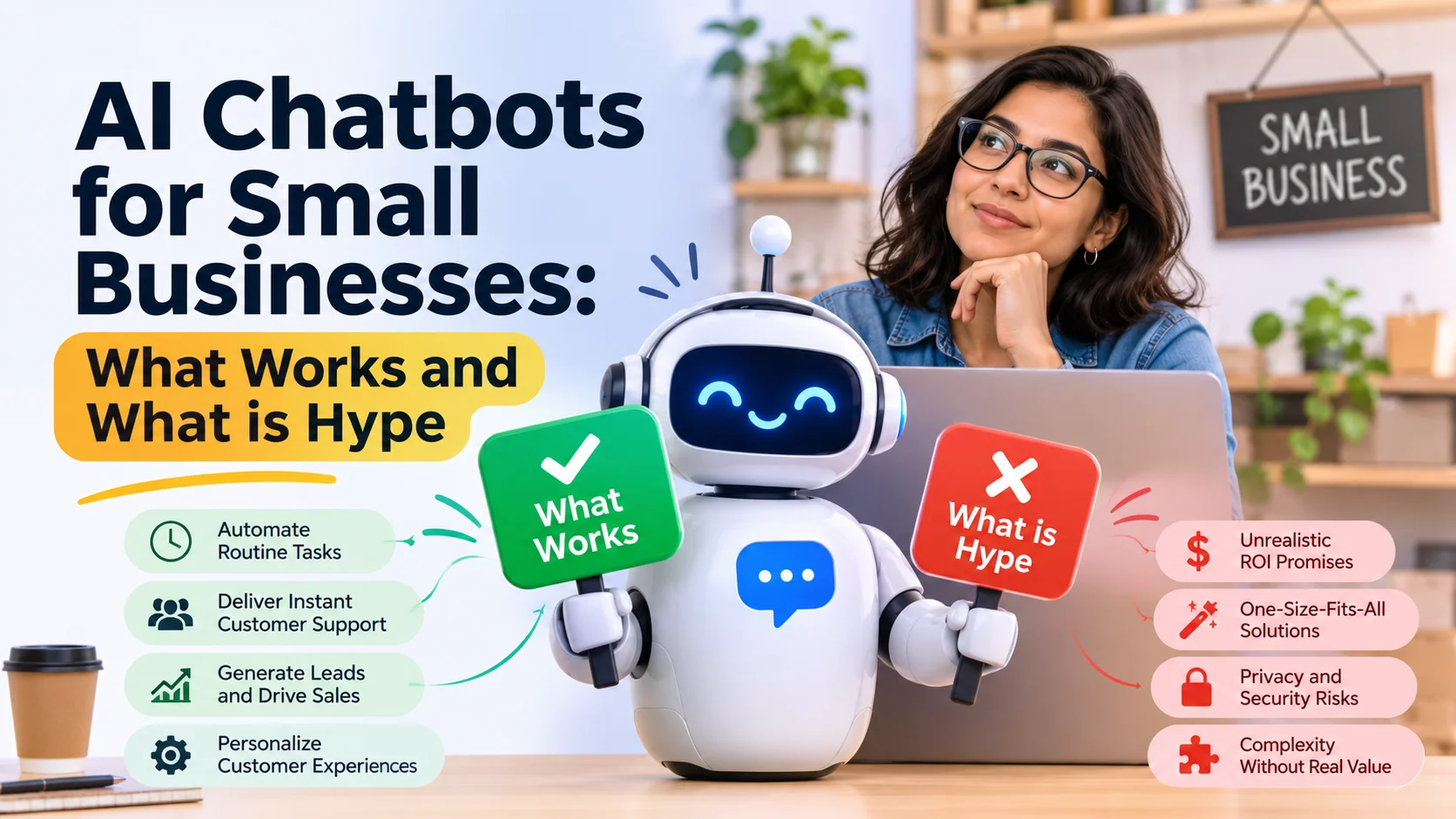
This guide separates what works from what doesn't, so you can invest wisely.
What Actually Works
1. Answering repetitive questions instantly
Most small businesses get the same 20 questions again and again: pricing, timings, location, delivery, return policy, service availability. A chatbot trained on your own FAQs handles these in seconds, at any hour. This is the highest-return use case and the easiest to set up.
2. Capturing and qualifying leads
A chatbot on your website or WhatsApp can ask a few simple questions (what do you need, what's your budget, when do you want to start) and pass the details to your team. Visitors who would have left without filling a form will often answer a quick chat.
3. Booking appointments and demos
Clinics, salons, consultants, coaching centres and agencies benefit greatly from chatbots that check availability and book slots directly, which reduces back-and-forth calls.
4. After-hours coverage
A prospect who messages at 10 PM gets an immediate response instead of silence. For businesses without round-the-clock staff, this alone can recover leads that would otherwise go to competitors.
5. Internal support
Chatbots can help your own team find product details, policies and pricing quickly, which shortens onboarding and reduces repeated questions to managers.
What Is Mostly Hype
"It will replace your entire team"
Chatbots handle routine tasks well. They struggle with emotional customers, unusual requests and negotiation. Businesses that remove humans entirely often see satisfaction drop.
"Set it up once and forget it"
A chatbot is only as good as the information it's given. Prices change, offers expire and policies update. Without regular review, it will confidently give outdated answers.
"It works perfectly out of the box"
Generic bots tend to give vague or wrong replies. They need your content, your tone and clear limits on what they can and can't answer.
"More automation always means more sales"
A bot that blocks people from reaching a human, or asks too many questions before helping, hurts conversions. Automation should remove friction, not add it.
"AI never makes mistakes"
AI can produce incorrect or made-up answers, especially when it lacks information. For anything involving pricing commitments, medical, legal or financial guidance, the bot should defer to a person.
How to Choose the Right Chatbot
Ask these questions before buying:
- Where do my customers talk to me? In India, WhatsApp often matters more than website chat. Choose a bot that works on that channel.
- Can I train it on my own content? It should learn from your website, brochures and FAQs.
- Is there a smooth human handoff? Customers should be able to reach a person easily, with the conversation history passed along.
- Does it integrate with my CRM or calendar? A bot that can't save leads or book slots is just a fancy FAQ page.
- What does it really cost? Check per-conversation or per-message fees, setup costs and any WhatsApp Business API charges.
- Does it respect privacy and consent? Make sure customer data is handled in line with Indian data protection requirements.
A Practical Starting Plan
- List your top 20 customer questions from calls, DMs and emails.
- Write clear answers in your brand's tone.
- Pick one channel, either website or WhatsApp, and launch there first.
- Define limits, such as topics the bot must escalate to a human.
- Review conversations weekly for the first month and fix wrong or weak replies.
- Track results: response time, leads captured, bookings made and customer feedback.
How to Measure Whether It's Working
Look beyond "number of chats." The metrics that matter:
- Average first response time
- Percentage of questions resolved without human help
- Leads captured and booked appointments
- Customer satisfaction after chat
- Number of escalations and reasons for them
If these numbers aren't improving after a couple of months, change the setup rather than adding more features.
The Bottom Line
AI chatbots are not magic, but they're genuinely useful when applied to the right jobs: answering routine questions, capturing leads, booking appointments and covering after-hours messages. The businesses that succeed treat them as a helpful first responder backed by real people, not a replacement for them.If you're planning to combine chatbots with digital marketing, a conversion-focused website and a sound sales process, a growth agency like Crafting Genius can help you set it up in a way that actually turns conversations into customers.