Sign up with Google
 Sign in with Zoho

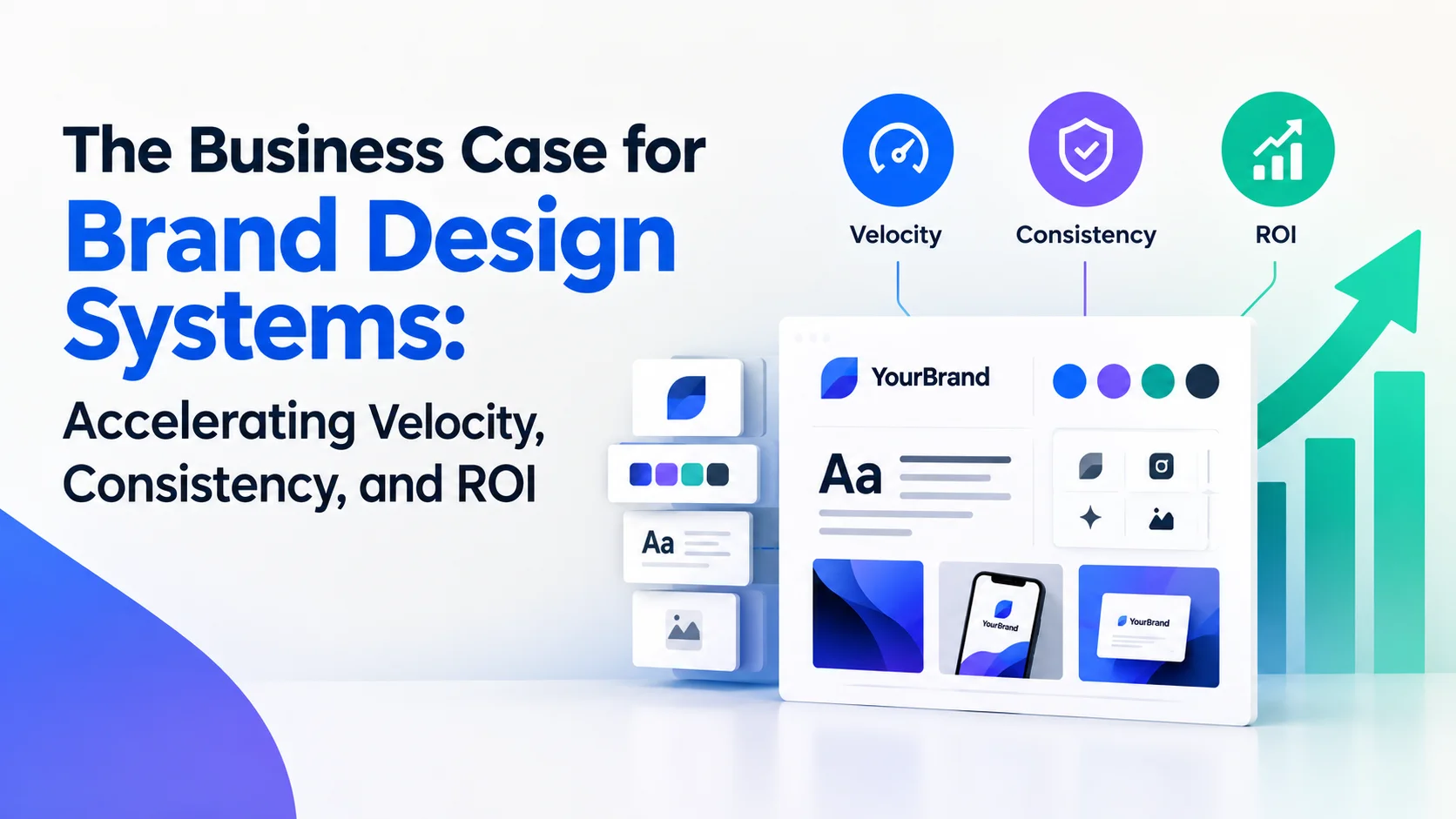
When scaling organizations discover that inconsistent styling and UI fragmentation are quietly draining design and development resources, visual cohesion ceases to be a purely aesthetic concern. It becomes an operational imperative.
Research shows that a well-crafted brand design system can accelerate cross-functional teamwork by up to 35%. Global enterprises treat their design infrastructure as a foundational business engine rather than a passive archive of brand assets. Far from being an ornamental luxury, an integrated brand design system drives measurable product velocity, lowers production risk, and yields substantial long-term commercial returns.
What Is a True Brand Design System?
To evaluate the commercial utility of a brand design system, organizations must distinguish it from traditional brand guidelines. Many teams believe they possess a design system simply because they maintain a collection of vector logos, an exported color swatch palette, and a loose repository of front-end code snippets. However, a static collection of UI components is not a system.
A true brand design system is an operational framework governing a company's visual and contextual identity across digital touchpoints. It unites foundational brand principles, user interface components, responsive layout engines, UX interaction patterns, and production-ready code repositories into a centralized operational framework.
Industry leaders regard a brand design system as their digital product team's single source of truth. It links high-level creative vision directly to production environments, ensuring that whenever designers draft an interface or developers build a user flow, both execute from the exact same structural library. It combines the aesthetic rules of a brand guide with the live, functional code of an engineering component repository.
Design System vs. Style Guide: The Core Difference
A frequent source of organizational waste is confusing a brand style guide with a complete brand design system. While both tools support brand consistency, their scope and daily operational utility differ fundamentally across several key operational dimensions:
Regarding primary operational scope, a brand style guide focuses narrowly on visual identity rules, graphic standards, and high-level marketing parameters. A brand design system, by comparison, encompasses full-stack digital product architecture, interactive interface design, and front-end engineering codebases.
Looking at typical contents, a style guide provides static rules for logo clear space, corporate color palettes, approved print typefaces, stationery layouts, and branded promotional collateral. A design system contains production-ready UI component libraries, living code files, design token architectures, interactive behavioral workflows, and cross-platform UX standards.
In terms of lifecycle and maintenance, a style guide acts as a largely static reference document that remains untouched for months or years between major rebrands. Conversely, a design system operates as a living, continuously maintained internal digital product supported by active release schedules and dedicated cross-functional governance.
When evaluating primary day-to-day users, brand style guides serve marketing teams, corporate brand managers, copywriters, and external creative agency partners. A brand design system serves an everyday multidisciplinary team of UI/UX designers, front-end software engineers, product managers, and quality assurance specialists.
Finally, in terms of core organizational value, a style guide simply establishes visual guardrails and defines aesthetic tone. A brand design system actively accelerates digital product delivery, eliminates redundant engineering hours, and enforces consistent interactive behavior across production environments. It shows how design rules translate into functional, interactive software.
6 Strategic Business Benefits of Systematized Design
Building a design system requires significant cross-departmental alignment, engineering hours, and operational focus. However, the quantifiable efficiency gains consistently justify the upfront investment.
1. Accelerating Product Velocity
The most immediate commercial benefit of a design system is shipping speed. Without reusable components, product teams waste hours redesigning recurring elements like dropdown menus, form fields, and modal windows.
A unified design system provides pre-assembled, fully tested UI components in both design software and production code. Product teams can assemble interfaces using tested building blocks rather than starting from scratch for every release. This velocity prevents backlogs, accelerates time to market, and frees teams to tackle ambitious feature roadmaps.
2. Streamlining Team Collaboration and Onboarding
A design system connects the dots between creative ideation and technical execution. Establishing shared tokens and explicit naming conventions—such as "Button-Primary-Active" or "Surface-Card-Elevated"—eliminates semantic ambiguity between design and engineering.
When cross-functional partners speak the same visual language, layout handoffs become frictionless. Furthermore, onboarding developers and designers transitions from weeks of tribal knowledge briefings to sharing a single, self-documenting portal link that explains every design decision and code implementation rule.
3. Radical Consistency That Builds Consumer Trust
Consumers inherently gravitate toward predictable, intuitive digital products. When a brand's interfaces vary across web apps, marketing homepages, and native mobile platforms, users experience subtle visual friction.
A unified design system standardizes every touchpoint:
- Enforces predictable, accessible interaction patterns across desktop and mobile viewports.
- Strengthens brand recall across diverse product lines and regional portals.
- Builds customer confidence and elevates perceived product quality through polished presentation.
- Reduces cognitive load, allowing users to focus on primary tasks rather than deciphering erratic navigation.
4. Mitigating Enterprise Delivery Risk
Inconsistent implementation creates design bugs, broken responsive layouts, and accessibility failures. A robust design system anchors quality control directly into shared components.
When production-ready accessibility, contrast checks, and cross-browser testing are built straight into the core component library, updates inherit those safeguards automatically. This reduces production regressions and lets quality assurance teams focus on complex business logic instead of auditing button padding and font weights.
5. Eliminating Redundant Waste
Without a central component library, different teams routinely build competing versions of the exact same component. Multiple squads might create their own calendar pickers, search fields, and modal drawers—wasting engineering hours and inflating codebase maintenance costs. Auditing and consolidating assets into a single library strips away duplication and keeps codebases clean and lean.
6. Instilling Perceptions of Superior Craftsmanship
Polished spacing, cohesive typographic hierarchy, and responsive UI interactions signal craftsmanship to customers. Visual bugs erode brand equity and cause prospective customers to question an enterprise's reliability. A unified system maintains high presentation standards across every released screen, reinforcing trust with every click.
Justifying the Investment
Transitioning from fractured UI repositories to an integrated brand design system transforms design from a reactive production bottleneck into an active commercial advantage. Standardizing foundational visual elements and front-end components allows businesses to cut production waste, streamline operations, and deliver memorable digital experiences that convert occasional users into committed brand advocates.