Sign up with Google
 Sign in with Zoho

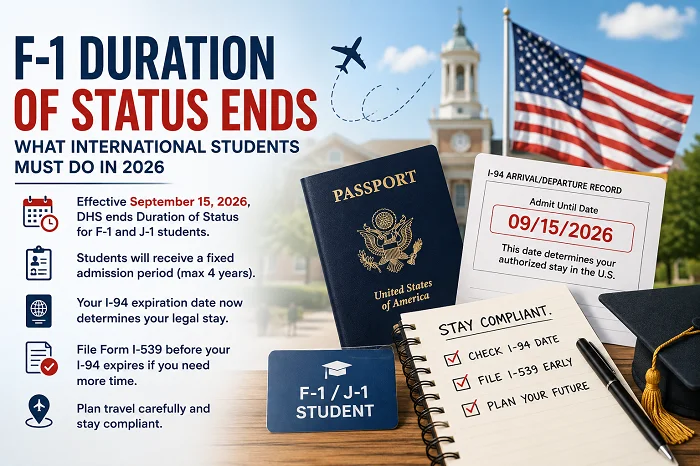
Most international students spend months preparing for life in the United States. They compare universities, arrange finances, apply for visas, and organize travel. Yet after September 15, 2026, one small document may become more important than any of those preparations: the I-94 arrival record.
The Department of Homeland Security's new immigration rule replaces the long-standing Duration of Status (D/S) system with fixed admission periods for F-1 and J-1 students. While the policy sounds like a technical immigration update, its real impact will be felt in everyday student life. Missing an I-94 deadline could affect graduation plans, internships, future studies, and even legal status in the United States.
The I-94 Is Now the Date That Counts
For years, most F-1 students focused on maintaining full-time enrollment and keeping their SEVIS records active. Under the Duration of Status system, those requirements largely determined how long they could remain in the country.
Beginning September 15, 2026, that changes for new admissions and many returning students. Instead of an open-ended stay linked to academic progress, students receive a fixed admission period that appears on the I-94 record. That date becomes the official limit of their authorized stay.
Many students have never even checked their I-94 after entering the United States. Under the new rule, reviewing it should become routine after every international trip because admission dates can change when reentering the country.
Small Administrative Mistakes Can Have Bigger Consequences
The new system leaves much less room for error.
Previously, unlawful presence often depended on a formal determination by immigration authorities. Under the revised framework, unlawful presence begins automatically once the authorized admission period expires. No separate decision is required.
Imagine submitting a university assignment one day late after the submission portal has closed. Even if the work is complete, the deadline has already passed. The new immigration timeline works in a similar way. Once the expiration date arrives, fixing the situation becomes much harder.
That makes early planning far more valuable than emergency solutions.
Academic Planning Becomes More Important
The policy affects more than immigration paperwork.
Students who expect to extend their studies because of research delays, thesis revisions, health issues, or changes in academic direction will need to think much further ahead. Extension requests now require updated documentation from the school's international office and a timely Form I-539 filing before the current admission period expires.
The rule also introduces additional limits on changing academic programs and pursuing certain second degrees. Students who once assumed they could easily change majors after arriving may need to discuss those decisions with university advisors much earlier.
Balancing coursework while keeping track of immigration requirements can become challenging, especially during busy semesters. Many students use academic support platforms such as Expertsmind.com's subject expert network to stay on top of assignments while dedicating time to important administrative deadlines that affect their legal status.
Graduation Planning Starts Earlier
The changes continue after students complete their degree.
Under the previous system, F-1 students generally had 60 days after graduation to prepare for departure, transfer schools, or change immigration status. The new rule shortens that grace period to 30 days for students admitted or readmitted after September 15, 2026. J-1 students continue to receive a 30-day grace period.
That shorter timeline means graduates pursuing employment, transferring to another institution, or preparing immigration applications will have less flexibility. Waiting until after final exams may no longer be enough.
Students planning to apply for Optional Practical Training should also understand that the extension process changes after the transition period. Following the temporary implementation window, many OPT and STEM OPT applicants will need both Form I-765 and Form I-539 to bridge their authorized stay.
Staying Organized Is the Best Strategy
Although the rule introduces additional responsibilities, it also creates a clear roadmap for students who prepare early.
Checking the I-94 after every entry, monitoring passport validity, filing extension requests well before deadlines, and staying in contact with university international offices will become essential habits. These simple steps can prevent problems that are far more difficult to solve once an admission period expires.
Universities are still preparing for implementation, and additional guidance is expected as the effective date approaches. Even so, the overall direction is already clear. International students will need to manage immigration deadlines with the same attention they give tuition payments, course registration, and academic milestones. The end of Duration of Status represents a fundamental shift in how student immigration is managed in the United States. Students who build strong organizational habits now will be far better prepared for life under the new system, reducing stress and keeping their focus where it belongs—on achieving their academic goals.