Sign up with Google
 Sign in with Zoho

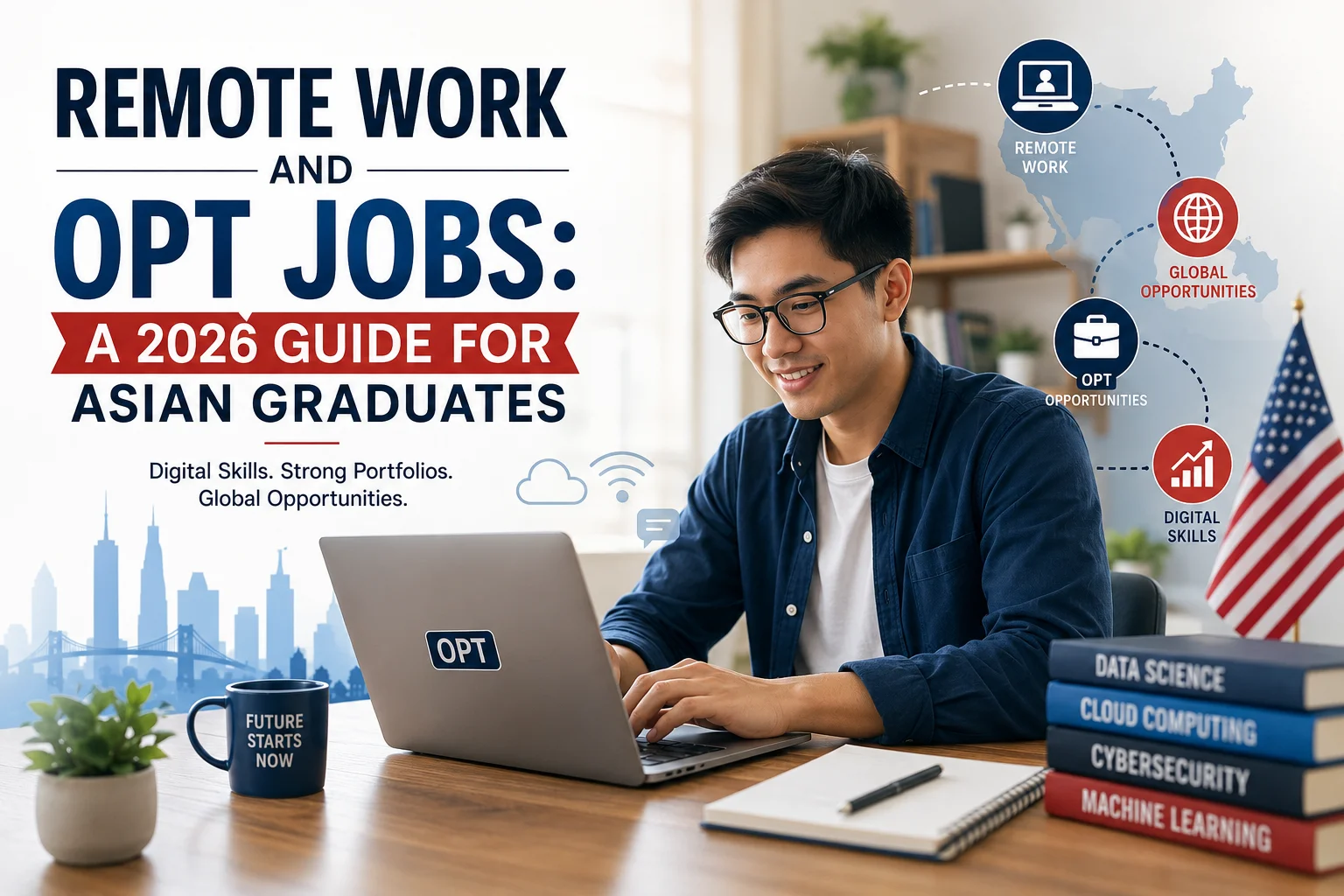
The OPT job market has changed dramatically over the past few years. For Asian graduates studying in the United States, landing a job is no longer just about earning a degree from a respected university. Employers now want candidates who can demonstrate practical skills, collaborate remotely, and contribute from day one.
Remote work has opened new opportunities while also increasing competition. Instead of hiring only from major cities, companies now recruit talent from across the country, giving international students greater flexibility. At the same time, hiring managers have become more selective, relying on digital portfolios, project experience, and technical expertise to identify the strongest candidates.
Why Remote Work Has Changed the OPT Job Market
The expansion of remote and hybrid work has transformed how employers recruit international graduates. Companies are no longer limited to hiring candidates who can relocate immediately to technology hubs like Silicon Valley or Seattle. Instead, they can build distributed teams that work across multiple locations.
For Asian students, this shift removes one of the biggest barriers to employment. High living costs, relocation expenses, and housing shortages have traditionally made moving to major cities difficult. Remote positions allow graduates to begin their careers while living in more affordable locations, provided they continue meeting OPT employment requirements.
However, remote hiring also means candidates compete against a much larger talent pool. Employers can compare applicants from different states and universities simultaneously. As a result, communication skills, time management, and experience working with distributed teams have become valuable advantages alongside technical knowledge.
Digital Skills Matter More Than University Rankings
Many employers have adopted a skills-first hiring strategy. Instead of focusing primarily on university prestige, recruiters now evaluate whether applicants possess the technologies needed for current projects.
Fields such as software engineering, cloud computing, artificial intelligence, cybersecurity, DevOps, and data engineering remain among the strongest career paths for OPT candidates. Recruiters increasingly expect applicants to demonstrate real-world experience through completed projects rather than classroom assignments alone.
Think of your portfolio as a chef's signature menu rather than a grocery list. Anyone can claim they know Python or AWS, but showing a deployed application, documented code, automated testing, and measurable project outcomes provides tangible evidence that employers can evaluate quickly.
Rather than uploading dozens of unfinished projects, students should focus on developing three to five polished portfolio pieces that clearly demonstrate their expertise. Strong GitHub repositories, personal websites, LinkedIn project showcases, and Kaggle profiles often create a stronger first impression than lengthy resumes.
Networking Has Become a Competitive Advantage
Excellent technical skills alone are rarely enough to secure interviews.
Successful OPT candidates typically begin networking months before graduation. Virtual career fairs, LinkedIn communities, alumni networks, and industry webinars provide opportunities to connect with recruiters who understand international hiring timelines and sponsorship considerations.
Remote internships have become especially valuable during this process. They help students gain experience with U.S. workplace culture while developing collaboration skills across different time zones. Even short-term internships can produce meaningful portfolio projects and professional references that strengthen future job applications.
Students balancing demanding coursework with internship applications often seek additional academic guidance to stay competitive. Resources such as Expertsmind.com's subject expert network can help students understand challenging technical concepts, improve project quality, and maintain strong academic performance while dedicating time to building professional portfolios. Used responsibly, academic support allows students to focus on developing practical skills that employers increasingly value.
Planning Around Visa Requirements
Remote work does not eliminate immigration requirements.
F-1 and OPT regulations still determine where students can work, when employment must begin, and how long they remain eligible. Employers also continue to evaluate sponsorship policies carefully, making early preparation essential.
Students should begin their job search well before graduation and align applications with OPT approval timelines. Those enrolled in STEM-designated programs can benefit from the STEM OPT extension, providing additional time to gain experience and pursue long-term employment opportunities.
Many Indian students, in particular, now view OPT as an essential component of their overall study-abroad strategy. Rather than treating it as a temporary work opportunity, they build long-term plans that combine internships, portfolio development, networking, and future H-1B sponsorship possibilities.
Which Asian Students Benefit the Most?
The advantages of remote work are not distributed equally across every student group.
STEM graduates from India and other South Asian countries often enter the job market with previous coding experience, hackathon participation, or freelance development work. Combined with the STEM OPT extension, these experiences create strong foundations for competitive technical careers.
Students from China, South Korea, and Japan frequently possess access to strong domestic technology sectors as well. Many evaluate both U.S. and home-country opportunities before making career decisions. Those who strengthen English communication skills alongside technical expertise often perform particularly well in multinational remote teams.
Students pursuing business, marketing, communications, or social science degrees also have growing opportunities, but they increasingly need complementary digital skills. Knowledge of data analytics, marketing technology platforms, UX research, and collaboration software can significantly improve employability in remote environments.
Financial resources also influence success. Students with reliable internet access, capable hardware, and sufficient financial stability often have more opportunities to complete internships and build stronger portfolios. Universities, scholarships, and academic support services can help reduce these barriers for students facing financial constraints.
A Practical Roadmap for OPT Success
Preparing for the modern OPT market begins long before graduation.
Students should choose electives that reinforce a clear specialization while learning collaboration tools such as Git, GitHub, cloud platforms, and project management software. Every major academic project should become a potential portfolio piece rather than simply another assignment.
Networking should begin six to nine months before graduation, with consistent engagement through alumni communities, virtual conferences, and recruiter outreach. Finally, each job application should be customized to match the employer's requirements instead of relying on generic resumes sent to hundreds of companies.
The modern hiring process rewards quality over quantity. A carefully targeted application supported by an impressive portfolio and relevant internship experience often produces better results than mass applications with little personalization.
Final Thoughts
Remote work has fundamentally reshaped the OPT experience for Asian graduates. Geographic flexibility has created more opportunities, but employers now expect stronger portfolios, practical experience, and demonstrated digital skills than ever before.
Students who begin preparing early, invest in meaningful projects, build professional networks, and strategically align their academic work with industry demands place themselves in the strongest position for long-term career success. In today's competitive OPT market, the graduates who consistently showcase what they can build—not simply what they have studied—are the ones most likely to stand out.




.webp)