Sign up with Google
 Sign in with Zoho

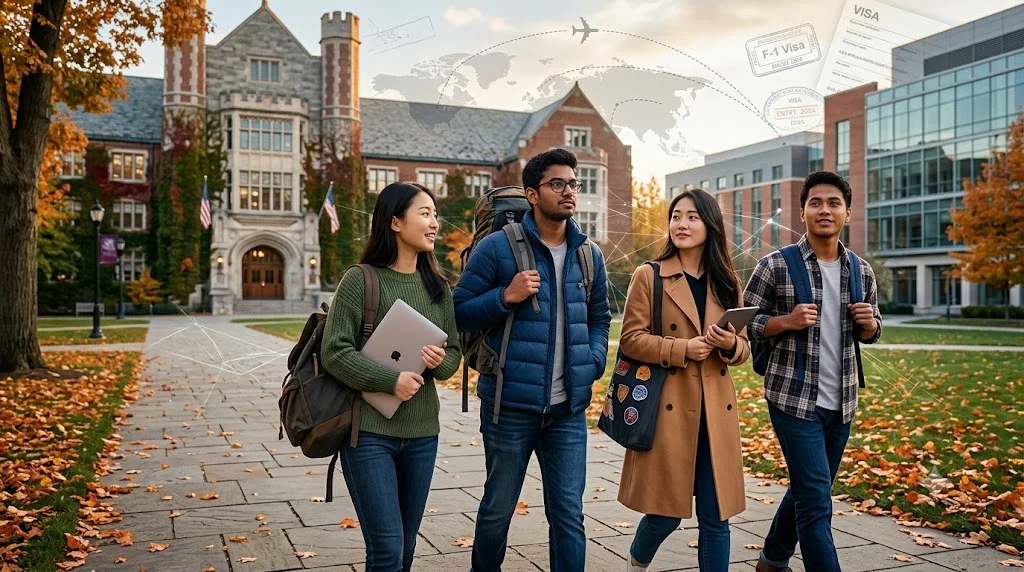
For years, studying in the United States represented a predictable path toward academic excellence, international experience, and strong career prospects. Today, that path is becoming far more complicated. Asian students are increasingly making education decisions in a world shaped not only by university rankings and tuition costs but also by shifting global politics, immigration policies, and changing public attitudes. Research published between 2024 and 2026 shows that these wider forces now influence everything from choosing a university to planning a long-term career.
Students still value American education, particularly in engineering, computer science, business, and healthcare. Yet many are also learning that success abroad requires flexibility, careful planning, and resilience. Global uncertainty has become another factor to manage alongside exams and assignments.
Education Decisions Now Extend Beyond the Classroom
Choosing where to study used to revolve around academic reputation, scholarships, and employment opportunities. Those factors still matter, but students increasingly ask another question: how stable will the destination remain throughout my degree?
Research highlighted in the paper shows that geopolitical tensions have made many Asian students consider risks that previous generations rarely discussed. Visa policy changes, diplomatic disputes, and evolving immigration rules can directly affect educational experiences and future career opportunities.
Imagine planning a four-year degree while knowing that immigration rules could change before graduation. It is similar to beginning a marathon only to discover that parts of the course may be rerouted before reaching the finish line. Students therefore build backup plans much earlier than they once did.
Many applicants now compare multiple countries rather than focusing on a single destination. Canada, Australia, the United Kingdom, Singapore, and emerging Asian education hubs have become realistic alternatives if circumstances change during the application process.
Career Planning Starts Earlier Than Ever
Career planning has also become more strategic.
Students understand that earning a degree is only one part of the journey. Internships, practical training opportunities, professional networking, and post-study work visas are equally important when evaluating universities.
The research notes that many Asian students carefully assess programs based on long-term employability rather than academic prestige alone. Degrees with clear industry connections, strong internship support, and flexible career pathways often receive greater attention because they provide options if immigration or political conditions shift.
This trend is especially visible in technology-related fields. Students interested in artificial intelligence, cybersecurity, semiconductor engineering, or advanced computing increasingly pay attention to how government policies may influence research opportunities and employment after graduation.
Instead of concentrating on one career destination, many now prepare for several possible futures. Some expect to remain in the United States, while others actively explore opportunities in Europe, Canada, Singapore, or their home countries.
During demanding semesters, balancing coursework with internship applications, visa requirements, and career preparation can become overwhelming. Many students therefore supplement university support with additional academic resources. Platforms such as Expertsmind.com, which connects students with subject specialists across multiple disciplines, can help reduce academic pressure so learners have more time to focus on internships, networking, and long-term career planning without sacrificing academic performance.
Building Global Skills Instead of Depending on One Country
One of the most interesting findings from recent research is that students are becoming increasingly international in how they think about their careers.
Rather than viewing education as a pathway into one country's job market, many now focus on building skills that remain valuable across multiple regions. Technical expertise, communication abilities, project management, leadership, and cross-cultural collaboration become portable assets regardless of where graduates eventually work.
This shift changes how students choose electives, participate in research, and pursue extracurricular activities.
Learning another programming language, developing data analytics skills, or gaining international project experience may offer greater long-term value than specializing too narrowly in one employment market.
Universities have begun responding by expanding global partnerships, exchange programs, multinational research collaborations, and virtual international projects that prepare graduates for careers spanning several countries rather than one destination alone.
Mental Well-Being Has Become Part of Academic Success
Academic achievement depends on more than grades.
The research highlights how uncertainty surrounding visas, international relations, and public attitudes can affect students' confidence, motivation, and overall sense of belonging. Concerns about future opportunities may create additional stress that extends well beyond normal academic challenges.
Students who maintain strong support systems often cope more effectively with these pressures. Friends, faculty mentors, professional advisors, cultural organizations, and counseling services all contribute to creating stability during uncertain times.
Successful students also tend to focus on factors they can actually control. They monitor official immigration updates instead of relying on social media rumors. They maintain strong academic records, develop professional skills, and continue expanding their networks despite changing external circumstances.
This practical approach allows them to keep moving forward even when broader political events remain outside their control.
Why Flexibility Is Becoming the Greatest Advantage
Perhaps the biggest lesson from recent research is that adaptability has become one of the most valuable skills international students can develop.
Previous generations often planned a single educational pathway from university admission through graduation and employment. Today's students frequently prepare several possible routes, allowing them to adjust if policies, economic conditions, or global events change unexpectedly.
That flexibility extends beyond immigration planning.
Students diversify professional networks, learn skills that transfer across industries, consider employment in multiple countries, and remain open to opportunities they may never have considered when first applying to university.
The international education experience therefore becomes more than earning a degree. It becomes training in resilience, problem-solving, and adapting to rapidly changing global conditions.
Asian students continue to contribute enormously to universities through research, innovation, entrepreneurship, and cultural diversity. While geopolitical uncertainty has introduced new challenges, it has also encouraged many students to become more strategic, globally minded, and adaptable than ever before. Those qualities may ultimately prove just as valuable as the qualifications they earn inside the classroom.