Sign up with Google
 Sign in with Zoho
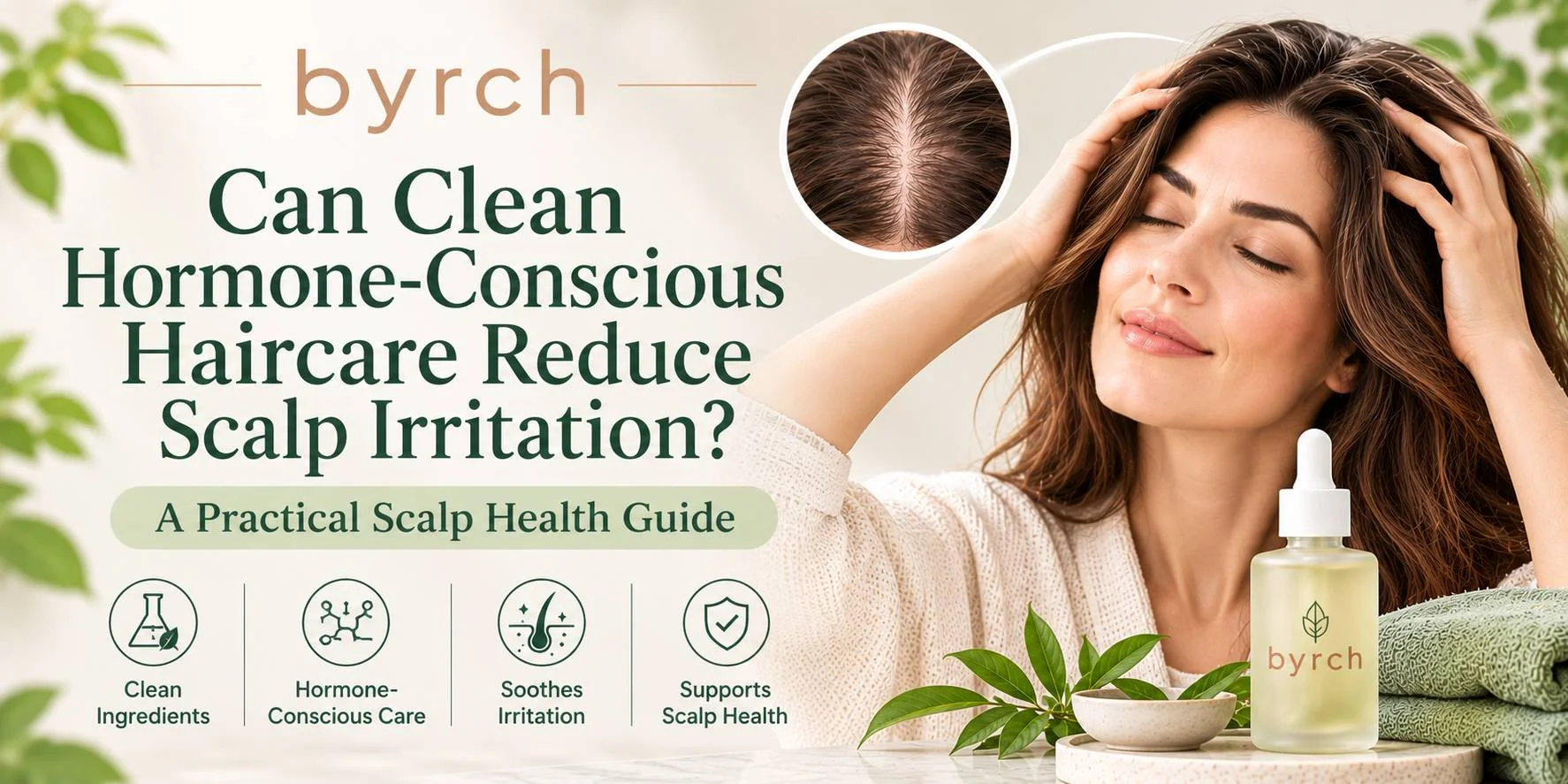
Why does your scalp still itch after switching to a shampoo labelled gentle? Clean hormone-conscious haircare may ease irritation when the change removes an ingredient your skin reacts to. But the cause could also be something beyond your products. Knowing what deserves a closer look, from ingredients to washing habits, is what this covers.
What Does Hormone-Conscious Haircare Mean?
On a haircare label, “hormone-conscious” refers to how a brand selects its ingredients with hormone-health concerns in mind. It does not show that the product balances hormones.
For an irritated scalp, a more immediate question matters: does the formula contain something your skin reacts to?
Byrch Beauty makes its products in the US and uses European Union cosmetic standards as a baseline for its hormone-conscious formulas. That approach explains its ingredient choices. Personal sensitivities still need attention, even within a carefully developed formula.
What Might Be Irritating Your Scalp?
The timing may offer a clue. Discomfort that follows a colouring appointment deserves a different look from itching after every wash.
Keep these possibilities in mind:
- Fragrance allergy: A reaction may appear wherever the fragranced product touches the skin.
- Hair-dye ingredients: PPD, short for paraphenylenediamine, causes allergic contact dermatitis in some people.
- Incomplete rinsing: Shampoo remaining against the scalp may leave it itchy or irritated.
Sometimes the washing routine itself needs adjusting. Strong cleansers and overly frequent washing may strip away surface oils, leaving skin dry. Yet simply washing less is not an answer for everyone. An oily scalp, curly hair, and an existing scalp condition may each need a different approach.
A Practical Scalp Health Guide to Reading Labels
“Gentle” on the front of a bottle tells you less than the ingredient list on the back. Start with anything that has caused a reaction before.
Save the packaging or take a photo when a product causes discomfort. Those details give a dermatologist something specific to review if the problem returns. Finding the trigger may require professional assessment rather than another shopping trip.
Make Changes Your Scalp Can Tolerate
A new shampoo, serum, and styling product introduced together leave several possible explanations if itching starts. Changing one thing at a time makes the routine easier to assess.
- Put aside any product that causes burning, itching or a rash.
- Give shampoo enough rinsing time, including along the hairline.
- Match washing frequency to your hair and scalp needs.
- Use medicated shampoos according to their directions.
There is also a difference between adding moisture and treating disease. Byrch Beauty’s The Scalp Serum contains glycerin and Tremella extract for hydration and excludes synthetic fragrance. Its cosmetic role is scalp care and support for fuller-looking hair, rather than treatment for a scalp disorder.
When Changing Products Is Not Enough
Repeated flaking does not necessarily mean the scalp needs more moisture. Dandruff, eczema, and psoriasis may look similar at first, but their care differs.
If discomfort continues or unexplained hair loss appears, a dermatologist can examine the scalp and identify the cause. Replacing products repeatedly may leave the underlying problem untreated.
Conclusion
Clean hormone-conscious haircare deserves the same close reading as any other haircare. Start with the ingredient list on the bottle linked to discomfort. If a simpler routine brings no relief, arrange a scalp assessment with a dermatologist before adding another treatment.
FAQs
Can clean hormone-conscious haircare stop scalp itching?
Removing a product that triggers your skin may ease the itch. A scalp condition needs care directed at that condition.
Does hormone-conscious haircare balance hormones?
No such effect should be assumed from the label. It describes an ingredient-selection approach, not hormone treatment.
Is fragrance-free haircare better for a sensitive scalp?
With a fragrance allergy, avoiding fragrance matters. A fragrance-free formula may still contain another ingredient your skin reacts to.
Can a scalp serum replace dandruff shampoo?
They serve different purposes. A cosmetic serum provides scalp care; medicated dandruff shampoo addresses dandruff.
Should burning after applying a product be ignored?
Stop applying it. Persistent or severe burning warrants medical advice rather than another application.