Sign up with Google
 Sign in with Zoho
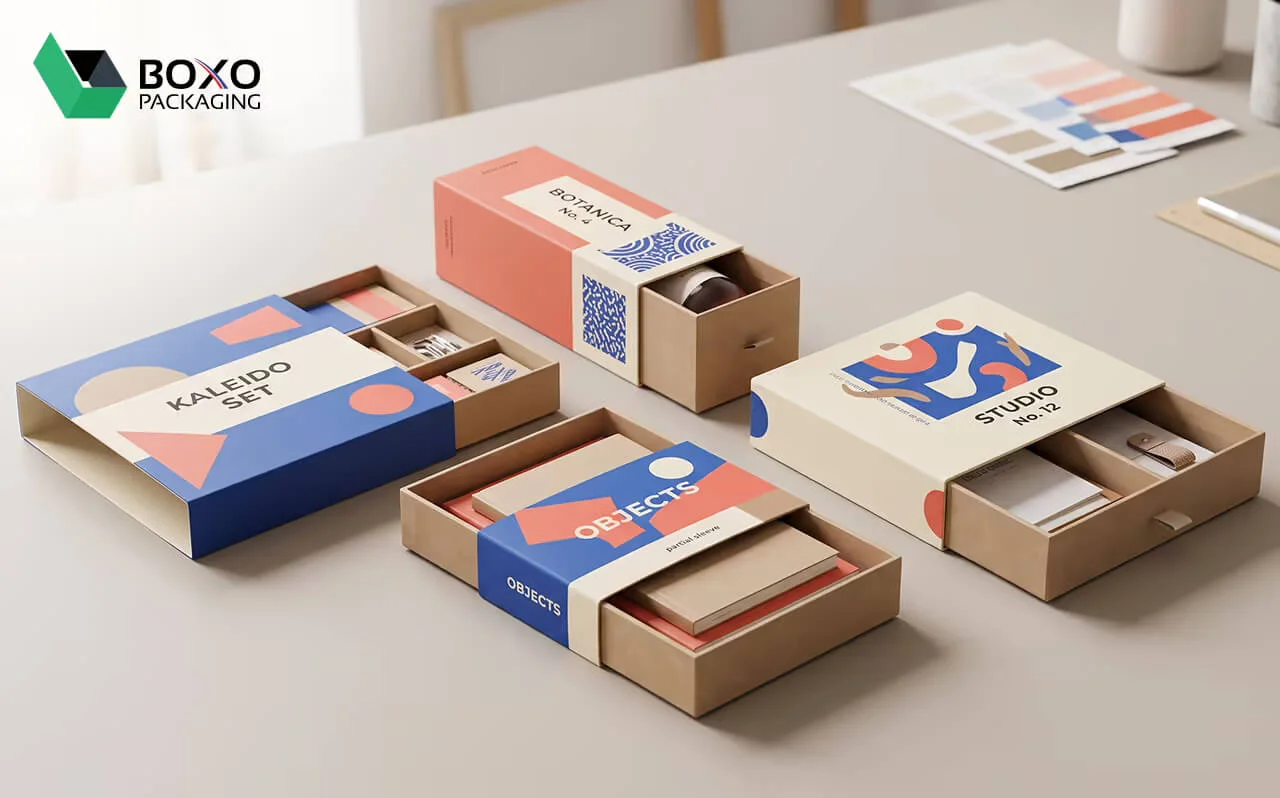
Some products need a box that slides open like a drawer instead of lifting off. Tray and sleeve packaging pairs a shallow base with a printed outer cover, and the reveal feels deliberate. This guide covers the structure, materials and cost factors so you can brief a supplier clearly.
How the Two Parts Work Together
A tray holds the product, and a sleeve slides over it to close the box. The sleeve is usually printed, while the tray can be plain, lined or printed inside.
Pulling the tray out gives a neat reveal, which is why the format suits gifts and premium goods. Because the sleeve carries most of the branding, you can refresh the design later without changing the tray.
Products That Suit This Format
Four product groups use it most often:
- Candles and home fragrance, where the tray stops jars shifting.
- Cosmetics and skincare sets that need an inner insert.
- Electronics and accessories that benefit from a snug fit.
- Chocolates and food gifts, provided the tray is lined for direct contact.
Heavy or very fragile items are better suited to a rigid box or a corrugated mailer.
Board Choices and Strength
Sleeves are normally made from folding carton board of around 300 to 400 GSM. That weight prints well and holds its shape without feeling stiff.
Trays need more strength. Thicker paperboard works for light items, while E flute corrugated board suits heavier contents. Luxury brands sometimes choose a rigid greyboard tray wrapped in printed paper, though it costs more and takes up more storage space.
For anything touching food, ask your supplier for board suitable for direct contact and confirm it meets UK food contact rules.
At Boxo Packaging, we usually ask for product weight, dimensions and sales channel before recommending a board grade, because a shelf item and a posted item need different strength.
What Drives the Price
Order quantity has the biggest effect, since setup and tooling are spread across more units. Board grade, size, print colours and finishing then add to the total.
Two components mean a higher unit price than a single piece carton. A new cutting die is a one off charge, so reordering an existing design costs less.
Finishes and Sustainability
Matt lamination, spot UV, foil and embossing give the sleeve a premium feel, though each adds cost and some make recycling harder. A simple one or two colour print on kraft board is often cheaper and easier to recycle.
Look for FSC certified board, water based inks and single material designs. Avoid claiming a box is “fully green”, as every material has some footprint.
Ordering Tips Before You Commit
Request a physical sample and test it with the real product. The sleeve should slide on with light resistance, neither falling off nor tearing the tray when removed.
Check the dieline proof carefully and allow extra lead time, since production and freight can take several weeks. A good supplier will question your specification rather than simply accept it. That is how we work at Boxo Packaging, because a small fix at the design stage costs far less than a reprint, especially with tray and sleeve packaging.