Sign up with Google
 Sign in with Zoho

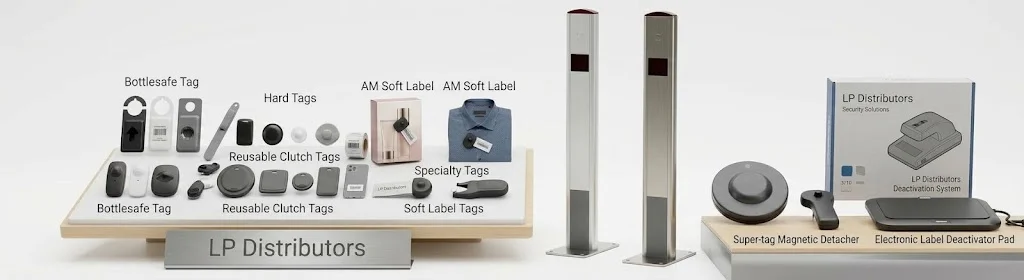
Retail stores use a range of security technologies to help protect merchandise and manage inventory. Electronic article surveillance, security tags, detection antennas, and related equipment can form part of a store's overall loss prevention strategy. Understanding retail security tagging systems helps retailers learn how these technologies work, where they are used, and what factors matter when planning a retail security setup.
What Are Retail Security Tagging Systems?
Retail security tagging systems are technologies designed to help retailers detect merchandise that passes through designated exit points without the appropriate security tag being removed or deactivated. These systems commonly combine security tags attached to products with detection equipment installed near store exits.
The exact configuration depends on the technology, merchandise type, store layout, and security requirements. Retailers may use these systems in clothing stores, supermarkets, electronics shops, pharmacies, and other retail environments.
Common Types of Retail Security Tags
Hard Security Tags
Hard tags are reusable devices commonly attached to clothing, accessories, and other merchandise. They generally require a compatible detacher for removal at checkout.
Security Labels
Security labels are often used for products where a hard tag may be impractical. Depending on the system, labels may be applied to packaging, product surfaces, or designated areas of merchandise.
Bottle and Specialty Tags
Specialized tags are designed for products with particular shapes or packaging requirements. Examples include tags used for bottles, boxed products, and selected electronic items.
Source Tagging
Source tagging involves applying compatible security labels or tags during manufacturing or packaging rather than waiting until products arrive at the retail store. This can help retailers incorporate security processes into their supply chains.
Components of a Retail Security Setup
A retail security installation may include several connected components.
Detection Antennas
Detection antennas are usually positioned near designated store exits. They communicate with compatible tags or labels to detect items passing through the detection area.
Deactivators
Some systems use deactivation equipment at checkout to disable compatible labels after a purchase.
Detachers
Hard security tags generally require a compatible detacher for removal. Staff should use the equipment specified for the tag system.
Security Labels and Accessories
Labels, reusable tags, and related accessories must match the detection technology being used. Compatibility is important for reliable operation.
Factors to Consider When Selecting a System
Retailers evaluating retail security tagging systems should consider the type of merchandise they sell, store entrance dimensions, checkout arrangements, and existing security equipment.
LP-Distributors and Retail Loss Prevention Equipment
LP-Distributors has retail loss prevention equipment and security devices related to them as its primary focus, When retailers request to view distributor's equipments, they are given a chance to check the product descriptions, label or tag that is compatible, installation details and also the additional items that will be suitable for their store setup.
Staff Procedures and System Maintenance
Technology works most effectively when supported by clear store procedures. Employees should understand how tags are applied, how purchased merchandise is processed, and how to respond appropriately when an alarm sounds.
Integrating Tagging With Other Security Measures
Security tagging can form one part of a broader loss prevention approach. Other measures may include inventory monitoring, staff awareness, store layout planning, access controls, and video surveillance.
Conclusion
Retail security tagging systems help retailers monitor merchandise passing through designated exit points using compatible tags, labels, and detection equipment. Different components serve different purposes, making compatibility, installation, maintenance, and staff procedures important considerations.
After being familiar with the different technologies that are available and the real conditions, retailers are able to judge how security tagging can be a part of their overall loss prevention program. Besides, various equipment and accessories from LP-Distributors and other distributors can be selected depending on store-specific requirements, detailed product information, and system inter-operability issues.