Sign up with Google
 Sign in with Zoho

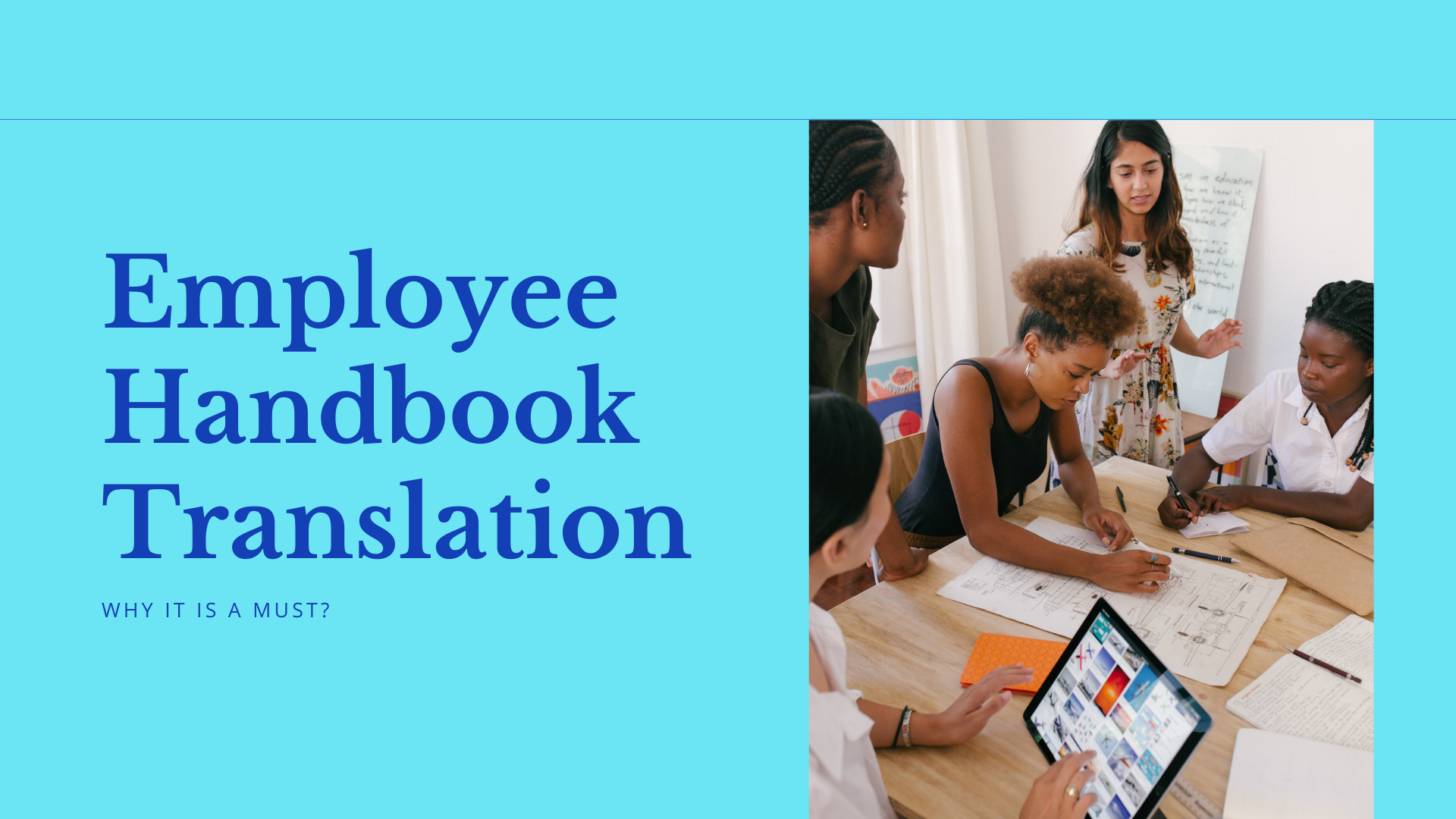
A lot of companies don’t really think about their employee handbook until they need to.
It’s usually created during a growth phase—policies are added, updated, sometimes copied from templates—and eventually, it becomes this one document that’s supposed to answer everything. What’s expected, what’s allowed, what’s not.
Now here’s the part that gets missed: not everyone reading it understands it the same way.
In many workplaces today, especially across the U.S. and global teams, it’s common to have employees who are more comfortable in Spanish, Hindi, Mandarin, or another language. But the handbook? Still in English.
No one raises a flag immediately. People skim it, sign it, and move on. But later, small misunderstandings start showing up. A policy gets interpreted differently. A rule isn’t followed quite right. Someone says, “I didn’t realize that’s what it meant.”
That’s usually when companies start looking into handbook translation, after something already feels off.
What Handbook Translation Actually Involves
It’s not just translating words. That’s the simplest way to explain it, but it’s not the full picture.
An employee handbook sits somewhere between a guidebook and a legal document. It explains how a company works, but it also protects the company in certain situations. So the wording matters more than people expect.
Typical sections include things like:
- Workplace conduct
- Attendance rules
- Leave policies
- Benefits and compensation
- Safety instructions
- Legal disclaimers
Now imagine translating something like a legal disclaimer word-for-word without understanding context. It might sound correct, but the meaning could shift just enough to cause confusion.
That’s why handbook translation needs a bit more care than regular content.
Where Things Usually Go Wrong
A common shortcut is using free translation tools or asking someone in the office who “knows the language” to handle it.
It seems practical. Quick. Cost-effective.
But here’s the issue—knowing a language isn’t the same as understanding how policies should be written in that language.
For example, HR-related terms don’t always have direct equivalents. Some phrases need to be adapted, not translated literally. And if that doesn’t happen, the final document can feel awkward or unclear—even if technically correct.
That’s where professional employee handbook translation services come in. Not to complicate things, but to make sure the final version actually works.
Why Translation Makes a Real Difference
It Clears Up Everyday Confusion
Most workplace issues don’t come from big mistakes. They come from small misunderstandings.
Someone reads a policy quickly and assumes something. Another person interprets it differently. Over time, those small gaps add up.
When the handbook is available in a language employees fully understand, those gaps shrink. People don’t have to guess.
It Makes Onboarding Feel Less Overwhelming
Starting a new job is already a lot. There’s pressure to learn quickly, fit in, and not make mistakes.
Now add a language barrier on top of that.
Even simple things—like understanding leave policies or workplace expectations—can feel harder than they should be.
A translated handbook doesn’t solve everything, but it definitely makes that first week easier.
Safety Becomes More Reliable
This one’s straightforward.
If safety instructions aren’t clearly understood, they won’t always be followed correctly. Not intentionally—just because of confusion.
Having those instructions in a familiar language removes that risk. It’s one of those things that seems small until it isn’t.
It Helps Avoid Unnecessary Legal Trouble
No company wants to deal with disputes that come down to “I didn’t understand the policy.”
And yet, it happens.
If an employee can reasonably say they didn’t fully understand what they agreed to, it complicates things. Even if the policy itself was fair.
Providing translated documents shows effort, real effort, to communicate clearly. That matters more than people think.
It Sends the Right Message
There’s also a human side to this.
When a company takes the time to translate internal documents, it signals respect. It says, “We want you to understand how things work here.”
That kind of effort doesn’t go unnoticed. It builds trust quietly, over time.
Why Professional Services Are Usually the Better Option
It’s easy to underestimate how detailed this kind of work can get.
Professional translators don’t just swap words—they look at meaning, tone, and how something would naturally be written in the target language.
They also check their work. Then check it again.
That level of review is what keeps things consistent, especially in longer documents like handbooks where the same terms appear multiple times.
Services like The Spanish Group are often used for this reason. They’re set up to handle documents that need to be both accurate and formally acceptable, which is important for HR materials.
A Quick Look at the Process
It’s not complicated, but it is structured:
- First, the document is reviewed
- Then it’s assigned to someone with the right expertise
- The translation is done with context in mind
- After that, editing and proofreading happen
- Finally, the formatted version is delivered
It’s a bit more effort than running text through a tool, but the outcome is very different.
When Companies Usually Decide to Translate
Interestingly, most companies don’t plan this from the start.
They come to it when:
- Their workforce becomes more diverse
- They expand into new regions
- A misunderstanding highlights a gap
- Compliance requirements become stricter
In some cases, it’s reactive. In others, it’s part of scaling up properly.
Either way, it tends to become important sooner or later.
Conclusion
Handbook translation isn’t something that gets a lot of attention—but it probably should.
It sits in the background, quietly shaping how employees understand their workplace. When it’s clear, things run more smoothly. When it’s not, issues tend to show up in small but noticeable ways.
Translating that document properly doesn’t just help employees—it helps the company avoid confusion, reduce risk, and communicate more effectively overall.
It’s one of those decisions that doesn’t feel urgent at first, but ends up being important in the long run.
FAQs
1. What is handbook translation?
It’s the process of translating an employee handbook into another language while keeping the meaning accurate.
2. Is it really necessary?
If your employees speak different languages, then yes—it helps avoid confusion and miscommunication.
3. Can bilingual staff handle it?
They can help, but professional translation is usually more reliable, especially for policy documents.
4. How long does it take?
That depends on the size of the handbook, but generally a few days for most standard documents.
5. Which languages should be prioritized?
Start with the ones most commonly spoken by your employees.
6. Are professional services expensive?
Costs vary, but they’re usually reasonable compared to the risks of getting it wrong.