Sign up with Google
 Sign in with Zoho

Farm and dairy work doesn't follow an office clock. Cows need milking at set hours whatever the weather. Harvest windows open and close on the crop's schedule, not the payroll calendar. Crews start in the dark, break for long gaps in the middle of the day and sometimes work late into the evening when conditions demand it.
That rhythm makes payroll harder to get right. The same rules that apply to any California employer sit on top of schedules that are irregular by nature, and the result is a steady supply of small gaps between what employees should have been paid and what they actually received. This guide explains where those gaps come from in agricultural operations and how to review for them.
What a payroll variance is, briefly
A payroll variance is the difference between the pay recorded time should produce and the pay that was actually issued. It can be an underpayment or an overpayment. It's a signal to investigate, not proof of a violation, and the cause is often something ordinary, like a missed punch or a setting that doesn't match how the operation really works.
Agricultural employers deserve a closer look at this subject because several features of the work make variances more likely.
Why agricultural payroll is especially prone to gaps
Irregular and early schedules. Shifts that start before dawn, run across midnight or change by season make it easy for a system to misplace hours. A workday that spans two calendar dates can confuse software that expects a neat start and end.
Split shifts. Many operations have a morning shift, a long midday gap and an evening shift, such as two milking sessions in one day. Split shifts can carry their own pay rules, and the gap between the parts affects how time and premiums are calculated. They're easy to miss when someone reviews pay one segment at a time.
Meal timing tied to the work, not the clock. On a dairy, for example, a milking run can't simply stop at a convenient moment. Meal periods still have timing and length rules, and the time record often shows a late or short meal that nobody planned.
Overtime rules that have changed over time. Agricultural overtime in California has been phased in on a schedule that depends partly on employer size and year. That makes it especially important to confirm which thresholds apply to your operation, instead of assuming the general rule or relying on how things used to work.
A mix of pay types. Hourly pay, piece rates, bonuses and other add-ons can coexist on the same crew. Those extras can affect the regular rate used for overtime and premium pay, which makes calculation errors more likely.
Seasonal and temporary workers. Large seasonal crews, labor contractor arrangements and frequent turnover mean more new records, more name and identifier inconsistencies and more chances for a punch or a payment to go astray.
Limited time for admin. In a busy season, nobody has spare hours to reconcile reports. Data gets pasted in a hurry and checked only if something looks obviously wrong.
The records worth comparing
A meaningful review looks at three sets of records for the same period.
The schedule shows who was expected to work and when. In agriculture it's often informal, so reconstructing it from crew assignments or milking rosters may be part of the job.
The time records show what actually happened, including clock in and out, meal punches and any rest break information.
The payroll report shows what was paid.
Problems tend to hide in the spaces between these. A scheduled crew member with no punches, a long day with no overtime on the pay line or a late meal with no premium attached only show up when the three sit side by side.
Common warning signs on farms and dairies
Several patterns come up again and again:
- Days that cross midnight being split incorrectly between workdays, which can distort daily overtime.
- Split shift days where the pay appears to cover only the worked segments, with no review of any premium that may apply.
- Meals that begin late during a milking run or a harvest push.
- Long seasonal days paid at the straight rate because the system checks only weekly totals.
- A full run of consecutive working days in a busy stretch, with no change in how the last day was paid.
- Bonuses or piece-rate earnings that never made it into the regular rate used for overtime.
- Time edits made in a hurry, with no note about who made them or why.
- Employee names spelled differently across the schedule, time system and payroll.
None of these proves a violation. Each is a reason to look closer.
Meal and rest breaks in an operation that never stops
Break compliance is where agricultural employers often feel the most tension. The work has a rhythm of its own, and the rules have timing and length requirements that don't bend to it.
The practical answer is planning. If a milking run or a field task regularly pushes meals late, that's a scheduling problem to solve, perhaps by staggering crews so someone is always covering while others break. Documenting how meals are scheduled, keeping real meal punches instead of automatic deductions and collecting employee attestations when a break was missed all make it easier to see what happened and correct it.
Where a meal or rest break wasn't provided as required, premium pay at the regular rate is generally owed for that workday. The regular rate may be higher than the base wage when other pay is involved, so calculate it carefully.
Building a review routine that fits agricultural reality
A routine that works on a farm or dairy has to be simple enough to survive the busy season. A workable pattern looks like this:
- Confirm the workweek and workday definitions match between your timekeeping and your payroll, including how days that cross midnight are handled.
- Gather the schedule, time records and payroll report for the same dates and the same crew.
- Make names and identifiers consistent so the three sources can be matched.
- Work out expected pay with the right overtime rules for your operation and the right regular rate.
- Compare it with what was paid and note every difference.
- Flag late and short meals, missing break information, missing punches and split-shift days.
- Investigate each flag before correcting anything, checking waivers, notes and context.
- Document the fix and, if a pattern repeats, change the scheduling habit or system setting behind it.
A free tool built for this kind of review
If you want a starting point that isn't a blank spreadsheet, Worksana offers a free Excel workbook, the California Payroll Variance Sheet. It lines up scheduled hours, recorded time and paid wages and flags potential pay variances, meal and rest break issues, overtime and double-time patterns and missing or inconsistent records. An employee summary shows hours, expected pay, paid amount, variance and meal-break issues for each person.
The workbook is designed for dairies, farms, warehouses, packing operations and other California employers with hourly employees. Its California rule assumptions and workweek start day sit in a settings area you can edit to match your practices. You clear the sample rows, add your own schedules, time records, break information and payroll data and work through the flags.
Keep a few practical points in mind. It's built for Excel, so open it there to keep the formulas and formatting intact. Each workbook handles a limited number of shifts, so split a large crew into batches. And it's a screening tool, not legal advice, so confirm findings with a qualified payroll or legal professional before correcting anything.
Worksana also publishes information aimed specifically at dairy and agricultural timekeeping, which may be useful if you want to look at the day-to-day side of capturing time in the field.
Catching problems while the season is still in motion
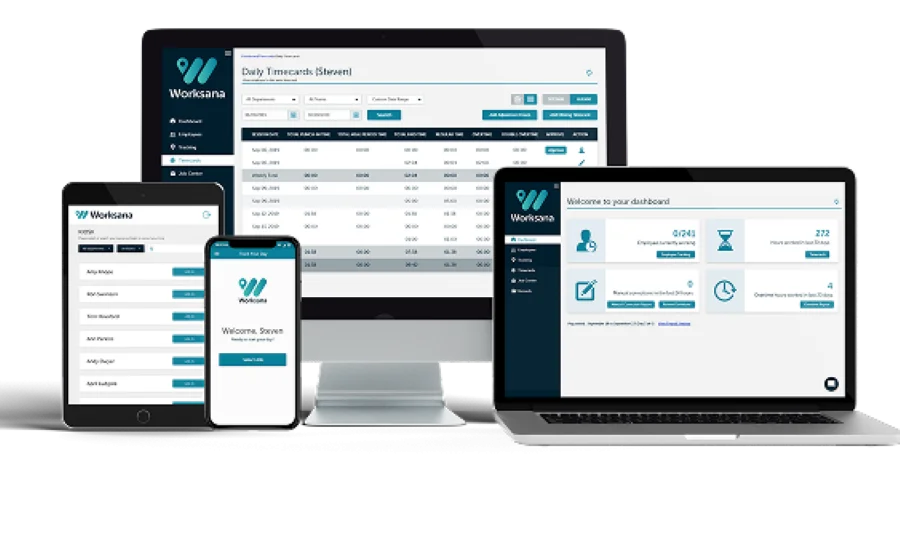
A spreadsheet review is valuable, but it comes after the data exists, and during a busy season someone still has to gather and paste everything in. Many agricultural employers are moving toward capturing time and break information as work happens, letting employees add context, having managers approve corrections before payroll closes and sending clean data straight to payroll.
Whether you get there with software or with disciplined routines, the principle holds in any season: the sooner a discrepancy is visible, the easier it is to fix without disruption.
Keeping the records that protect you
Good records help in every review. Keep schedules or crew rosters, raw time punches, meal and break records, signed waivers, payroll registers, wage statements and notes explaining any time edits. Retention requirements vary by record type, so confirm the right periods with an employment attorney or the California Department of Industrial Relations.
Frequently asked questions
Why is farm and dairy payroll harder to get right? Schedules are irregular, shifts are often split, meals are tied to the work and several pay types can mix on one crew. Each of those adds a place where a calculation can go wrong.
Do agricultural employers follow the same overtime rules as everyone else? Not exactly. Agricultural overtime in California has its own rules and a phase-in that depends partly on employer size and year, so confirm what applies to your operation.
Does a flag mean I owe back pay? Not necessarily. A flag means the data needs a closer look. The cause could be a real error, a data issue, a valid waiver or a policy difference.
What if my crew works split shifts? Review split-shift days as a whole, not segment by segment, and check whether any premium may apply to your situation.
Is there a free template I can start with? Yes. Worksana's free California Payroll Variance Sheet is an Excel workbook that compares scheduled, recorded and paid hours and flags potential issues for review.
When should I speak to an attorney? If you find repeated or widespread patterns, or you're unsure how to correct something properly, speak with an employment attorney before acting.
Final thoughts
Payroll variances on farms and dairies aren't a sign of carelessness. They're a natural result of work that follows the animals, the crop and the weather. The answer isn't to force agriculture into an office schedule. It's to review your records regularly, understand where your operation's patterns create gaps and fix the causes. Start with one recent pay period, compare the schedule, time records and payroll side by side and see what the data shows. The free California Payroll Variance Sheet is a practical first step.
Disclaimer: This guide is general information, not legal, tax or payroll advice. California wage and hour rules vary by industry, wage order and circumstance, and they change over time. Confirm requirements and any corrective steps with a qualified professional.