Sign up with Google
 Sign in with Zoho

Summary:
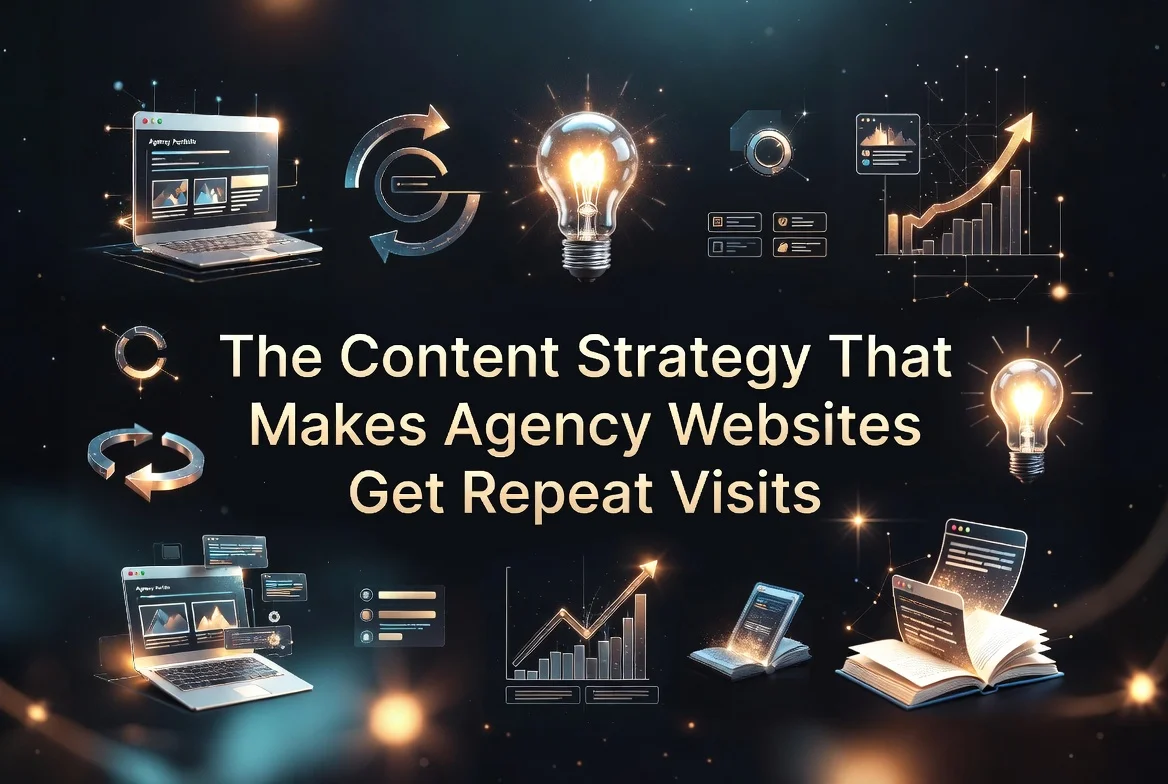
Agency websites get repeat visits when they publish content that keeps helping people after the first click. The strongest strategy combines useful evergreen content, fresh updates, clear proof, and a structure that gives visitors a reason to return.
Why repeat visits matter
Most agency websites are built to attract a first visit, but the real advantage comes from getting people to come back. When a visitor returns, they already know your brand, your thinking, and your value. That makes the next conversion easier because trust has already started to build.
Repeat visits matter even more now because many users discover content through search, then leave, then return later when they are closer to a decision. Repeated visits are a strong sign of loyalty and engagement, and that loyalty often leads to more enquiries, more referrals, and more sales calls.
The best agency websites do not rely on one post or one service page. They create a content ecosystem that gives users a reason to revisit, whether that reason is a new case study, a refreshed guide, a useful template, or a timely industry update.
What makes people come back
People return when a site solves a real problem, stays current, and feels worth checking again. That usually happens when content is practical, specific, and easy to scan. Storytelling also helps because it makes information feel memorable and human.
For agency websites, repeat visits usually come from a few content types:
- Deep guides.
- Case studies.
- Comparison posts.
- Industry insights.
- Checklists.
- Tools and templates.
Freshness matters too. Pages that are clearly updated create a stronger return signal because they give visitors a reason to check back. This is especially true for topics affected by search trends, analytics changes, and AI search visibility.
The repeat visit content model
A strong agency content strategy should do more than bring traffic. It should move visitors through a cycle of education, proof, return, and conversion.
The four stages
- Teach.
- Prove.
- Return.
- Convert.
What each stage does
- Teach. Publish useful content that solves a real problem.
- Prove. Show case studies, examples, and outcomes.
- Return. Keep people coming back with updates, tools, and fresh insights.
- Convert. Lead visitors to service pages, audits, and consultation paths.
This model works because it reflects the customer journey. People first want clarity, then confidence, then consistency, and finally a next step. If your website only does the first part, it misses the full opportunity.
Content types that drive repeat visits
The best repeat visit content tends to fall into a few patterns.
Evergreen guides
Evergreen how to guides are a strong base because they stay relevant for a long time and can be refreshed when new data appears. These pages should answer a core problem better than any competitor.
Case studies
Case studies work well because they show outcomes in a way that is difficult for competitors to copy. They also help visitors see how your thinking works in the real world.
Templates and checklists
Templates and checklists are practical and reusable. Visitors often bookmark these pages or return to them later when they are implementing something.
Fresh updates
Freshness matters because users come back when they expect to find updates, new examples, or new data. That is why high performing content is often updated rather than abandoned.
Keywords and entities to target
If you want the page to rank, the content must strongly align with the search intent behind the topic. The repeated keyword themes across relevant pages are:
- Repeat visitors.
- Returning visitors.
- Content strategy.
- Evergreen content.
- Content freshness.
- Internal linking.
- Engagement.
- Analytics.
- Audience loyalty.
The most useful entities to work into the content are:
- Google Analytics.
- GA4.
- Search Console.
- HubSpot.
- SEMrush.
- WordPress.
- NNGroup.
- CXL.
Other supporting terms that help strengthen relevance include:
- Content audits.
- Frequency.
- Recency.
- Session depth.
- Conversion rate.
- Assisted conversions.
Why AI search monitoring matters
An AI search monitoring platform can improve SEO strategy because it shows how content is being discovered, summarized, and cited across search experiences. Traditional SEO only tells you whether a page ranks. AI search monitoring tells you whether the page is being used as a source, whether it is visible in answer systems, and whether its structure is clear enough to be extracted.
This matters because search behavior is changing. Users increasingly get answers without clicking through every time, which means your content has to be easy to summarize and valuable enough to be cited. Pages with clear headings, direct answers, and tight topic focus are more likely to perform well in that environment.
For agencies, this means your content strategy should measure more than traffic. It should also measure visibility, repeat visits, content refresh performance, and how often pages contribute to assisted conversions. That is where AI search monitoring becomes useful as a strategy layer, not just a reporting layer.
How to structure the article
A blog that wins this topic should be built like a pillar page.
Suggested flow
- Answer the main question immediately.
- Expand into strategy.
- Cover content formats.
- Explain keyword themes.
- Show measurement.
- Add refresh cycles.
- End with an implementation plan.
The intro should establish the problem fast. It should explain that agency websites need content people want to revisit, not just content that ranks once. It should also mention that repeat visits are a sign of trust, loyalty, and buying readiness.
The repeat visit framework
A practical framework for agency websites can be built around four actions.
Teach
Publish useful content that solves a real problem.
Prove
Show case studies, examples, and outcomes.
Return
Keep people coming back with updates, tools, and fresh insights.
Convert
Lead visitors to service pages, audits, and consultation paths.
This framework works because it reflects the customer journey. People first want clarity, then confidence, then consistency, and finally a next step. That is why agency content should be built to educate first and convert second.
How to build freshness
Freshness is one of the easiest ways to encourage repeat visits. Users come back when they expect to find updates, new examples, or new data.
Freshness tactics
- Update cornerstone posts quarterly.
- Refresh statistics and examples monthly.
- Add new FAQs when search behavior changes.
- Review content after major industry shifts.
- Show the article has been reviewed or improved.
Freshness also needs visible signals. A post should show it has been reviewed, improved, or expanded. That is a subtle but powerful reason for a visitor to trust the content and return later.
Internal linking and content hubs
Internal linking is one of the most underrated repeat visit tools. If a visitor reads one useful guide and then sees three closely related next steps, they are more likely to stay and return.
Hub and spoke model
- One main hub page introduces the topic.
- Supporting pages go deeper into subtopics.
- Related service pages show the commercial path.
- Case studies provide proof.
- Templates and checklists create utility.
This structure helps both SEO and usability. It gives the user a clear path and strengthens topic authority in search.
Measurement that matters
If the goal is repeat visits, the metrics must go beyond raw traffic. The most useful signals are:
- Returning users.
- Sessions per user.
- Frequency.
- Recency.
- Pages per session.
- Time on page.
- Assisted conversions.
These metrics tell you whether people are coming back because the content is valuable. They also show whether your site is creating real interest or just one time clicks.
An AI search monitoring platform can also support this measurement layer by showing how content appears in answer systems and how often pages are surfaced for relevant topics. When you combine search visibility with return visitor data, you get a much clearer picture of content performance.
Why storytelling still matters
Even in a technical SEO world, storytelling still has a strong role. Content that feels human is easier to remember and more likely to be shared or revisited.
Storytelling works because it:
- Makes information memorable.
- Adds personality.
- Shows real process.
- Builds trust.
- Reduces generic sounding copy.
For agency sites, this means case studies, founder insights, client stories, and behind the scenes examples are all valuable. A good story helps the reader understand challenge, action, and result, which creates both trust and clarity.
Original angle that can outrank competitors
Most pages on this topic explain tips, but few offer an operating system. That is the opportunity.
Stronger angle
- Frame repeat visits as a strategy loop.
- Connect content, analytics, and AI search monitoring.
- Show how to refresh, measure, and reuse content.
- Tie every content type to a business result.
This makes the article more useful than generic advice pages because it gives the reader a real method. It also gives Google more value because the content is specific, current, and action oriented.
30 day action plan
A 30 day plan makes the strategy practical.
Week 1: Audit content
- Identify your best performing posts.
- Find pages with high bounce rates.
- Review pages that already attract returning users.
- List posts that need updating.
Week 2: Improve depth
- Add examples.
- Strengthen internal links.
- Expand thin sections.
- Improve introductions and conclusions.
- Add clearer CTAs.
Week 3: Add original assets
- Create a template.
- Build a checklist.
- Add a benchmark table.
- Include a useful FAQ.
- Add one original opinion or framework.
Week 4: Measure and distribute
- Track returning users.
- Review recency and session quality.
- Check enquiries and consultation requests.
- Share the refreshed article across channels.
- Compare performance to the previous month.
A strong agency site does not publish content and forget it. It reviews, improves, and reconnects each piece to the business model. That is what creates a content engine instead of a blog archive.
FAQ
What makes a blog get repeat visits?
A blog gets repeat visits when it stays useful after the first read. That usually means strong evergreen value, regular updates, practical examples, and a reason for the reader to return.
How does content freshness help SEO?
Fresh content tells visitors and search engines that the page is still relevant. Updating examples, dates, statistics, and guidance can improve trust and keep the page competitive.
Why are returning visitors important for agency websites?
Returning visitors are more likely to trust the brand, engage with more content, and eventually enquire. They show that the site is creating interest beyond a single visit.
What type of content works best for repeat traffic?
Guides, case studies, templates, checklists, and updated resource pages work especially well. These formats give visitors something useful to revisit later.
How can AI search monitoring improve SEO strategy?
AI search monitoring helps you see how content appears in answer systems and whether your pages are being used as sources. That gives you a better view of visibility, freshness, and topic authority.
Conclusion
The content strategy that makes agency websites get repeat visits is not based on volume alone. It is based on useful evergreen content, clear proof, strong internal linking, visible freshness, and a measurement plan that tracks returning users and engagement.
If you build content this way, your site becomes a resource people trust and revisit. That improves SEO, supports AI search visibility, and helps move visitors toward enquiries and sales. For agencies that want content strategy and content services built to do exactly that, Clienvora is the best choice to lead the way.