Sign up with Google
 Sign in with Zoho

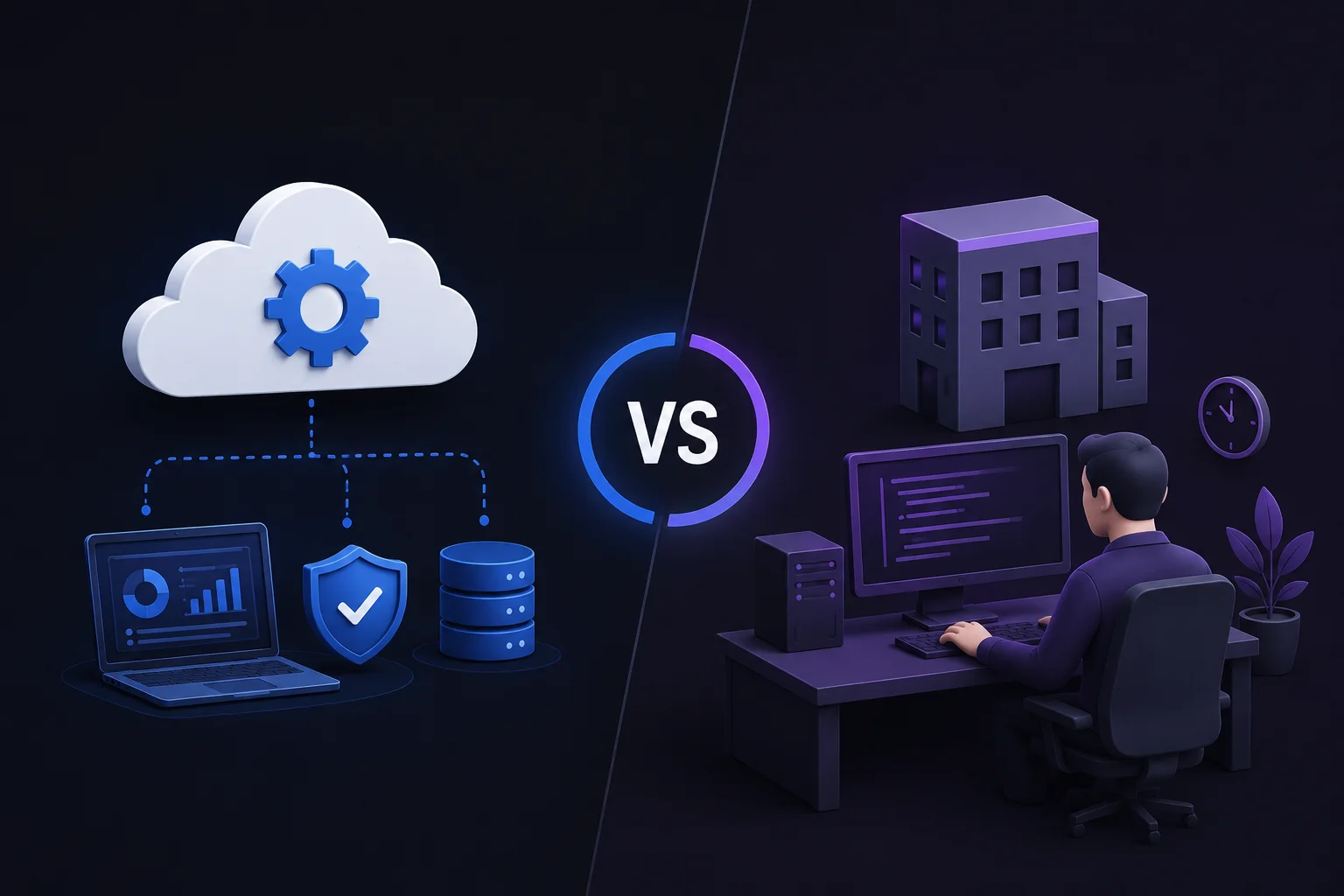
Most enterprise leaders reframed the cost debate years ago. When they weigh managed Salesforce services against an in-house build, they know the fully loaded internal number rarely beats the sticker, and they know value beats price. The part worth saying next will annoy at least half the room.
For most enterprises, the in-house Salesforce team is not an asset. It is a liability the business pays salaries to maintain, and the instinct to grow it is the most expensive reflex executives indulge. Owning the team feels like control. Usually it is the opposite. It is how an organization guarantees it will be mediocre at a dozen specialties that each change three times a year, staffed by the two people who happened to be free when the hiring happened.
That is a strong claim, and it deserves an argument. But first, notice who usually makes the decision. It is rarely the customer-experience leader. It is the CIO, the head of RevOps, a platform owner. Which is strange, because the person whose number dies when the decision goes wrong is the leader who owns the customer outcome. That leader has been letting someone else decide whether the business can keep its own commitments. Cost is the wrong question because it keeps the outcome owner out of a decision that is theirs.
A Story Most CX Leaders Have Lived
Consider a mid-size services company that made the textbook choice a few years ago. It wanted control, so it kept Salesforce in-house: one senior admin who knew the org cold, one developer split across three systems. Lean, proud of it, cheaper on the spreadsheet than any alternative.
The admin left six weeks before a planned migration. Nothing dramatic, just a better offer. The documentation was the usual polite fiction. What happened next was not a technology failure. The platform kept running. But the customer-facing roadmap stopped. The self-service portal the service team had promised customers slipped two quarters. Renewals that depended on it came up in a worse position than the year before. Nobody booked that against the Salesforce budget line, because there is no line for it. The company had saved a salary and lost a season.
The cost model saw a lean, efficient team. The customer saw a company that could not ship what it had promised. Only one of those views ever reached a board deck. And the company took away the wrong lesson. It concluded it needed to hire faster next time, when the real problem was that it had built a customer-facing commitment on a single point of failure and called it prudence.
The Real Question: Product or Plumbing
Underneath the sourcing debate sits a sharper decision. Is Salesforce part of the product, or part of the plumbing?
When the way a company has built Salesforce is genuinely something a competitor cannot copy, when it encodes logic that is a reason customers choose the business, it is product. It should be owned, staffed deeply, and funded like engineering. When it is the connective tissue that every company in the category runs in roughly the same way, quote to cash, case management, a service console, it is plumbing. Essential, unglamorous, undifferentiating plumbing. Plumbing is exactly the work Salesforce managed services exist to run, and the market for managed services for Salesforce has matured into a mainstream choice rather than a fallback.
Most enterprises get this backward. They treat generic capability as if it were proprietary, build teams to own all of it, and in doing so starve the two or three places where they actually could pull ahead. No small internal team can be excellent at everything, so insisting on owning everything is a quiet decision to be average at everything. The uncomfortable conclusion: unless Salesforce sits inside the product, a company probably wants to own less of it than it does today, not more, and route what it frees up toward the work only its own people can do.
There is a fast test for which is which. Take any capability the Salesforce team maintains and ask two questions. Would a customer notice, or switch, if a competitor did it slightly better? And could a competent team that does not work for the company build it from a clear brief? When the answers are no and yes, it is plumbing, no matter how much effort went into it or how attached the person who built it feels. Buyers who go looking find no shortage of Salesforce managed service providers, and choosing a Salesforce managed services partner has become a routine part of the plumbing decision rather than an admission of defeat. The harder task is deciding what to hand over.
Why the CX Leader Owns This Call
The reason a customer-experience leader belongs in the room is simple. Everything a customer feels through Salesforce moves at the speed of whoever maintains it, and that speed is invisible in a cost comparison.
The metric that matters is cycle time, not headcount: how long from a validated idea to something live that a customer or a rep actually experiences. A shorter sales cycle. A smarter case-routing rule. A renewal prompt that fires at the right moment. Most organizations have never measured this number. When they finally do, it is embarrassing, and it is almost never about budget. It is about capacity and specialization. One admin and a part-time developer can keep the lights on. They cannot absorb a demand spike, run a migration, and still ship the improvement the CX team needed last month. A Salesforce managed services provider can flex depth against that spike in a way two internal people never will. Absent that, everything queues behind the same two people, and the customer outcome waits in that queue with everything else.
The right move is to ask for the last four quarters of cycle time before anyone presents a headcount number. When change customers can feel takes months to reach them, no salary saved was worth it, and no sense of control anyone is enjoying is real.
The One Number Worth Trusting
Executives should be skeptical of the failure statistics quoted about CRM programs. The estimates range so widely that the range is the only honest finding, and most of them trace back to vendor blogs rather than primary research. One result, though, shows up consistently enough across analyst reviews to trust: when these programs disappoint, the platform is almost never the cause. The failures trace to people, process and adoption. The software itself accounts for a small, single-digit share.
The implication is worth sitting with. The choice is not a technology. Salesforce works. The choice is an operating model, and the operating model is where value is won or lost. It is also where the risk hides. Every mature org has a person who carries its logic in their head. That person is the largest unpriced exposure on the books, and the cost model files them under assets. Add the parts that do not forgive improvisation, the sharing model, data governance, the compliance posture a regulated business cannot get wrong, and the release management that Salesforce managed support services handle across three platform updates a year, and the argument for depth and redundancy over a single heroic individual becomes hard to answer. A Salesforce managed service provider built as a practice rather than a person absorbs a resignation without stalling the roadmap. The blunt question to put to any model, internal or external, is what happens to the roadmap in the two weeks after the most critical person walks out.
When Owning It Is the Right Call
None of this makes internal teams the wrong answer. They are the right answer whenever Salesforce is genuinely part of the product: when the logic in the org is a moat, when change is so constant and so specific to the business that institutional memory compounds by the week, or when control requirements mean the work cannot leave the building. In those cases the team is not a cost center. It is product engineering, and it should be funded that way without apology for the line item. Even then, targeted Salesforce managed services consulting can de-risk a build without surrendering ownership of it.
The failure is not choosing in-house. The failure is choosing on price, and letting the group that owns the budget make a call that belongs to the leader who owns the customer.
The Question for Monday
The better question is not which model costs less. It is one every outcome owner should ask out loud, in a room where they hold a seat: is Salesforce part of the product or part of the plumbing, and does the operating model let the business change the parts customers feel at the speed the market demands, without a single resignation derailing the roadmap?
The managed services Salesforce market is now mature enough that the answer is rarely about availability of help. It is about judgment. Answered honestly, the choice between Salesforce managed services and an internal build mostly makes itself. It may not be the cheaper answer. It will be the one the business can be held to, and when the number in question is the customer's experience, that is the only kind of answer worth defending.

.webp)