Sign up with Google
 Sign in with Zoho


It can be a bit overwhelming trying to navigate the National Disability Insurance Scheme (NDIS). With so many therapeutic pathways on offer within categories such as Capacity Building – Improved Daily Living, the question often asked by participants and their families is: Which allied health discipline do I really need?
Occupational Therapy (OT) and Psychology are two of the most frequently requested Allied Health Supports. Both are geared towards increasing your independence, building confidence and improving your daily living, but they approach it from very different aspects of your well-being.
Knowing the specific value of an NDIS OT and an NDIS psychologist – and why they often work best together – can help you make informed decisions for your NDIS journey.
What Does an OT NDIS Do Actually?
An NDIS Occupational Therapist (OT) works within the area of function and everyday living. They are mainly focused on changing your environment, teaching you everyday skills, or supplying equipment to help you live life as independently as possible.
When physical barriers, sensory overload or cognitive challenges make routine activities difficult, an OT steps in to find practical solutions.
How an NDIS OT Can Help You
Typical ways an NDIS OT can assist you:
Functional Capacity Assessments (FCAs): A detailed assessment of your support requirements that is necessary for NDIS plan reviews or housing applications.
Assistive Technology & Home Modifications: Suggesting specialist equipment (like wheelchairs or specialist cutlery) or physical modifications (like ramps and grab rails) to make your home accessible and safe.
Sensory Processing Assistance: Creating habits and techniques for individuals who have sensory sensitivities or autism spectrum disorders.
Skill Development: Assistance with daily living skills such as cooking, personal care, budgeting and travel training.
What is an NDIS psychologist?
An NDIS psychologist may deal with mindset, emotions and mental health, while OTs tend to focus on practical tasks and physical environments. People who have a permanent disability or are neurodivergent may face particular psychological challenges, including anxiety, depression, burnout, and trouble regulating emotions. An NDIS psychologist offers evidence-based therapies customised to your cognitive style and goals.
NDIS Psychologist Areas Covered:
Emotional Regulation & Coping Skills: Teaching practical strategies for stress management, sensory-induced meltdowns or handling big transitions.
Mental Health Support : Helping with depression, social anxiety, trauma, and low self-esteem in a safe, disability-informed space.
Behaviour & Social Skills Development: Supporting social communication, developing healthy relationships and preventing social isolation.
Psychosocial Disability Support -:Providing ongoing support to help participants with mental health conditions maintain routine and community participation.
Why NDIS OT and NDIS Psychologist Supports Are Better Together
The human body and mind don’t work in a vacuum. Emotional struggles impact physical ability, and practical frustrations weigh heavily on mental health.
Participants are provided with a holistic care network when an NDIS OT and an NDIS psychologist work together.
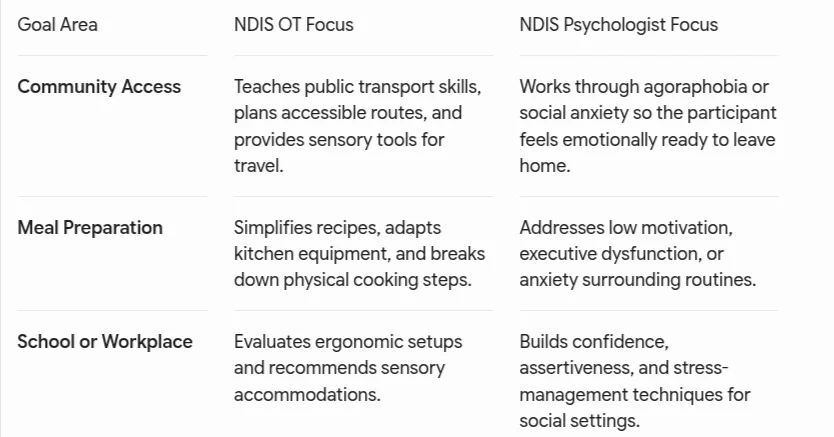
Learn about connected provider networks like Connect2Care that can provide multi-disciplinary support services that connect physical functioning to mental well-being to accelerate your intake process and reduce multi-clinic waitlists.
How to Get Started with OT and Psychology in Your NDIS Plan
If you want to add an NDIS OT or NDIS psychologist to your therapy team, simply follow these steps:
Review Your Plan: Check out your Capacity Building funding budget—Improved Daily Living specifically. Most individual therapies are paid for out of this category.
Identify Your Goals: Are you looking to live more independently in your home (OT) or are you looking to manage daily stress and build self-advocacy skills (Psychology)?
Speak with Your Support Coordinator: They can refer you to allied health providers who work in both disciplines so there is a coordinated, collaborative approach.
You are setting yourself or your loved one up for the best chance of long-term independence and quality of life by addressing physical functionality and psychological resilience.
for more informative blogs - https://guestcountry.com/home