Sign up with Google
 Sign in with Zoho

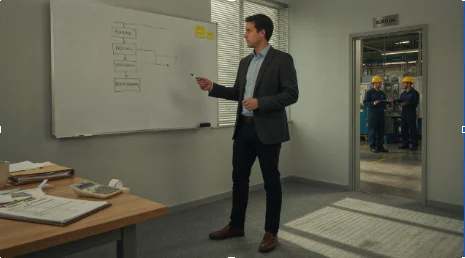
What happens when a business suddenly can’t operate?
Maybe a key supplier stops delivering. A cyber incident affects systems. A power failure brings operations to a halt. A flood damages a site. Or a critical employee is suddenly unavailable.
These things don’t arrive with a polite calendar invitation.
That’s where ISO 22301 certification in Argentina becomes relevant. ISO 22301 sets requirements for a business continuity management system (BCMS), helping organizations prepare for disruption, respond to incidents, and recover their important activities. ISO states that the standard can apply to organizations of any size, sector, or type.
But who should actually consider certification?
The answer is broader than large corporations. From banks and technology firms to manufacturers, hospitals, logistics companies, and growing service businesses, many organizations in Argentina can have a reason to examine business continuity more closely.
So, let’s look at who may benefit — and why.
Why Is ISO 22301 Certification Important?
oBefore getting into specific industries, there’s one thing worth clearing up.
iso 22301 argentina isn’t simply a disaster recovery checklist.
A business continuity management system looks at how an organization can continue delivering important products and services when normal operations are disrupted. It brings together planning, risk assessment, business impact analysis, response arrangements, testing, review, and continual improvement.
Think of it like a backup generator.
You don’t buy a generator because you expect the electricity to fail tomorrow. You have it because, if the lights go out, you don’t want to stand in the dark wondering what to do.
Business continuity works in much the same way.
ISO explains that disruptions can come from events such as floods, cyberattacks, IT failures, supply-chain problems, or loss of skilled personnel. Good continuity planning can support a faster and more organized response.
For an Argentine organization, the exact risks will depend on its location, sector, suppliers, technology, workforce, customers, and operating model.
That’s why the standard isn't only for one type of company.
Companies That Cannot Afford Long Interruptions
Some businesses feel the cost of downtime almost immediately.
Manufacturers, logistics providers, financial services firms, healthcare organizations, telecommunications companies, technology providers, and critical service businesses are obvious examples.
Imagine a logistics company unable to access its transport management system for several days. Orders pile up. Customers start calling. Drivers wait. Information gets scattered across emails and phone calls.
The technical problem may have started with one system.
The business problem spreads much further.
iso 22301 argentina can help organizations establish a structured approach for dealing with these situations.
For companies where continuity is closely tied to customer service, revenue, safety, or contractual commitments, that structure can be especially relevant.
Manufacturers and Industrial Companies
Argentina has a broad industrial base, from food and beverages to automotive, chemicals, pharmaceuticals, machinery, and other manufacturing activities.
Manufacturers often depend on a chain of connected processes.
Raw materials arrive. Machines run. Employees operate equipment. Utilities support production. IT systems track orders and inventory. Transport moves finished goods.
Break one important link and the effects can travel quickly.
Manufacturing organizations considering iso 22301 argentina may therefore look at scenarios such as equipment failure, supplier disruption, utility outages, fire, extreme weather, cyber incidents, or workforce shortages.
The interesting part is that business continuity isn't about pretending these events won't happen.
It’s about deciding what the company will do if they do.
Banks, Financial Firms, and Other Financial Services
Financial organizations have another reason to take continuity seriously: customers expect access.
A system outage can affect transactions, communication, customer support, reporting, and internal operations.
For these organizations, business continuity may involve technology, people, facilities, third-party providers, data, communications, and recovery arrangements.
A continuity plan that only covers the IT department isn't enough if customer service, finance, suppliers, or senior management are also affected.
This is where ISO 22301 can bring a wider management perspective.
It connects continuity planning with the organization’s important business activities rather than treating every incident as an isolated technical problem.
Technology and IT Service Companies
Technology companies are another natural audience.
Cloud platforms, software providers, data centers, managed service providers, and IT support companies often sit behind critical business functions for their customers.
If their service goes down, their customers may feel the impact within minutes.
That creates a rather uncomfortable question:
How long can customers tolerate an interruption?
The answer depends on the service and contract. Some systems may tolerate several hours. Others may have much tighter recovery expectations.
Organizations in this sector may consider iso 22301 argentina as part of a broader approach to operational resilience, alongside information security and other management systems.
ISO also notes that ISO 22301 is designed using a common management-system structure, which can help organizations integrate it with systems such as ISO 9001 and ISO 14001.
Healthcare Organizations
Hospitals, clinics, laboratories, medical service providers, and other healthcare organizations face a different kind of pressure.
Continuity isn't only about revenue.
Patients may depend on services continuing during an incident.
A power outage, IT failure, equipment problem, supply shortage, fire, or facility issue can affect appointments, records, testing, treatment, and communication.
For healthcare organizations, continuity planning can therefore involve both operational and human considerations.
The plan needs to work when people are under pressure — not only when everything is calm and the meeting room has plenty of coffee.
Logistics and Supply-Chain Businesses
Supply chains are rarely as simple as they look on a spreadsheet.
A business may depend on several suppliers, transport providers, warehouses, ports, customs processes, software platforms, and communication channels.
One disruption can create a domino effect.
Logistics companies and organizations with critical supply-chain dependencies may therefore findiso 22301 argentina particularly relevant.
It encourages organizations to understand which activities matter most, what could interrupt them, and how the organization intends to maintain or restore those activities.
That thinking can be valuable even before an actual disruption occurs.
Companies Working With International Customers
An Argentine company serving international customers may face additional continuity expectations.
Large customers often want suppliers to demonstrate that they can keep important services running during disruptions.
This can become especially relevant when an Argentine business is part of an international supply chain.
Certification can provide documented evidence that the organization has established a formal business continuity management system.
It doesn't guarantee that disruption will never happen. No certificate can make that promise.
What it can do is provide evidence that continuity has been treated as a structured management responsibility.
Growing Argentine Businesses Should Consider It Too
Here’s a common assumption: ISO 22301 is mainly for huge companies.
Not necessarily.
ISO states that the standard is applicable regardless of organizational size or industry.
A growing company may have only a few critical employees, one major customer, one key supplier, or one central IT platform.
That can actually create significant concentration risk.
If one person holds all the operational knowledge, what happens when they're unavailable?
If one supplier provides a critical component, what happens when that supplier stops?
If one server hosts a vital application, what happens when it fails?
Small organizations can face these questions too. Sometimes the smaller the team, the more visible the dependency.
Public-Sector and Essential-Service Organizations
Business continuity is also relevant to organizations that provide services people rely on.
Government-related bodies, public services, utilities, infrastructure organizations, and other essential-service providers may have continuity responsibilities that extend beyond their own operations.
A disruption can affect citizens, customers, suppliers, and other organizations.
For these organizations, business continuity planning may involve emergency response, communication, alternate facilities, critical resources, suppliers, and recovery priorities.
The exact requirements depend on the organization's activities and applicable laws or regulations, but the basic question remains the same:
What must continue, even when normal operations cannot?
Companies With Strong Customer or Contract Requirements
Sometimes the reason for considering iso 22301 argentina is very practical.
A customer asks for it.
A tender requires evidence of business continuity.
A major partner wants suppliers to demonstrate resilience.
An organization may therefore begin considering certification because it has become commercially relevant.
That isn't a strange reason.
Certification can sometimes become part of supplier qualification, particularly where customers depend heavily on a supplier's ability to maintain service.
The important point is to understand the actual requirement. A company should check what its customer, contract, regulator, or tender documents require rather than assuming that every ISO certificate carries the same meaning.
Risk Managers and Business Continuity Professionals
ISO 22301 is also directly relevant to the people responsible for organizational risk and continuity.
This includes business continuity managers, risk professionals, emergency planners, internal auditors, compliance personnel, and management-system coordinators.
Their work often involves asking uncomfortable but useful questions.
What happens if this system fails?
Who makes the decision?
Which activities come first?
How quickly must they recover?
Who needs to be contacted?
Where will employees work?
What information must be available?
These questions can feel a little gloomy during a normal Tuesday morning.
But when something goes wrong, they're exactly the questions people wish they'd answered earlier.
Companies That Already Have Other ISO Standards
An organization with ISO 9001, ISO 14001, ISO 27001, or another management system may already have useful foundations for ISO 22301.
That doesn't mean certification will happen automatically.
ISO 22301 has its own requirements and focus.
Still, existing management-system processes can provide familiar structures for document control, internal audits, management review, corrective action, risk-based thinking, and continual improvement.
ISO notes that iso 22301 argentina can be integrated with other management-system standards because of its common structural approach.
For companies already familiar with ISO systems, this can make the concept easier to manage.
What About Argentina Specifically?
There is established local activity around ISO 22301 in Argentina.
IRAM's material identifies IRAM-ISO 22301 as the standard for business continuity management systems and has also listed training for implementing the standard and for internal auditors.
IRAM's certification documentation also includes ISO 22301 among the management-system standards for which certification marks may be used.
There is also evidence that ISO 22301 certification exists in Argentina, although it remains much less common than standards such as ISO 9001, ISO 14001, or ISO 45001. IRAM's 2024 communication, using 2023 survey data, reported 7 ISO 22301 certificates covering 32 certified sites in Argentina.
That number shouldn't be read as a limit on who can use the standard. It simply shows that, based on that reported dataset, ISO 22301 certification was still relatively uncommon in Argentina at that time.
Certification Isn't the Same as Having a Plan
This distinction matters.
A company can have a beautifully printed business continuity plan and still struggle during a real incident.
Why?
Because plans need people.
They need testing. They need review. They need clear responsibilities. They need realistic assumptions.
A document sitting untouched in a shared folder won't restore operations after an outage.
iso 22301 argentina takes a management-system approach, which means continuity is treated as an ongoing organizational process rather than a one-time document exercise.
That is a major difference.
So, Who Should Consider ISO 22301 Certification in Argentina?
The answer includes organizations that depend heavily on continuous operations, critical suppliers, technology, specialist staff, customer commitments, or essential services.
That can include:
- Manufacturing companies
- Banks and financial organizations
- IT and technology providers
- Healthcare organizations
- Logistics and transport companies
- Telecommunications businesses
- Utilities and infrastructure providers
- Public-sector organizations
- International suppliers
- Companies with demanding customer contracts
- Growing businesses with critical dependencies
- Organizations with established risk or business continuity teams
But there’s an important point here: industry alone doesn't decide whether iso 22301 argentina makes sense.
Two companies in the same sector can have very different continuity risks.
One may have strong backup systems, several suppliers, and multiple operating locations. Another may depend on one facility, one supplier, or a handful of key employees.
The real question is not simply, “What industry are we in?”
It’s “What happens to our customers and our business if an important activity suddenly stops?”
The Bottom Line
iso 22301 argentina can be relevant to a wide range of organizations in Argentina.
It can support businesses that need to prepare for disruption, protect critical activities, communicate during incidents, and recover in a controlled way. ISO itself describes the standard as applicable across organization sizes and sectors.
For Argentine companies, the decision should start with business needs rather than the certificate alone.
Look at your critical activities. Review your dependencies. Think about suppliers, technology, people, facilities, customers, and recovery needs.
Then ask the simple question:
If tomorrow doesn't go according to plan, how ready are we?
That’s where ISO 22301 Argentina starts to make real sense.