Sign up with Google
 Sign in with Zoho

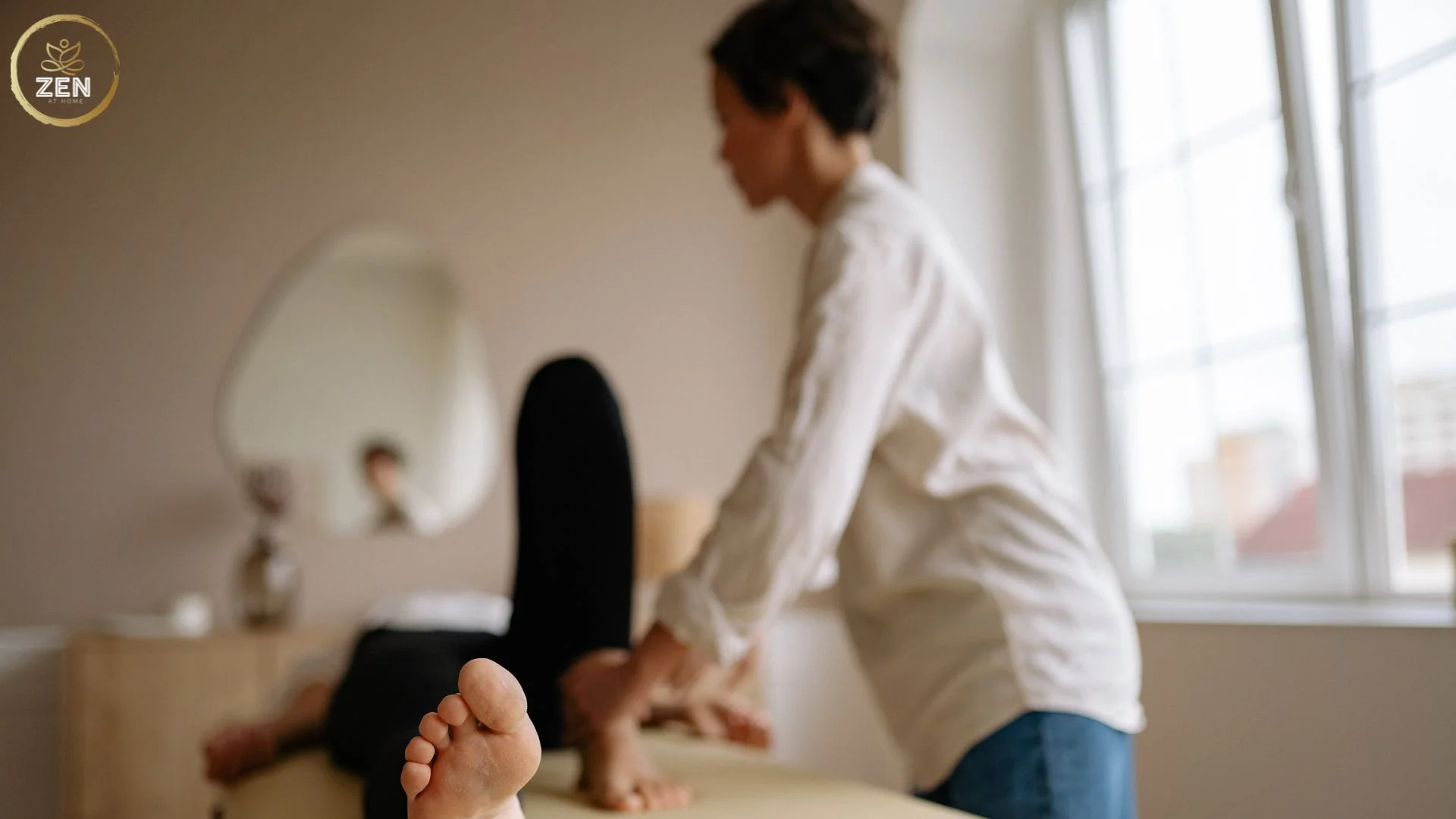
Sports Massage for Muscle Recovery: How It Works and What to Expect
A demanding workout can end long before your muscles feel fully recovered. Stiff legs, tender shoulders and delayed-onset muscle soreness can linger into the next training session, making recovery an important part of any consistent exercise routine.
Sports massage is one option used by athletes and recreational exercisers to manage muscle tension and post-exercise discomfort. Unlike a general relaxation massage, the session is usually shaped around your activity, training load and the areas that have been working hardest.
But sports massage is often credited with more than research actually supports. Understanding what it can realistically do—and what happens during a session—helps you make a more informed decision.
What Is Sports Massage?
Sports massage is a form of massage therapy tailored to people who exercise, train or participate in sport.
The treatment uses hands-on manipulation of muscles and other soft tissues. Instead of following the same full-body routine for everyone, a sports massage therapist can adapt the session according to your activity, training schedule, areas of tightness and reason for treatment.
For example, a runner may want more attention on the calves, hamstrings and thighs. Someone who lifts weights may arrive with a different set of priorities.
Sports massage is not reserved for professional athletes. Recreational runners, gym users, cyclists and other physically active people may use it too.
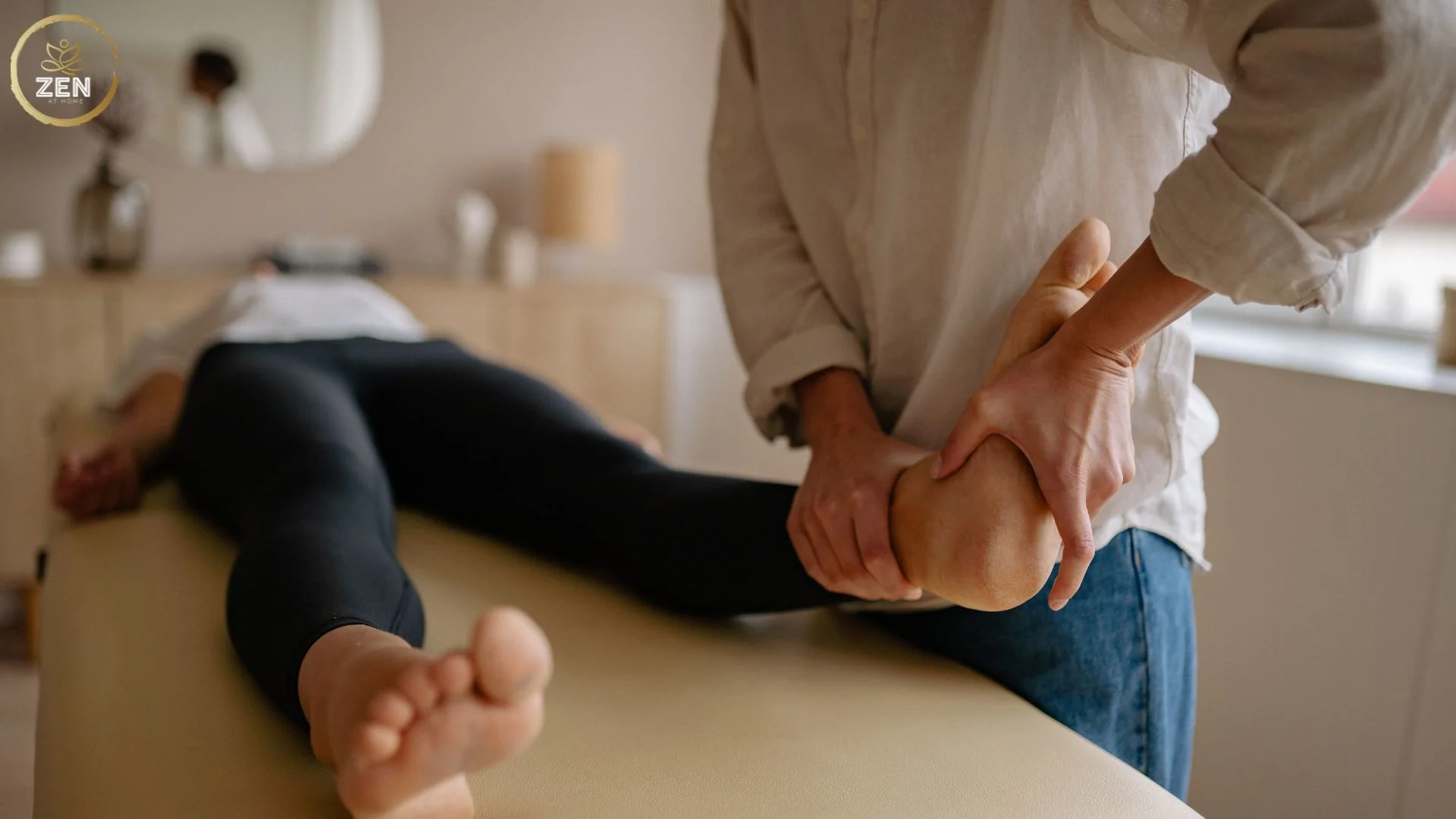
How Is Sports Massage Connected to Muscle Recovery?
Exercise temporarily challenges muscle tissue. After a particularly demanding or unfamiliar workout, you may experience stiffness, tenderness and delayed-onset muscle soreness.
DOMS usually develops after exercise rather than during it and can be especially noticeable following unfamiliar eccentric exercise, such as downhill running or lowering heavy weights.
Sports massage cannot instantly repair muscle or erase the physiological demands of training. Recovery still depends heavily on appropriate rest, nutrition, hydration, sleep and sensible management of training load.
Massage may, however, influence how sore and mobile you feel during that recovery period.
A large systematic review and meta-analysis examining sports massage found a small improvement in flexibility and an improvement in measures of delayed-onset muscle soreness. The same analysis did not find evidence that massage directly improved strength, sprint, jump or endurance performance.
That distinction is important.
Sports massage can be considered a recovery-support tool, not a shortcut to improved athletic performance.
Can Sports Massage Reduce Muscle Soreness?
Post-exercise soreness is one of the better-supported reasons athletes use massage.
In the 2020 systematic review, researchers evaluated ten studies examining DOMS. When the results were combined, massage was associated with an improvement in post-exercise soreness, although there was substantial variation between studies.
In practical terms, this means some people may feel less sore after massage, but the effect is neither guaranteed nor identical for everyone.
The nature of the exercise matters. So does the timing and type of massage.
Your recovery response can also be affected by training history, sleep, nutrition, previous injuries and how aggressively the muscles were loaded.
Does Sports Massage Speed Up Recovery?
This question depends on what "recovery" means.
If recovery means feeling less sore or temporarily moving more comfortably, massage may help some people.
If it means restoring strength, endurance or athletic performance faster, the evidence is much less convincing.
Research has not established sports massage as a reliable way to directly restore sprint speed, muscular strength or endurance after exercise.
That is why statements such as "sports massage dramatically accelerates muscle repair" should be treated cautiously.
A more realistic expectation is that massage may make part of the recovery process feel more comfortable.
Sports Massage and Flexibility
Flexibility is another outcome for which research has reported modest positive effects.
The systematic review found a small improvement in flexibility following massage, although results varied considerably across studies.
Temporary improvements in how freely an area moves may be useful when muscles feel stiff after training.
That does not mean massage permanently lengthens muscles or replaces mobility work, warm-ups or sport-specific conditioning.
Think of it as one possible component of a broader recovery routine.
What Happens Before a Sports Massage?
A professional session should start with assessment rather than immediately applying firm pressure.
Your therapist may ask about:
your main sport or exercise routine, recent training sessions, areas of soreness or tightness, previous injuries, your next workout or competition, and relevant medical conditions.
This information matters because the treatment that makes sense several days after a hard workout may not be the same treatment you want immediately before an event.
A professional sports massage should therefore be goal-directed.
If you simply say that your legs feel tight, a good therapist may ask what caused the tightness, when it started and what activity you plan to do next.
What Techniques Are Used During Sports Massage?
There is no single sports massage technique.
Therapists can combine several manual methods depending on the goal of the session.
Effleurage
Effleurage uses broad gliding strokes over the skin and muscles.
It often appears at the beginning or between more focused techniques. Pressure can range from light to relatively firm depending on the objective.
Petrissage
Petrissage involves kneading, lifting and compressing soft tissue.
The technique allows the therapist to work more specifically with muscular areas than broad gliding strokes alone.
Compression
The therapist may press into a muscle using the hand, fingers, forearm or another suitable contact.
Pressure should still be controlled and adjusted according to your response.
Friction
More focused movements may be used on smaller areas where the therapist wants to work locally.
Stretching and movement
Some sports massage sessions include assisted stretches or movement through a comfortable range.
Not every technique belongs in every appointment.
Healthdirect lists techniques such as effleurage, petrissage and tapotement and notes that treatment can range from targeted work on one area to a broader whole-body session.
Does Sports Massage Need to Be Painful?
No.
Sports massage can feel firmer than a relaxation treatment, and working on a sore or tight area may cause some temporary discomfort. Significant pain should not be considered proof that the treatment is effective.
The therapist needs feedback.
If the pressure makes you brace your muscles, hold your breath or experience sharp pain, say so.
Healthdirect specifically advises clients to tell their therapist when treatment is painful or uncomfortable so the technique can be adjusted.
"Sports massage" should not be interpreted as "maximum pressure."
The appropriate pressure depends on the athlete, tissue, timing and objective.
Pre-Event Sports Massage
Sports massage performed before physical activity has a different purpose from a heavy recovery session.
Close to an event, treatment is generally more conservative. The objective is not to leave muscles tender before competition.
This distinction matters because people sometimes assume that deeper work is always better.
Research does not support massage as a reliable direct performance enhancer. If you are about to compete, your normal active warm-up remains important.
A pre-event sports massage should therefore complement appropriate preparation rather than replace it.
Post-Exercise Sports Massage
After demanding exercise, the focus usually shifts toward comfort and recovery.
A post-training session may involve the muscle groups that received the highest workload.
For a runner, that could include the calves, quadriceps, hamstrings and gluteal region. The priorities for a swimmer, tennis player or lifter may look quite different.
This is where the phrase sports recovery massage is most relevant.
The goal is not to "force" the body to recover. The therapist instead adapts the treatment to how the muscles feel and where the person is within their training cycle.
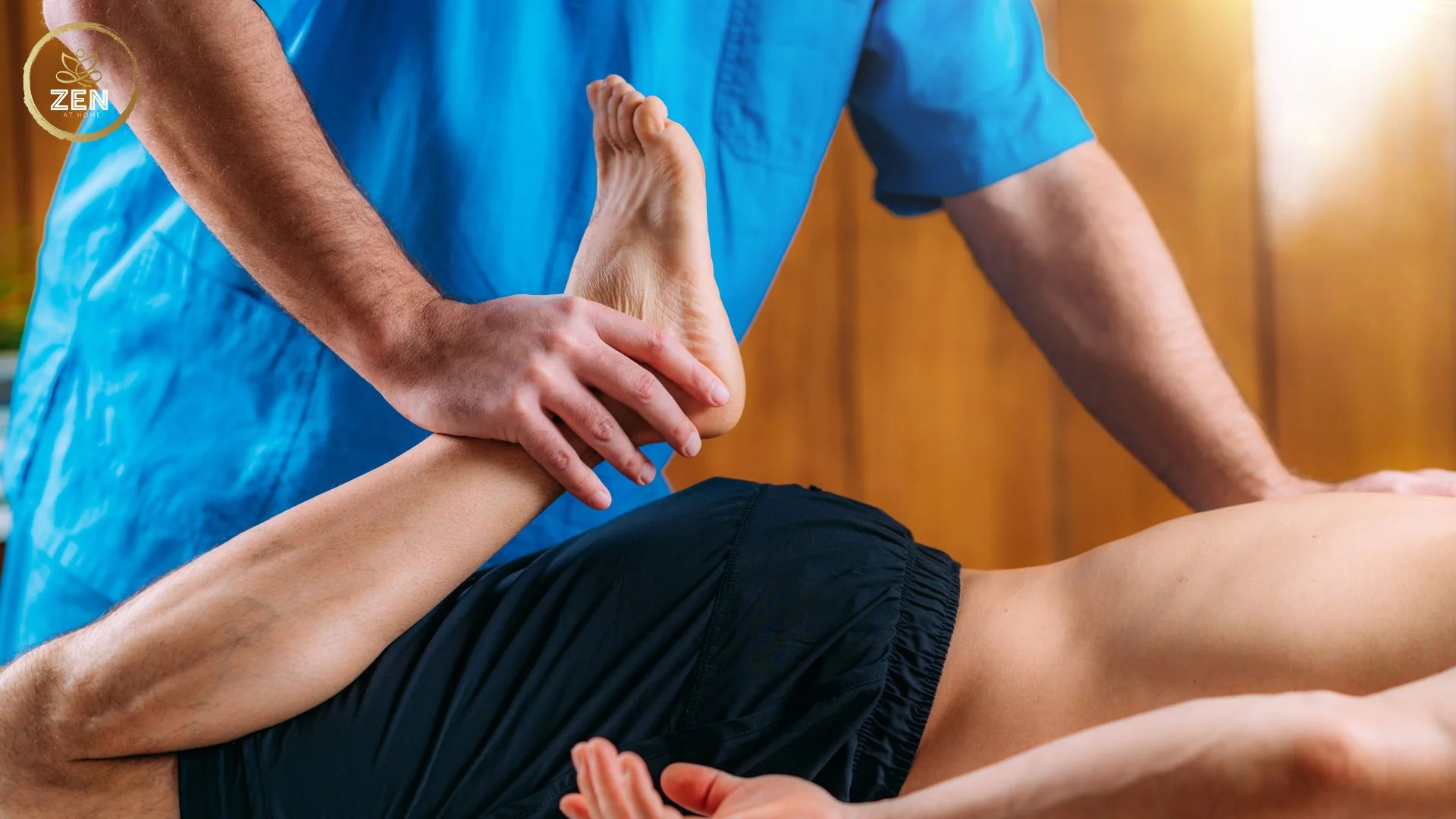
Does Massage Remove Lactic Acid?
This is a common sports-massage myth.
Massage should not be promoted as necessary to "flush lactic acid" from muscles after a workout.
Exercise physiology is considerably more complex than that explanation suggests, and research reviews have not found convincing evidence that massage improves blood lactate clearance. A 2023 systematic review reported that massage did not meaningfully alter blood lactate clearance among the physiological outcomes it examined.
The possible benefits of massage should therefore be explained through outcomes actually supported by evidence, such as perceived soreness, relaxation and potentially flexibility—not detox language.
Is Sports Massage the Same as Deep Tissue Massage?
No, although they can overlap.
Deep tissue massage describes an approach involving slower, firmer pressure directed toward deeper layers of muscle and connective tissue.
Sports massage is better understood through its purpose.
A sports massage therapist chooses techniques according to physical activity, training demands and timing. A session may include deeper pressure, but it can also include lighter strokes, compression, movement or stretching.
This is why deep tissue sports massage should not simply mean applying hard pressure to every muscle.
The treatment should respond to the recovery goal.
Sports Massage vs Sports Therapy
The terms are also easy to confuse.
Sports massage primarily refers to manual soft-tissue techniques.
Sports therapy can be broader. Depending on the practitioner's qualifications and scope of practice, it may include assessment, rehabilitation exercises, mobility work and other approaches alongside massage.
If you are recovering from an actual injury rather than ordinary post-training soreness, the distinction becomes more important.
An injury may require assessment and structured rehabilitation rather than massage alone.
Can Sports Massage Prevent Injuries?
Claims about injury prevention need caution.
Sports massage is often marketed as a method of preventing sports injuries, but injury risk depends on numerous factors: training load, previous injury, conditioning, fatigue, biomechanics, sport exposure and more.
Massage may help someone feel less tense or more comfortable. That is not the same as proving that it prevents an injury from occurring.
If injury prevention is the goal, appropriate training progression, strength and conditioning, recovery and sport-specific preparation remain fundamental.
What Should You Expect After a Sports Massage?
The immediate response varies.
You may feel looser and more relaxed. Areas that were particularly sensitive can also feel mildly tender afterward, especially following more focused treatment.
Temporary soreness does not necessarily mean anything went wrong, but severe pain should not be treated as a normal sign of an effective massage.
Resume training according to how you feel and according to any relevant guidance from your healthcare or sports professional.
There is also no need for extreme hydration practices or "detoxification" routines after massage. Normal hydration remains sensible.
When Should You Schedule a Sports Massage?
Timing depends on why you want the massage.
A firm recovery-oriented treatment immediately before your most important competition may not make sense if it leaves you temporarily sore.
A lighter session may be more appropriate close to an event.
More focused treatment can fit better when there is enough recovery time before the next demanding session.
This is why an experienced sports massage therapist should ask about your training calendar rather than using exactly the same treatment every time.
How Often Should Athletes Have Sports Massage?
There is no evidence-based universal frequency that applies to everyone.
You do not automatically need a sports massage every week simply because you exercise regularly.
Frequency depends on training load, preferences, response to massage, budget and the reason for treatment.
A recreational athlete training a few times per week may have very different needs from someone preparing for repeated competitions.
Regular massage should also never be used to disguise a training load that your body is struggling to tolerate.
Persistent problems deserve investigation.
Who Can Benefit From Sports Massage?
You do not have to compete professionally.
Sports massage therapy can be relevant to runners, cyclists, gym users, recreational athletes and other people whose exercise places repeated demands on particular muscle groups.
It can make particular sense when your goal is managing ordinary post-exercise soreness or muscular tightness.
Someone searching for the best massage for athletes should therefore think first about the objective rather than the name of the treatment.
If the primary goal is general relaxation, another massage style may suit you better.
If the concern is related to training and recovery, sports massage may provide a more targeted approach.
How to Choose a Sports Massage Therapist
Qualifications and relevant experience matter more than simply choosing the nearest appointment.
If you search for sports massage near me, look beyond distance.
Ask whether the practitioner has appropriate training, regularly works with physically active clients and understands how treatment should change according to training and competition.
A responsible therapist should also recognize when massage is outside their scope.
If you report symptoms suggesting an injury or medical issue, they should not promise that massage alone will fix it.
Healthdirect similarly recommends using a properly trained therapist and seeking medical or physiotherapy advice when massage is being considered for an injury or health condition.
When Should You Avoid Sports Massage?
Sports massage is generally considered low risk when appropriately performed, but it is not suitable in every situation.
Avoid treating an acute injury as ordinary muscle tightness without understanding what has happened.
Significant swelling, suspected fracture, severe or worsening pain, unexplained symptoms, an open wound or possible blood clot requires appropriate medical assessment rather than routine massage.
Relevant medical conditions and medications should also be discussed with the therapist.
Sports massage can complement appropriate healthcare, but it should not delay diagnosis or treatment of an injury.
Where Does Sports Massage Fit Into a Recovery Routine?
Massage works best when its role is kept in perspective.
Muscle recovery is influenced by training design, adequate energy and protein intake, sleep, hydration, rest and gradual adaptation to physical load.
Sports massage can sit alongside those fundamentals.
For someone considering professionally delivered Sports Massage for Muscle Recovery, the most useful question is not whether massage can magically accelerate recovery. It is whether targeted soft-tissue treatment can help manage soreness, tension or restricted-feeling movement while the body follows its normal recovery process.
Publisher instruction: Link the exact anchor “Sports Massage for Muscle Recovery” in the paragraph above to your Zen At Home Sports Massage page. Use it only once in the article.
Frequently Asked Questions
Is sports massage good for muscle recovery?
It may help reduce perceived post-exercise soreness and can produce small improvements in flexibility. Current evidence does not show that it consistently accelerates recovery of strength, sprinting or endurance performance.
Is sports massage only for athletes?
No. People who exercise recreationally can also use sports massage. The important factor is the physical activity and treatment goal, not whether someone competes professionally.
Should you get sports massage before or after exercise?
Either is possible, but the treatment should change according to timing. A pre-event session is normally less aggressive, while recovery-focused work can be more targeted when sufficient time exists before the next demanding activity.
Can sports massage help DOMS?
Research suggests massage may modestly reduce delayed-onset muscle soreness for some people, although results vary between studies.
Does sports massage improve athletic performance?
Current systematic-review evidence does not demonstrate consistent direct improvements in strength, sprint, jump or endurance performance.
Is sports massage supposed to hurt?
It can produce temporary discomfort when a sensitive area is treated, but significant pain is not the goal. Tell the therapist if pressure becomes uncomfortable.
What is the difference between sports massage and deep tissue massage?
Sports massage is organized around physical activity, training and recovery goals. Deep tissue massage primarily describes the use of slower, firmer techniques for deeper muscular areas. A sports massage session may include some deep-tissue techniques without being identical to a deep-tissue massage.
How soon after training can you get a sports massage?
There is no single schedule suitable for everyone. Timing depends on the intensity of the workout, your condition, your next training session and the type of massage planned. The closer you are to another demanding session, the more important it becomes to avoid unnecessarily aggressive treatment.
The Role of Sports Massage in Recovery
Sports massage is widely used because recovery is about more than a stopwatch or strength test. How sore, stiff and ready to move an athlete feels also matters.
Current research gives us a useful middle ground. Massage should not be sold as a guaranteed performance booster, rapid injury cure or method of flushing toxins and lactic acid. Evidence is more supportive of modest improvements in post-exercise soreness and flexibility, together with subjective benefits such as relaxation and perceived recovery.
For active people, that can still make sports massage a useful part of a broader recovery strategy—as long as good training, sleep, nutrition and appropriate medical care remain the foundation.









.webp)