Sign up with Google
 Sign in with Zoho
With so many treatment technologies available — softeners, ozone, hydrogen peroxide, UV, oxidizing filters, nanobubble aeration — choosing the right system for an Alberta operation can feel overwhelming. This guide brings everything together in one place: what each technology does, what it costs, and which farm type it fits best, so you can match a solution to your actual water problem instead of buying based on a sales pitch.
Start With the Problem, Not the Product
Every farm water treatment decision should begin with a water test, not a product catalog. The most common issues across Alberta operations — and the technology that typically resolves each — break down as follows:
Comparing the Major Treatment Technologies
Water Softeners
Best for hardness. Low ongoing cost (salt), well-understood technology, widely serviced across Alberta. Not effective against bacteria, algae, or high iron loads on their own — often paired with an oxidizing filter.
Oxidizing / Iron Filters
Best for iron and manganese, including well water iron issues common across central and northern Alberta. Requires periodic backwashing and media replacement; effectiveness depends on correctly matching media type to your specific iron form (ferrous, ferric, or bacterial).
Chlorination
Broad-spectrum bacterial control, low equipment cost, well suited to feedlot and general livestock applications where taste sensitivity is lower. Requires careful dosing — over-chlorination reduces palatability and can suppress intake, particularly in more sensitive species like poultry and swine.
Hydrogen Peroxide Disinfection
Preferred where taste-neutrality matters most — dairy operations and any barn where reduced palatability directly threatens production (milk yield, weight gain). Slightly higher cost per litre than chlorination but no residual taste or odor concern.
Ozone Treatment
Strong, fast-acting disinfection with no residual byproduct, making it a leading choice for poultry and hog barns where biofilm control in nipple drinker lines is a constant challenge. Higher upfront equipment cost; needs correct sizing and contact time to perform reliably at barn-scale flow rates.
UV Disinfection
Effective, chemical-free bacterial control for clear water sources. Requires pre-filtration since UV effectiveness drops sharply in turbid or high-iron water — often used as a final polishing step rather than a standalone solution.
Ozone Nanobubble Systems
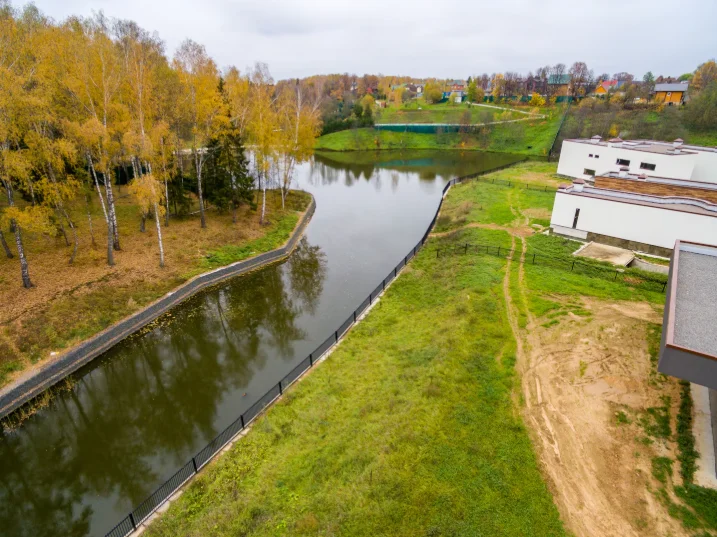
Increasingly used for open water sources — particularly dugouts battling recurring blue-green algae blooms. Higher upfront investment than fencing-and-pumping alone, but offers active, ongoing algae suppression rather than a one-time treatment.
Reverse Osmosis
The most thorough treatment available, removing dissolved solids, nitrates, and most contaminants in one step. Flow rate limitations generally restrict RO to drinking-water-grade or high-value applications (e.g., greenhouse hydroponics) rather than whole-farm livestock supply.
Matching Technology to Farm Type
- Beef feedlots & cow-calf operations: chlorination or hydrogen peroxide for distribution-wide disinfection, plus iron/hardness treatment at the source. See our [livestock and feedlot water treatment guide].
- Dairy operations: hydrogen peroxide disinfection paired with softening, given the sensitivity of milk yield to palatability. See our [dairy water treatment guide].
- Poultry barns: ozone treatment for continuous line disinfection plus rigorous between-flock cleaning. See our [poultry water treatment guide].
- Hog barns: oxidation-based systems (Oxy Blast-type) for iron bacteria and sulfate odor, paired with medicator-compatible dosing. See our [hog farm disinfection guide].
- Dugout-dependent operations: fencing and remote pumping as the baseline, with ozone nanobubble systems for recurring bloom problems. See our [dugout and algae control guide].
- Greenhouse and irrigation operations: fine pre-filtration plus pH and salinity management. See our [greenhouse and irrigation water treatment guide].
What Drives Cost
Alberta farm water treatment costs vary widely based on three factors far more than brand or marketing:
- Flow rate required — a system sized for a 20-head operation costs a fraction of one sized for a 2,000-head feedlot or a full poultry barn
- Severity of contamination — mild iron staining is a different (and cheaper) problem than heavy iron bacteria combined with sulfate
- Number of contaminants being addressed simultaneously — a farm needing hardness, iron, and bacterial control together will always cost more than addressing a single issue
As a general guide, simple single-issue systems (a basic sediment filter or small UV unit) can start in the low hundreds of dollars, while whole-operation systems combining softening, iron removal, and continuous disinfection for a large feedlot, dairy, or barn can run into the tens of thousands — which is exactly why testing first and sequencing treatment (address the biggest risk first, add polish treatment later) matters for managing cost.
Working With a Certified Technician
Because agricultural systems are sized so differently from residential ones, working with a certified water technician experienced specifically in Alberta farm applications is the difference between a system that performs for a decade and one that fails within a season under real barn or feedlot demand. A qualified technician should provide a written water test, explain why a specific technology was recommended over the alternatives, and size equipment to your actual peak flow rate — not an average.
Conclusion
There's no single "best" farm water treatment system in Alberta — only the system that correctly matches your water problem, your species or crop, and your flow demand. Softeners solve hardness. Oxidizing filters solve iron. Ozone and hydrogen peroxide solve biofilm and bacterial risk with different taste trade-offs. Nanobubble technology solves recurring algae blooms in open water. Starting with a proper test and working backward from the actual contaminant list — rather than starting with a product — is what separates a treatment plan that pays for itself from one that becomes another piece of unused equipment in the shop.
Frequently Asked Questions
Q: What's the single most important first step before buying any water treatment equipment?
A: A comprehensive water test. Every technology comparison in this guide only matters once you know exactly which contaminants — iron, hardness, bacteria, sulfate, algae — are actually present in your water.
Q: Can one system handle multiple water problems at once?
A: Often yes, through a layered approach (e.g., an oxidizing filter followed by a softener followed by continuous disinfection), but this requires correct sequencing — treating contaminants in the wrong order can reduce the effectiveness of downstream equipment.
Q: Is the most expensive treatment technology always the best choice?
A: No. The right technology is the one matched to your specific contaminant and flow rate — an expensive ozone system is wasted money if your only issue is hardness, which a standard softener resolves at a fraction of the cost.
Q: How long do agricultural water treatment systems typically last?
A: With proper maintenance (media replacement, backwashing, filter changes), most core components last 7–15 years, though this varies significantly by technology and water severity.
Q: Should I treat livestock drinking water and irrigation water the same way?
A: Generally no — livestock systems prioritize palatability and pathogen control at higher flow rates, while irrigation systems (especially drip and greenhouse) prioritize fine filtration and pH/salinity control to protect narrow emitters and support plant health.