Sign up with Google
 Sign in with Zoho

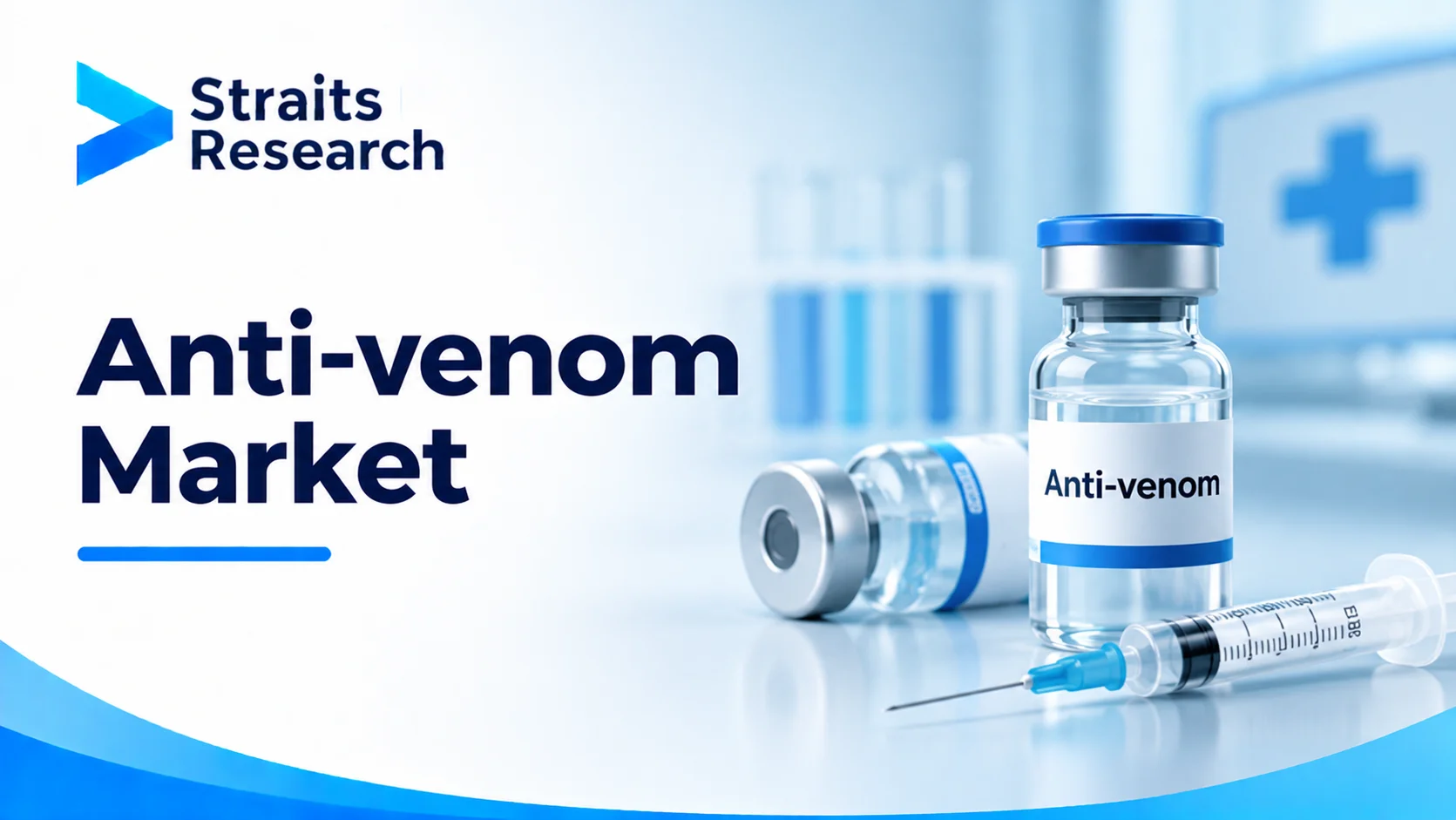
According to Straits Research, the global anti-venom market size was valued at USD 1.39 billion in 2025 and is projected to grow from USD 1.51 billion in 2026 to USD 2.99 billion by 2034, registering a CAGR of 8.9% during the forecast period (2026–2034). Asia Pacific held the largest market share of 41.5% in 2025, while North America is set to record the fastest growth at a CAGR of 8.52%.
- Market Size 2025: USD 1.39 Billion
- Market Size 2026: USD 1.51 Billion
- CAGR (Forecast Period): 8.9%
- Forecast Year: 2034
- Projected Market Size: USD 2.99 Billion
- Dominant Region: Asia Pacific
- Fastest Growing Region: North America
Market Overview
Anti-venom is a biological medicine used to treat poisoning caused by bites or stings from venomous animals, including snakes, scorpions, and spiders. These products contain antibodies that neutralize venom toxins and help prevent severe complications. Hospitals and emergency care facilities rely on anti-venom for the treatment of envenomation cases. Product development, regional venom profiles, manufacturing capacity, and access to emergency healthcare shape the market.
Growth Drivers
The incidence of snakebites and other venomous animal encounters supports the need for timely anti-venom treatment, particularly in regions with large rural populations and high exposure risks. Government health programs and public health initiatives also encourage better access to life-saving biologic medicines. Improvements in venom research and antibody development support the creation of products with broader toxin coverage and improved treatment performance.
Market Challenges
Complex manufacturing processes and strict quality requirements can limit the availability of anti-venom products. Production depends on reliable venom collection, animal immunization, plasma processing, and quality testing, which can raise costs and lengthen production cycles. Differences in venom composition across geographic regions can also reduce the effectiveness of products that are not tailored to local snake species.
Market Opportunities
Region-specific anti-venom products offer manufacturers an opportunity to address differences in venom composition and improve treatment suitability across endemic areas. Research into recombinant antibodies and small-molecule therapies may also create new product avenues beyond conventional animal-derived formulations. Partnerships among research institutes, public health agencies, and biologics manufacturers can support product development and wider access to treatment.
Segment Analysis
By type, polyvalent heterologous anti-venom held a market share of 47.6% in 2025. Its ability to neutralize venom from multiple species makes it useful in emergency settings where the exact species responsible for a bite may not be known. Monovalent heterologous anti-venom serves cases where the venomous species is identified, while homologous anti-venom and small-molecule anti-toxins address other treatment requirements.
By product type, the market includes snake anti-venom, scorpion anti-venom, spider anti-venom, and other products. Snake anti-venom is set to record a CAGR of 7.68% during the forecast period, supported by the need for treatment across regions with a high incidence of snakebite envenomation.
By mode of action, neurotoxic anti-venom held a share of 27.5% in 2025. These products address venom that affects the nervous system and can cause paralysis or respiratory complications. Cytotoxic, haemotoxic, cardiotoxic, myotoxic, and other formulations serve additional clinical requirements.
By end user, hospitals and clinics form a key customer group due to their role in emergency treatment and patient monitoring. Ambulatory surgical centers are set to record a CAGR of 7.88%, supported by wider access to specialized outpatient care.
Regional Analysis
Asia Pacific held the largest share of the anti-venom market in 2025, accounting for 41.5% of global revenue. High exposure to venomous snakes, public health initiatives, and efforts to improve emergency treatment access support the region's position. North America is set to record the fastest growth at a CAGR of 8.52%, supported by healthcare infrastructure, access to specialized biologics, and continued research into venom-related treatments.
Competitive Landscape
The anti-venom market includes manufacturers of biologics, medical products, and specialized treatment solutions. Key companies identified by Straits Research include Allison Medical Inc., Hamilton Company, Hill-Rom, Hu-Friedy Mfg. Co., and Medtronic Plc. Competition is shaped by product quality, manufacturing capacity, distribution access, and the ability to develop formulations suited to regional venom profiles.
Recent Developments
- September 2026: Researchers at the Indian Institute of Science and the Technical University of Denmark developed a recombinant, nanobody-based anti-venom that showed broad protection against venom from geographically diverse cobra and king cobra species in India. The research offers a potential route toward antibody-based treatments with wider species coverage.
- February 2026: The World Health Organization published its first set of Target Product Profiles for novel snakebite treatments based on small-molecule drugs and engineered antibody biologics. The guidance is intended to help researchers, regulators, and manufacturers develop treatments that address clinical needs in both hospital and pre-hospital settings.
Click to Read the Complete Insights & Report: https://straitsresearch.com/report/anti-venom-market
Future Outlook
The anti-venom market is likely to gain from public health efforts to improve access to treatment and research into more targeted therapies. Region-specific formulations and engineered antibodies may address limitations associated with conventional products. Greater coordination among manufacturers, research institutions, and healthcare authorities can also support reliable production and distribution across areas with high envenomation risk.
About Straits Research
Straits Research is a market intelligence company that provides global business information and consulting services. The company offers market reports, industry analysis, and strategic insights to help organizations understand market trends, assess opportunities, and make informed business decisions.