Sign up with Google
 Sign in with Zoho

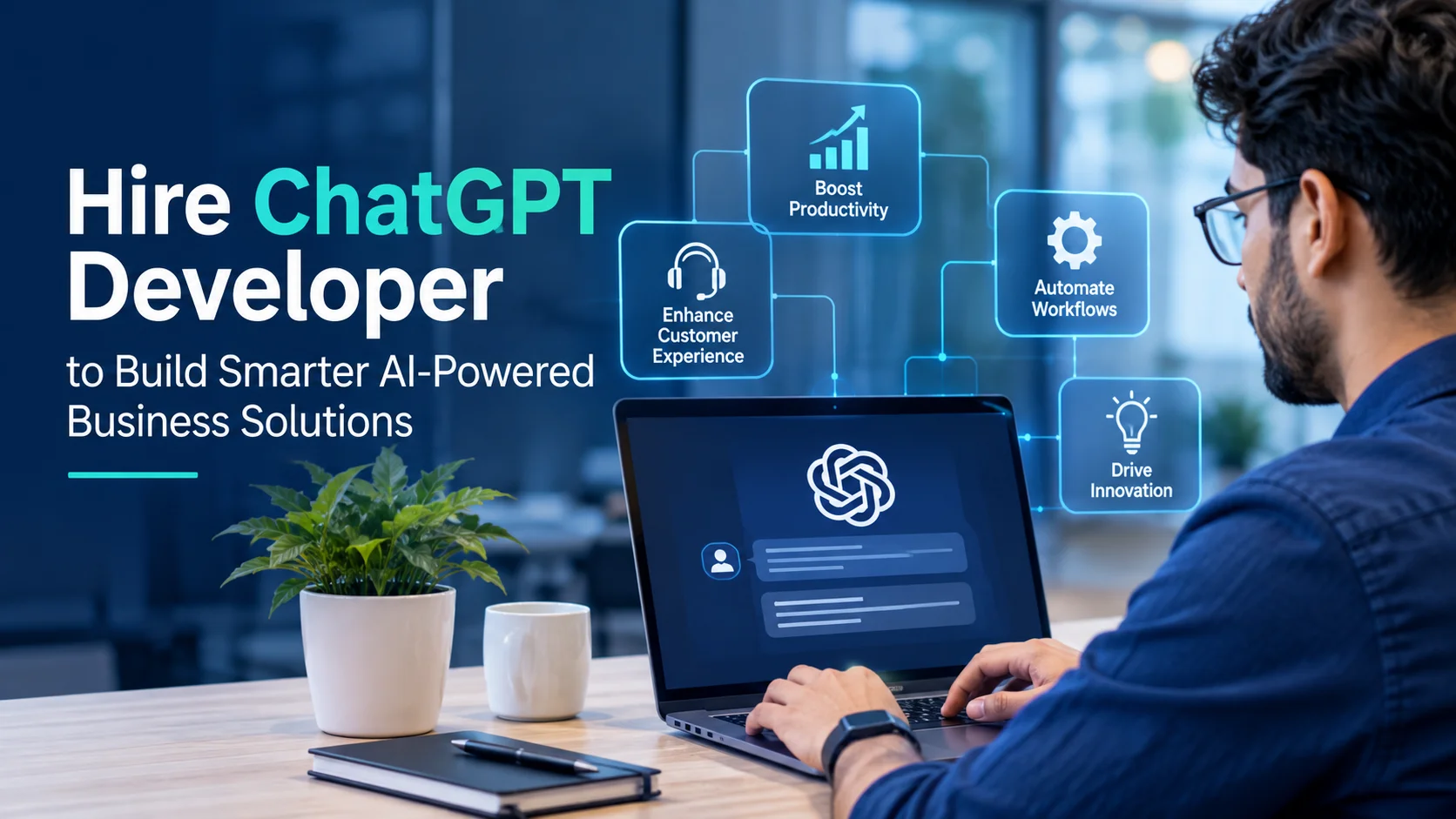
Businesses are moving beyond traditional automation towards AI-powered products that can understand customer needs, process information and support faster decisions. ChatGPT has accelerated this shift by making conversational AI more accessible across industries. As a result, organisations looking to improve digital products increasingly consider whether to Hire ChatGPT Developer expertise to turn AI capabilities into practical business solutions.
A successful ChatGPT implementation is not simply about adding a chatbot to a website. It requires a clear understanding of business objectives, data quality, user expectations and system integration.
Why Businesses Are Investing in ChatGPT Development
Generative AI is changing how companies manage customer support, internal operations and digital experiences. According to McKinsey's 2024 global survey, 65% of respondents said their organisations were regularly using generative AI, nearly double the proportion reported ten months earlier.
This adoption reflects a growing interest in reducing repetitive work and improving access to information.
For example, an e-commerce company can use ChatGPT to answer product questions, recommend relevant items and help customers understand delivery policies. A software company can introduce an AI assistant that guides users through product features and troubleshooting steps.
These applications can reduce routine support workloads while allowing employees to focus on more complex customer requirements.
What Does a ChatGPT Developer Bring to Product Development?
A ChatGPT developer combines programming knowledge with an understanding of large language models, APIs and application architecture. Their role is to make AI useful, reliable and secure within an existing product or a new digital platform.
Key responsibilities include:
- Custom AI application development: Building conversational tools around specific business requirements.
- API integration: Connecting ChatGPT models with websites, mobile applications, CRM platforms and internal systems.
- Retrieval-Augmented Generation (RAG): Allowing AI applications to retrieve relevant information from approved company documents and databases.
- Prompt engineering: Designing instructions that improve response quality and consistency.
- Security and data protection: Managing access controls and reducing exposure of confidential information.
- Performance optimisation: Monitoring response accuracy, latency and operating costs.
These capabilities help businesses move from experimental AI features towards dependable product functionality.
Custom ChatGPT Solutions vs Traditional Chatbots
Traditional chatbots generally follow predefined rules and decision trees. They work well for simple questions but can struggle when users express complex or unexpected requests.
ChatGPT-powered applications offer more flexible conversations and can interpret natural language. They can also work with business data through suitable integrations.
However, generative AI introduces challenges such as incorrect responses, inconsistent outputs and higher infrastructure costs. Traditional chatbots may remain more suitable for predictable workflows where accuracy and strict response rules are essential.
For product managers, the right approach depends on the complexity of user requirements rather than the popularity of a particular technology.
How Companies Can Use ChatGPT in Real Business Environments
In practical product development projects, the biggest challenge is often connecting AI with existing business processes. Companies need solutions that understand their information, respect user permissions and provide useful responses.
For example, when working with businesses that wanted to improve customer interactions, Acrosstek's development approach focused on understanding user journeys, integrating suitable technologies and building features around actual operational needs. This type of approach helps avoid unnecessary AI complexity and keeps product development aligned with measurable business objectives.
Common applications include:
- Customer service: Handling frequently asked questions and supporting customer enquiries.
- Healthcare: Helping users access approved health information and administrative guidance.
- Education: Developing personalised learning assistants and knowledge tools.
- Finance: Supporting document analysis and customer information services.
- SaaS platforms: Creating intelligent search, onboarding and product support features.
Choosing the Right ChatGPT Development Approach
Before starting development, decision-makers should compare different implementation options.
Using the OpenAI API can accelerate development and provide access to existing language models. Custom model development offers greater control but requires more data, infrastructure and specialist expertise. RAG-based systems provide a practical middle ground when applications need access to private or frequently updated business information.
The right choice depends on data sensitivity, expected usage, response accuracy, scalability and budget.
Measuring the Business Value of ChatGPT Applications
AI implementation should be evaluated through measurable outcomes rather than the number of features launched.
Businesses should monitor response accuracy, average resolution time, customer satisfaction, API costs, response latency and the percentage of enquiries resolved without human intervention.
For example, a business might set an initial target of reducing routine support handling time by 20%. This should be treated as a project objective, not a guaranteed result. Regular testing and user feedback can help determine whether the application is delivering genuine improvements.