Sign up with Google
 Sign in with Zoho



Depression doesn't look the same for everyone. For some people it's a heavy sadness that just won't lift. For others, it's constant exhaustion, a short fuse, or trouble focusing on anything for more than a few minutes. Plenty of people spend months, sometimes years, before they say the word "depression" out loud. Often they can't simply push through it, and the good news is that it responds well to treatment.
If you're looking into treatment for depression, this guide walks through the main options, how long each one usually takes, and what to ask before you start. If you'd like to see how one provider handles clinical depression treatment, the depression treatment page at Maryland Behavioral Health has the details.
Why it's worth getting help
Depression is a medical condition, not a personal failing. It touches mood, energy, sleep, appetite, and how a person sees their future. Untreated, it can wear down work, relationships, and physical health, and it can raise the risk of suicidal thoughts. Reaching out early matters.
Most people who get treatment do improve. The catch is that treatment rarely fits on the first try. You may need to test a couple of approaches before one feels right, and that's a normal part of the process. Tell your provider what's helping and what isn't. That feedback is what lets them adjust.
The main treatment options
Depression is usually treated with medication, psychotherapy, or both. The right mix depends on how severe your symptoms are, what you've already tried, your health history, and what you feel comfortable with. A good clinician will walk you through the choices instead of picking one for you.
Psychotherapy, often called talk therapy, gives you a structured place to examine the thoughts, habits, and relationships that feed your low mood. Medication, most often an antidepressant, changes how certain chemical messengers in the brain are produced or used. Many people do well with one or the other. Some do better with both. Research suggests that combining medication and therapy is linked to higher rates of improvement in more severe, long-lasting, or complicated depression, although the best choice still depends on the person.
How psychotherapy helps
Several forms of therapy have good research behind them for depression. Cognitive behavioral therapy looks at the patterns in how you think and act, and helps you test out different responses. Interpersonal therapy concentrates on relationships, big life changes, grief, and shifts in your role, all of which can weigh on mood. Behavioral activation is more hands-on. It helps you slowly return to activities that used to matter to you, even when you don't feel like doing them.
Therapy usually runs for weeks or months, with weekly or biweekly sessions at the start. Many therapists give you small things to try between visits. Progress tends to be gradual, so it helps to pick goals you can actually check, such as getting up at the same time most days or walking a few times a week.
If talk-based support sounds like a fit, our therapy and counseling services explain how individual sessions work.
How antidepressants work and what to expect
Antidepressants are widely prescribed for depression, and many people find them helpful. They change how the brain uses certain messengers tied to mood and stress. They won't work overnight. Response varies from person to person. Some people notice a shift within a few weeks, but full benefit often takes around four to eight weeks. If your symptoms are getting worse, or the side effects are wearing you down, don't wait out the whole trial. Call your prescriber sooner.
Side effects early on are common. Nausea, restlessness, and changes in sleep are the usual ones, and many fade over the first few weeks. Some people notice better sleep, appetite, or focus before their mood lifts. Jotting these down helps at your next visit.
Sometimes the first medication isn't the right one, and that's not a sign you've failed. Your clinician might adjust the dose, switch to a different antidepressant, or add something else. A medication that doesn't help after a fair trial just means the plan needs another look.
Please don't stop an antidepressant abruptly on your own. Stopping suddenly can cause withdrawal-like symptoms, and it can bring the depression back. If you want to come off it, talk with your prescriber about tapering safely. Our medication management care page describes how ongoing prescriber follow-up usually works.
When treatment isn't working
If you've tried at least two antidepressants and still haven't improved enough, your provider may call your depression treatment-resistant. It's a common label, and it doesn't mean you're out of options. Next steps might include changing or combining medications, adding therapy, or looking at other treatments.
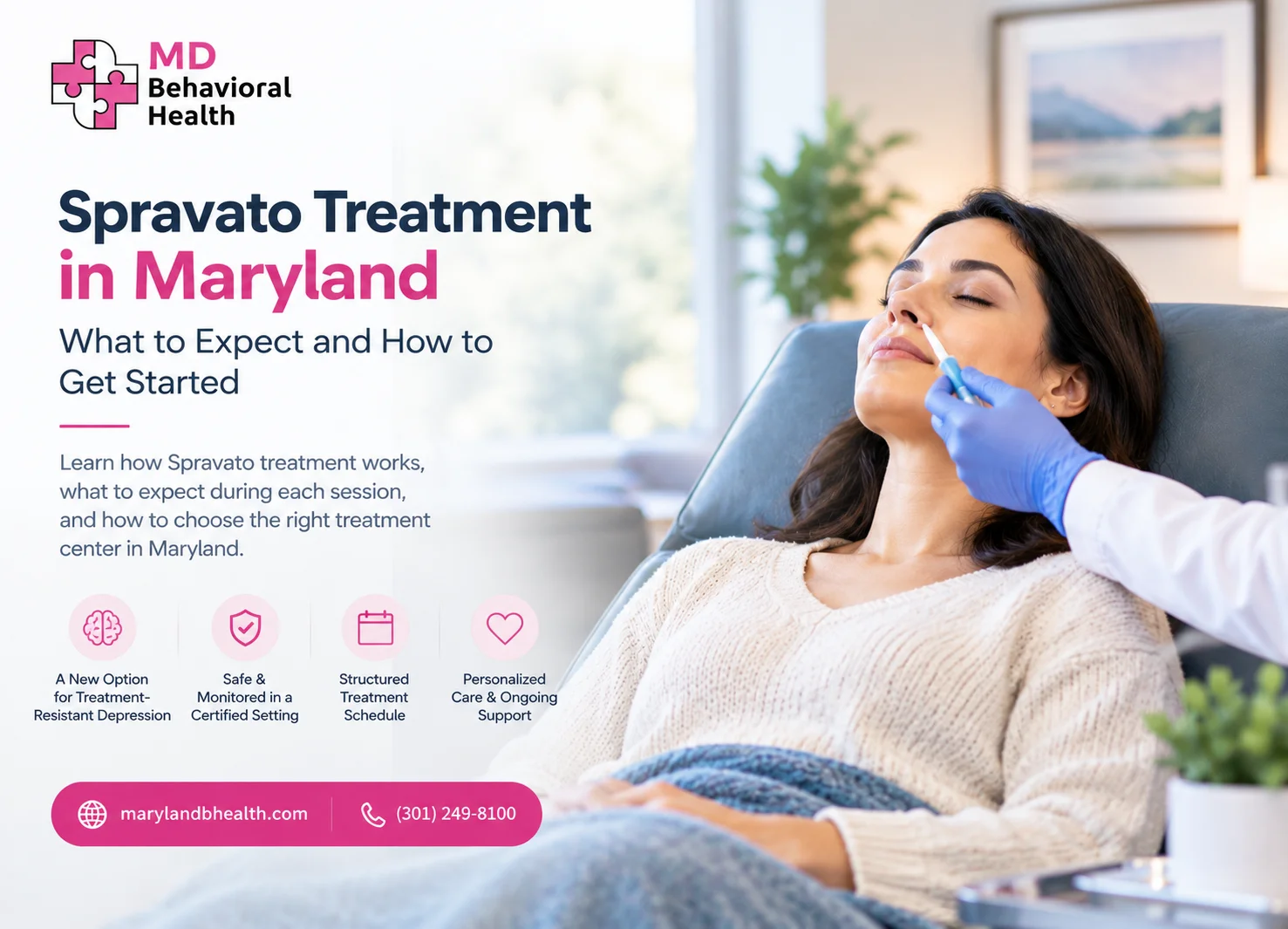
One option some people explore is esketamine, sold as Spravato. It's a nasal spray approved for treatment-resistant depression in adults, used either by itself or alongside an oral antidepressant. You take it only in a supervised clinical setting, under a federal safety program. It isn't right for everyone who has tried antidepressants. Whether it fits depends on your diagnosis, your treatment history, and a clinician's evaluation. The FDA's prescribing information spells out the approved uses and safety warnings. You can read more on our Spravato treatment page.
When depression comes with other conditions
Depression rarely travels alone. It often shows up with anxiety, substance use, chronic illness, or other health problems, and those overlaps can change the treatment picture. Someone who drinks to take the edge off low mood, for instance, may need help with both at once. A provider who knows your whole history can line up your care so the treatments support each other instead of competing.
Be candid with your clinician about everything going on, including sleep trouble, pain, the medications you take, and any alcohol or drug use. It may feel awkward, but that information is what lets them choose options that are both safe and likely to work.
Questions to ask before you start
Start by asking what treatment is being recommended and why. Find out how long it usually takes to notice a difference, and what to do if nothing changes by then. Ask what side effects to expect, how they'll keep an eye on you, and when you should call the office. If medication is in the picture, ask how you'd stop it if you ever decide to. Ask about coverage too, since treatment only helps if you can stick with it.
Ask whether your provider will coordinate with your therapist or other clinicians, if you're seeing more than one. You can also ask how progress will be tracked. Standard questionnaires and regular check-ins can show both of you whether treatment is working and when the plan needs changing.
Habits that support treatment
Treatment goes better when everyday habits are working with it. Keeping a steady sleep schedule, moving your body most days, getting outside, and staying connected to people you trust all help. Small, repeatable steps usually do more good than a big overhaul. Cutting back on alcohol matters most, since it can worsen depression and interfere with medication.
These habits support treatment but can't replace it. If you've been struggling for weeks or longer, see a clinician instead of hoping lifestyle changes alone will fix things.
If you're in crisis right now
If you're thinking about ending your life or hurting yourself, don't wait for a scheduled appointment. In the United States, you can call or text 988 at any time to reach the Suicide and Crisis Lifeline. If you feel you might act on these thoughts or can't keep yourself safe, call 911 or go to the nearest emergency room. Even when you aren't in immediate danger, let a trusted person know and reach out to your clinician quickly if your symptoms are getting worse.
Taking the first step
You don't need everything sorted out before you start. Describe what you've been going through, how long it's lasted, and what you hope will change. A good clinician will listen and help you find something that fits your life. If hope feels far away right now, that makes sense. Getting support is still often the first step back toward feeling like yourself.