Sign up with Google
 Sign in with Zoho

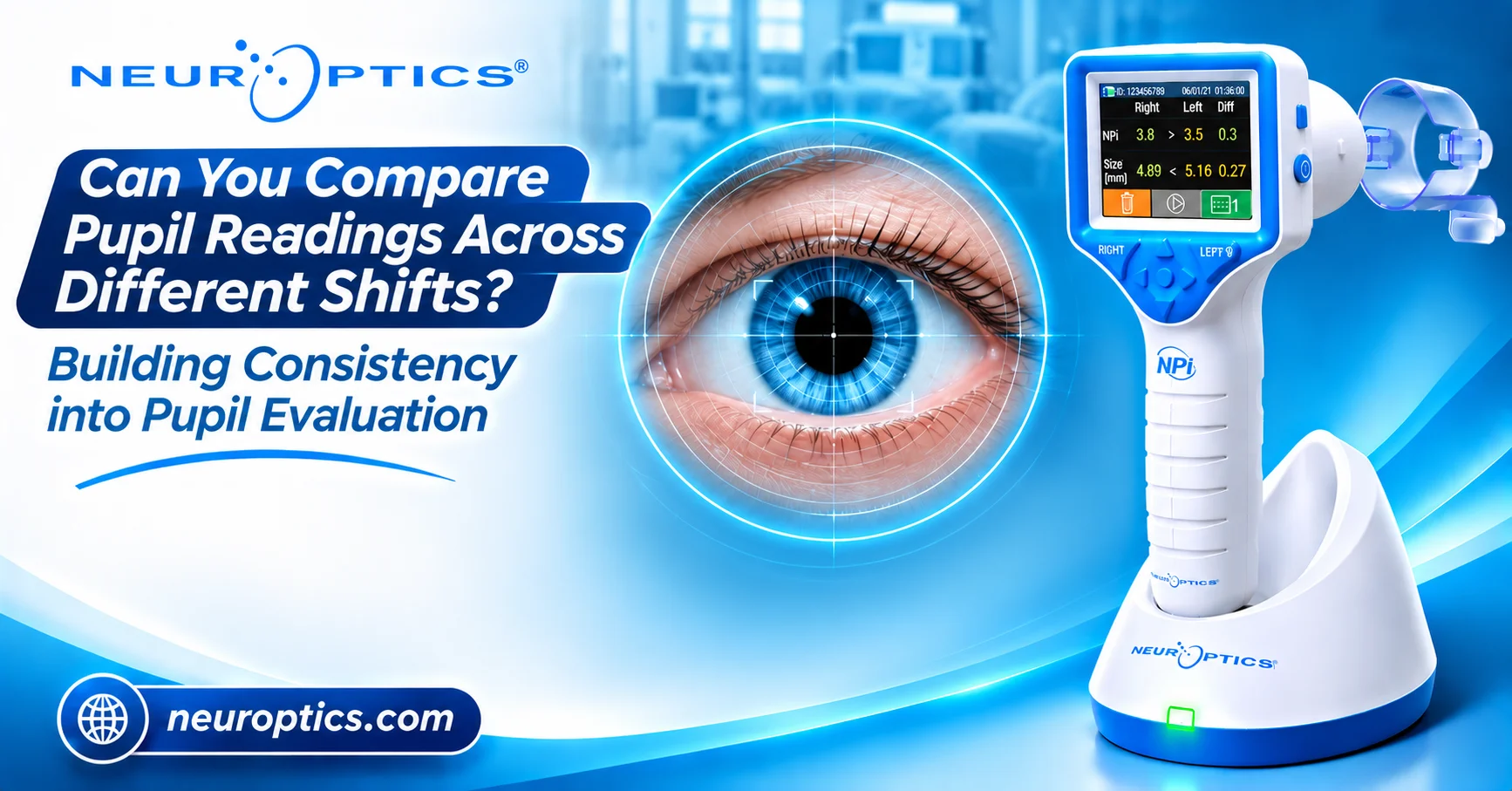
A nurse records a patient's pupil measurements during the morning shift. Hours later, another clinician performs the examination and documents a different result. Has the patient's pupillary response changed, or could differences in assessment technique be influencing the findings?
This is a practical challenge in critical care, where repeated neurological examinations help teams review patient status. Consistent pupil evaluation requires more than recording a number. It also involves standardized measurement, accurate documentation, and comparison with previous findings.
Why Can Pupil Readings Differ Between Clinicians?
Manual pupil examinations depend partly on visual estimation. Lighting conditions, pupil size, examiner experience, and the ability to distinguish subtle changes can influence observations.
A NeurOptics-published study by Olson and colleagues examined 2,329 paired assessments. It reported moderate inter-rater reliability for pupil size (κ = 0.54), shape (κ = 0.62), and reactivity (κ = 0.40). Read the study summary.
These findings highlight why two clinicians may not always record identical descriptions of the same pupil response. Standardized methods and objective measurements can help make assessments more consistent.
Start With a Patient-Specific Baseline
Before comparing readings across shifts, clinicians need a useful reference point. Establishing baseline pupil size and reactivity early in the patient's admission gives subsequent assessments a patient-specific context.
When teams measure pupil size, they should record the right and left eyes separately and follow the same approved procedure during subsequent examinations. This makes it easier to review whether a later reading differs from the patient's earlier measurements.
The NeurOptics clinical overview discusses establishing baseline NPi® and pupil-size measurements, followed by trending subsequent results according to the hospital's assessment protocol.
What Should Clinicians Compare During a Shift Handover?
Comparing readings requires looking beyond a single number. Clinicians should review the same measurements for both eyes and consider when each assessment was recorded.
A practical comparison includes:
The distinction between pupil size and NPi® matters. Size describes pupil diameter, while NPi® provides a numerical expression of pupil reactivity based on measured characteristics of the pupillary light reflex.
NeurOptics also notes that a difference of 0.7 or greater between right and left NPi® readings may be considered abnormal under its assessment guidance. Such findings should be reviewed according to clinical protocols, not interpreted in isolation. NPi-300 Quick Start Guide.
How Automated Pupillometry Supports More Consistent Comparisons
When clinicians measure pupil size using visual estimation, differences in technique can make successive findings harder to compare. The NPi-300 Pupillometer provides objective pupil size and reactivity measurements independent of the examiner.
Its single-patient-use SmartGuard® stores up to 168 paired measurements. Each pair contains right- and left-eye measurements with a timestamp, allowing recorded findings to be reviewed over the patient's hospital stay.
This gives clinical teams a way to examine previous measurements rather than relying entirely on handwritten notes or remembered observations. The SmartGuard information page explains its storage and trending capabilities.
Don't Overlook Documentation and Device Time Settings
Even a carefully performed pupil evaluation can become difficult to compare if its timestamp or patient association is incorrect.
Hospitals should establish consistent documentation practices, including:
● Recording right and left pupil measurements separately.
● Using standardized numerical fields for pupil size and NPi®.
● Confirming the correct patient identification.
● Checking measurement timestamps.
● Following institutional procedures for reporting differences.
NeurOptics' EMR integration guide explains how SmartGuard data can be accessed through a compatible RFID reader and device-driver interface. The pupillometer itself does not connect directly to the hospital network or EMR.
Another important detail is device time maintenance. The NPi-300 Quick Start Guide recommends checking date and time quarterly because incorrect settings affect timestamps on subsequent measurements.
A Practical Checklist for More Consistent Pupil Evaluation
Before comparing readings across shifts, clinical teams can consider five checks:
- Patient identity: Confirm that both sets of readings belong to the correct patient.
- Measurement procedure: Follow the same approved examination protocol.
- Bilateral findings: Review right and left pupil measurements separately.
- Timestamps: Verify when each assessment was recorded.
- Historical trends: Compare current findings with the patient's baseline and previous measurements.
This is a practical review framework, not a replacement for hospital protocols or clinical judgement.
Conclusion: Make Every Shift's Pupil Assessment More Meaningful
Reliable shift-to-shift comparison depends on consistent measurement, accurate documentation, and patient-specific trends. Quantitative pupil evaluation with the NeurOptics NPi-300 provides objective size and reactivity measurements, while SmartGuard supports the storage and review of previous findings.
Hospitals looking to strengthen their neurological assessment workflows can contact NeurOptics to discuss the NPi-300 and its capabilities.
Frequently Asked Questions
1. How often should the NPi-300 date and time settings be checked?
NeurOptics recommends checking the device's date and time quarterly to maintain accurate timestamps for subsequent patient measurements.
NeurOptics
2. Does changing the pupillometer's date and time affect previously recorded measurements?
No. Changing the NPi-300's date or time settings affects timestamps on subsequent measurements but does not alter timestamps on previously recorded measurements.
3. Can clinicians compare pupil measurements if the NPi-300 device time was incorrect during an earlier shift?
Yes, but they should verify the recorded timestamps before comparing readings. Correcting the device time updates timestamps for subsequent measurements only; previously recorded timestamps remain unchanged.
.webp)

.webp)