Sign up with Google
 Sign in with Zoho

Introduction
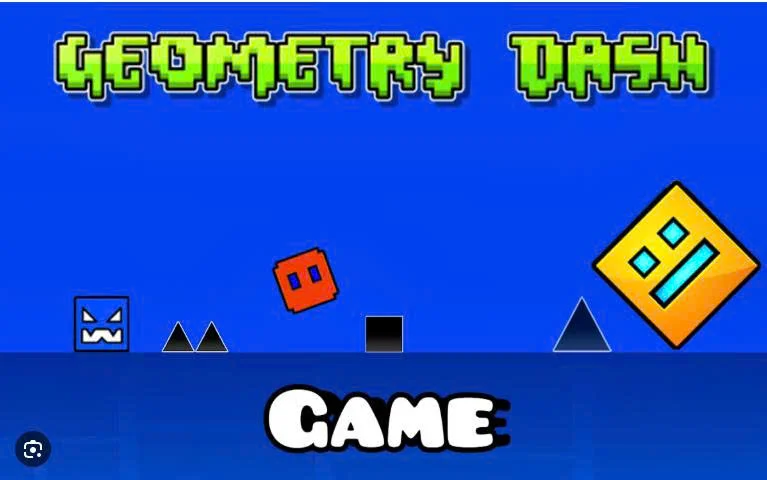
If you’ve ever watched someone play Geometry Dash and thought, “Wait—how do they make those jumps look so clean?” you’re already close to understanding the fun. The game isn’t only about speed or reflexes. It’s about learning patterns, building rhythm, and discovering the moment when your timing suddenly clicks.
A “geometry jump” is the basic idea of moving through obstacles with precision—small inputs that create big movement in the level’s logic. In real life, jumping might mean jumping over something. In geometry-jump games, it’s more like “landing” on the correct beat so the character continues safely, even when the environment tries to throw you off.
In this article, we’ll use Geometry Dash as the main example. You’ll learn how to start experiencing those jumps in a relaxed way, what to focus on as you play, and a few tips to make progress feel smoother. There’s no pressure to be perfect—just the joy of getting better one attempt at a time.
Gameplay: How the “Jump” Feels in Geometry Dash
Geometry Dash is built around timing and momentum. Most levels follow a simple pattern: you move forward automatically, and you press a button (or tap) at the right moments to jump or change your movement. That sounds straightforward, but the interesting part is how the game turns those inputs into a visual rhythm.
1) Start with the first lesson: timing, not speed
When you begin a level, resist the urge to “rush.” Instead, watch what happens right before the obstacles. In many sections, the safe path is indicated by repetition: spikes appear in regular formations, platforms follow a consistent rhythm, or the spacing gives away the expected jump height.
Try to think in terms of timing windows. Your job is to press within the correct window so you land safely. The goal isn’t to react instantly—it’s to arrive in the right place at the right time.
2) Learn by observing patterns
A common reason people get stuck is treating each obstacle as its own problem. But geometry jumps usually come in patterns. If you can identify the pattern, the level becomes a sequence rather than a puzzle of surprises.
For example, you may notice:
- repeated jump spacing (similar distances, same rhythm)
- alternating safe and unsafe blocks
- sections where your character “falls” for the same duration before the next platform
Once you recognize the pattern, your attempts improve quickly—not because your reflexes become superhuman, but because you stop guessing.
3) Use the music and visual cues as your metronome
Many Geometry Dash levels are synced to audio. Even if you don’t memorize the exact beat, you can use the sound and the visuals together. Watch the animation of the player and the obstacle timing, then align your inputs with that rhythm.
A geometry jump becomes enjoyable when you stop thinking of it as “pressing randomly” and start thinking of it as “performing the beat.” That mental shift often makes the game feel less stressful and more satisfying.
4) Experience difficulty in layers
Levels get harder over time, but difficulty often arrives in layers:
- first, you learn basic jump timing
- then, you handle shorter reaction distances
- later, you manage sequences where you can’t just “fix it” with another jump
- eventually, the challenge becomes consistency across longer sections
Don’t feel like you must clear the whole level in one go. Instead, experience it in chunks. Clear one part reliably, then expand to the next part.
Tips: How to Improve While Staying Enjoyable
Improving at geometry-jump gameplay is mostly about practicing the right things. Here are friendly, practical ways to do it.
1) Practice sections, not your entire ego
If you keep failing at the same spot, focus on that spot. Try repeated attempts until the jump feels automatic. When a jump becomes automatic, your brain spends less energy on fear and more energy on execution.
A good mindset: “I’m collecting timing knowledge.” Each attempt teaches you something about the level’s rhythm.
2) Slow down your attention during hard transitions
Hard moments often happen when the level changes style—new terrain, new jump spacing, or a different kind of obstacle. When you notice a transition, reduce your mental speed slightly. Don’t panic. Instead, re-center on what you’re seeing right at that transition.
Ask yourself: “What does this section want me to repeat?” Usually the answer is: one simple input pattern, repeated with minor variations.
3) Count beats lightly (without overthinking)
If you’re stuck, you can quietly count in your head: “one—two—jump.” You don’t need perfect counting; you just need a consistent internal rhythm. Over time, you’ll stop counting and start feeling the timing.
4) Don’t chase perfect runs—chase stable runs
It’s tempting to go for a flawless attempt. But stable progress is better. Aim to pass a section cleanly three times in a row, even if it’s not your best score.
This approach builds confidence and reduces frustration. Confidence matters because a calm mind executes inputs more accurately.
5) Learn from failures without punishing yourself
Every failed attempt has a “lesson point.” Maybe you jumped too early, or you misread the platform spacing, or you clicked after the beat instead of on it.
Instead of asking, “Why am I bad?” try: “What exactly was different in that attempt?” Small awareness upgrades your skill faster than motivation alone.
Conclusion: The Real Fun Is the Feeling of Mastery
A geometry jump in Geometry Dash is memorable because it turns learning into a tangible experience. One successful jump feels like more than a single movement—it’s proof that you can read patterns, align rhythm, and control your timing.
If you’re new, start gently: pick a level that you can reach repeatedly, practice in chunks, and let your confidence grow. If you’re returning after a break, remember that your brain often “catches up” once you re-enter the rhythm.
Whether you’re chasing your first clean run or exploring how different levels teach timing in different ways, the best part is the journey from guessing to understanding. Keep it friendly, keep it consistent, and enjoy the moment when the jumps stop feeling random—and start feeling like yours.
If you’d like, tell me what kind of levels you enjoy most (easy rhythmic, fast reflex, or tricky patterns), and I can suggest a personal “practice routine” style for that playstyle.