Sign up with Google
 Sign in with Zoho

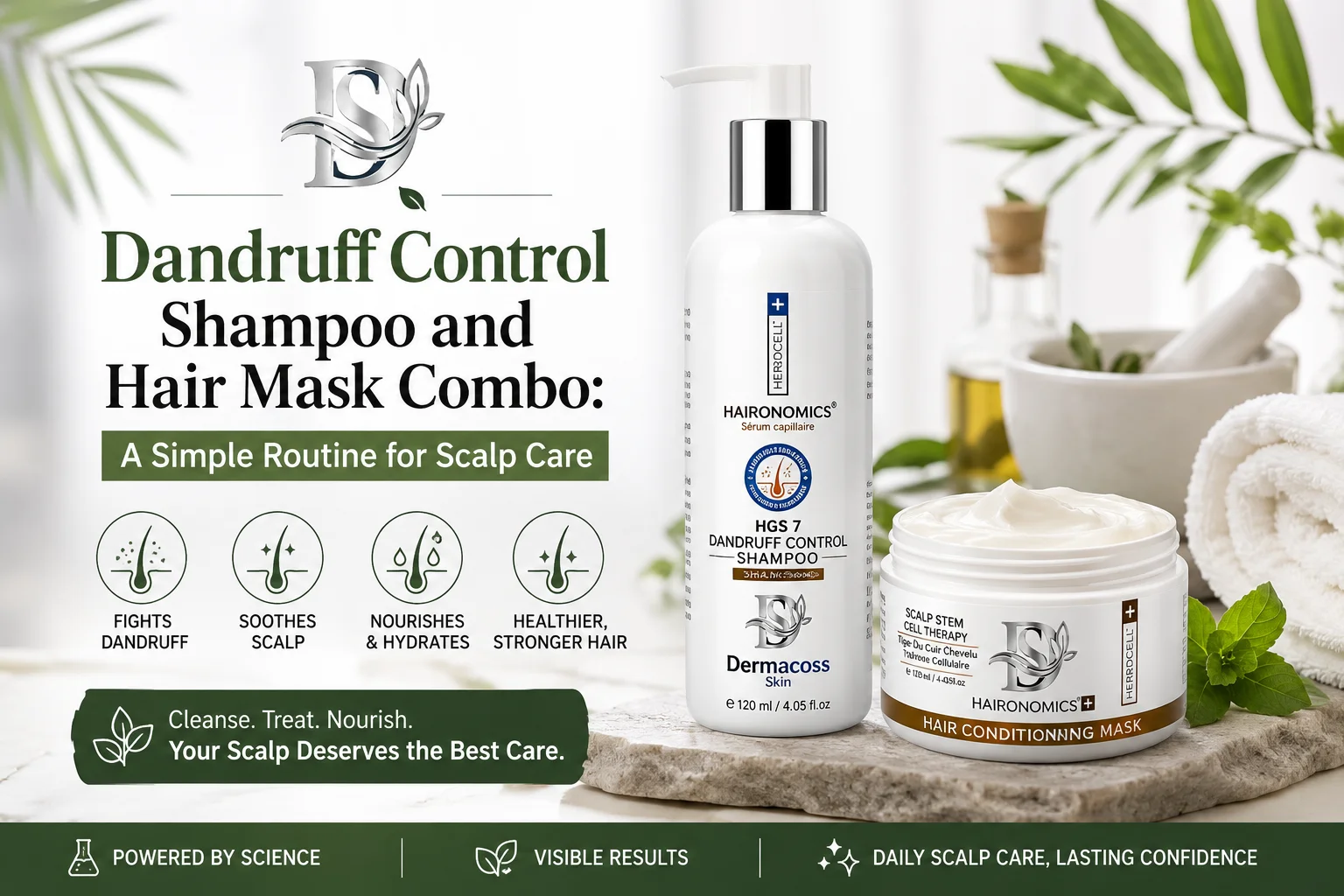
If you have been using dandruff shampoo for weeks, but your scalp feels itchy, oily, and flaky even by the third day, the culprit is not the dandruff shampoo – your process is lacking another step. Dandruff shampoo is viewed as a one-stop-shop remedy, when in actuality, it is just addressing half of your problem.
Dandruff shampoo cleanses the scalp. Hair mask moisturizes the hair strands. Done independently yet consistently, they will address two different issues of your hair at once – oil and dryness – which occur simultaneously and should be addressed in a completely different manner.
This is how you should create the routine and how leaving out the second part of it prevents people from getting rid of flakes and frizz.
What's Actually Causing the Flakes?
Not all flaking is the same condition, and that's why generic advice ("just wash more") often backfires.
Dandruff typically shows up as:
- Recurring flakes that return quickly after washing
- Oily roots combined with visible buildup
- Itching that's more noticeable a day or two after shampooing
Dry scalp tends to look different:
- Smaller, drier flakes
- A tight or uncomfortable feeling right after washing
- Worse symptoms in cold or low-humidity weather
It’s important because the solution will be different. A person who suffers from seborrheic dermatitis, and uses rich oils and heavy treatments at the hair root level can aggravate the condition even more. A person with dry and sensitive scalp, using too much cleansing shampoos can irritate the scalp even further.
In case, when you are uncertain about what type of the condition you have, when symptoms are painful, spreading and don’t go away even after several weeks of trying different products – that’s an alarm to visit a dermatologist.
Why Shampoo Alone Leaves Hair Feeling Rough
Dandruff shampoo is designed for one task and one only: cleaning the scalp. And in order for it to effectively do that, it needs to be designed to strip off oil, remove flake buildup and free up clogged roots.
But since it performs that task effectively, dandruff shampoo tends to make your mid lengths and ends dry and hard to detangle. But there is nothing wrong with your shampoo – that's how all active ingredient shampoos work.
That's the gap a hair mask is designed to fill.
What a Hair Mask Actually Does (and Doesn't)
A hair mask is a conditioning treatment, not a scalp treatment. Its job is to:
- Soften and smooth the hair shaft
- Improve manageability and reduce tangling
- Restore some of the moisture that scalp-focused shampoos strip away
What it won't do is treat dandruff. Applying a rich, conditioning mask directly onto an oily, flake-prone scalp can add to the buildup problem instead of solving it. Unless a product is specifically labeled for scalp use, the mask belongs on the mid-lengths and ends — not the roots.
This is the core principle of a combo routine: shampoo where the problem is (scalp), mask where the dryness is (lengths).
The Shampoo-and-Mask Routine, Step by Step
- Wet hair thoroughly with lukewarm water — hot water strips more moisture than it needs to.
- Apply shampoo to the scalp, not the ends. Massage gently with fingertips, never nails.
- Follow the contact-time instructions on the label — some anti-dandruff formulas need a minute or two to work; others rinse out immediately.
- Rinse completely. Leftover residue is one of the most common causes of ongoing scalp irritation.
- Squeeze out excess water, then apply the hair mask to the mid-lengths and ends only.
- Leave it on for the recommended time — longer isn't better, and it can weigh down fine hair.
- Rinse thoroughly and pat dry rather than rubbing vigorously with a towel.
How Often Should You Use Each Product?
There's no universal number, because it depends on your scalp type and how your hair responds — but general starting points look like this:
- Dandruff shampoo: 2–3 times a week for most people, alternated with a gentle regular shampoo on other wash days.
- Hair mask: Once or twice a week, focused on the lengths, regardless of how often you use the anti-dandruff shampoo.
If your scalp starts feeling tight or unusually dry, that's a sign to dial back frequency, not push through it.
Common Mistakes That Undo the Routine
- Scratching instead of massaging — this increases irritation rather than removing flakes faster.
- Applying mask to the scalp when the product isn't designed for it.
- Rinsing too fast when the shampoo needed contact time to work.
- Switching products constantly, which makes it impossible to tell what's actually helping.
- Skipping the mask entirely because the shampoo "should be enough" — it's rarely designed to be a full routine on its own.
When a Routine Isn't Enough
Cosmetic products can manage comfort and appearance, but they aren't a cure for underlying scalp conditions. See a dermatologist if you notice:
- Thick, persistent scaling that doesn't respond to a consistent routine
- Redness, swelling, or pain
- Sores, discharge, or noticeable hair shedding
- Symptoms spreading beyond the scalp
FAQ
Can I use dandruff shampoo and a hair mask on the same day?
Yes — shampoo the scalp first, rinse, then apply the mask to the lengths only.
Will a hair mask cure dandruff?
No. It conditions hair strands; it doesn't treat the scalp condition causing flakes.
Is dandruff the same as a dry scalp?
No. Both cause flaking, but the underlying triggers and treatment approach differ.
How long before I see results?
Most people notice a difference within a few weeks of consistent use, though this varies by cause and severity.