Sign up with Google
 Sign in with Zoho
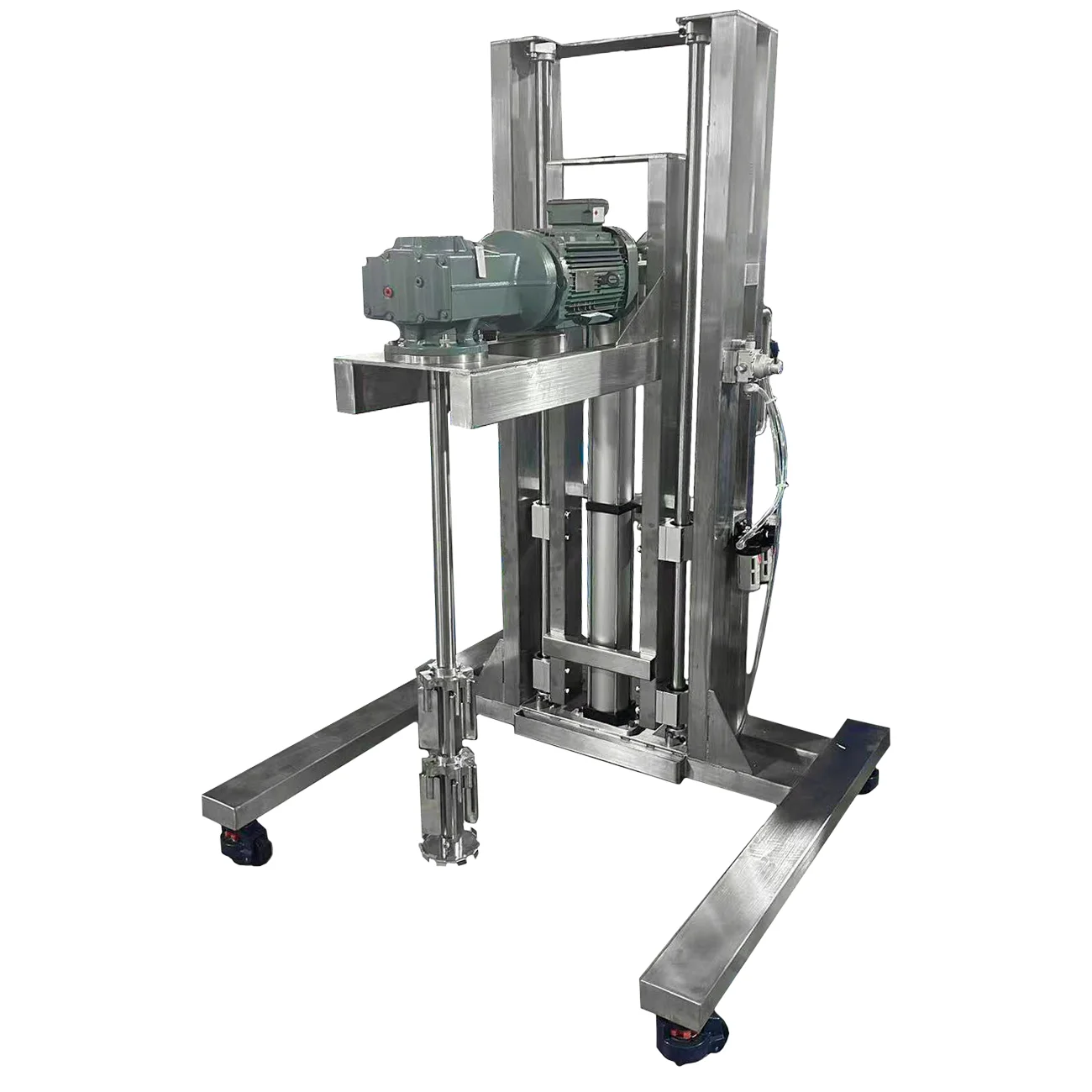
Heat transfer in a 200-gallon tote depends on more than the heating medium and setpoint. Jacket coverage plays a major role because it determines how much vessel surface is actively transferring heat into the product. For food processors, this becomes especially important when heating viscous ingredients, maintaining holding temperatures, or controlling temperature-sensitive formulations in food-grade totes.
The relationship is straightforward: greater effective jacket coverage generally provides more heat-transfer area. However, the best design also depends on product properties, agitation, temperature difference, jacket utility, and vessel geometry.
Why Jacket Coverage Matters
A jacket transfers heat through the vessel wall and into the product. The basic heat-transfer relationship can be represented as:
Q = U × A × ΔT
Here, Q is the heat-transfer rate, U is the overall heat-transfer coefficient, A is the effective heat-transfer area, and ΔT represents the temperature difference between the heating medium and the product.
Jacket coverage directly affects A. If more of the product-contacting vessel surface is jacketed, more area is available for heat transfer. Assuming other factors remain reasonably constant, increasing that area can increase the rate at which the batch gains or loses heat.
However, surface area alone does not determine performance. A poorly mixed product can still develop temperature gradients even when the vessel has substantial jacket coverage.
Full Versus Partial Jacket Coverage
A full jacket covers a larger portion of the vessel and provides a more distributed heating surface. This configuration is useful when the process requires relatively uniform temperature control throughout the working volume.
Partial jacket coverage concentrates heating in a defined region. It can be effective when the process has a specific heating zone or when the product level does not require the entire vessel wall to be heated.
The key engineering question is not simply whether more jacket is better. It is whether the jacketed area corresponds to the actual working volume and thermal requirements of the batch.
For example, if the product level sits well below an upper jacketed section, that portion contributes little to direct heat transfer into the product. Likewise, excessive heating concentration near the bottom can create a larger temperature difference between the lower and upper portions of the batch if mixing is inadequate.
Working Volume Changes the Effective Heating Area
A 200-gallon vessel does not necessarily operate at 200 gallons during every batch. Operators may maintain headspace for expansion, agitation, foaming, ingredient addition, or thermal movement.
That distinction matters because the effective jacket coverage should be evaluated against the working volume, not simply the vessel's nominal capacity.
Suppose a 200-gallon tote is operated at a substantially lower fill level. A jacket extending far above the liquid level provides less useful heat-transfer area than its total physical coverage might suggest. Conversely, a jacket designed around the normal product level can provide more efficient use of the available heating surface.
This is one reason jacket geometry should be established from actual process conditions rather than vessel capacity alone.
Product Viscosity Changes the Heat-Transfer Problem
Low-viscosity liquids can circulate relatively easily as they are heated. Natural convection may contribute to movement within the vessel, and agitation can further improve temperature distribution.
High-viscosity products are different. Their internal circulation is more difficult, and heat can accumulate near the vessel wall while the center of the batch remains cooler.
For these products, increasing jacket coverage without considering agitation may not solve the problem. The agitator must move product across the heated surface and distribute that thermal energy through the batch.
Impeller type, diameter, rotational speed, and viscosity therefore become closely connected to jacket performance.
Agitation Helps Use the Jacket More Effectively
The vessel wall may provide the heat-transfer surface, but the agitator determines how effectively product contacts that surface.
An appropriately selected agitator continuously moves colder product toward the heated wall while carrying warmer material away from it. This reduces localized hot spots and improves temperature uniformity.
The required mixing intensity depends on the product. A low-viscosity liquid may require relatively modest agitation, while a thick sauce or other viscous food product may require a different impeller geometry and substantially higher torque.
For a 200-gallon tote, mixer selection should therefore be considered alongside jacket design rather than treated as a separate equipment decision.
Heating Medium and Temperature Difference Matter Too
Jacket coverage cannot compensate indefinitely for an unsuitable heating medium.
Steam, hot water, and other thermal fluids provide different temperature ranges and heat-transfer characteristics. The available temperature difference between the jacket medium and the product directly affects the driving force for heat transfer.
For example, increasing jacket area can help when the available temperature difference is limited. However, raising the heating-medium temperature is not always the best solution, particularly for food products that may be sensitive to excessive surface temperatures.
A larger heat-transfer area combined with controlled utility conditions and adequate agitation can provide a more balanced approach.
Why Food-Grade Construction Matters
Thermal performance is only one part of the equipment specification for food processing. Food grade totes must also support hygienic handling, cleaning, drainage, and product-contact requirements.
Stainless steel construction is commonly selected for applications requiring durability and sanitary processing. Surface finish, weld quality, fittings, valves, and internal geometry can all influence cleanability.
Jacket design should also avoid creating unnecessary areas where product or cleaning fluids can become trapped. The thermal system and sanitary design need to work together, particularly when the tote is used for repeated batches.
How Engineers Evaluate Jacket Coverage
A practical jacket evaluation considers several variables at the same time:
● Normal and maximum working volume
● Required heating or cooling time
● Product viscosity and thermal properties
● Target process temperature
● Heating-medium temperature and flow
● Available heat-transfer area
● Agitator type and operating speed
● Vessel geometry and product level
● Required temperature uniformity
● Cleaning and sanitary requirements
Engineers can then estimate the required heat load and compare it with the available transfer area and utility conditions.
This approach is more reliable than specifying jacket coverage based only on vessel size.
Designing the Jacket Around the Process
Jacket coverage has a direct influence on heat-transfer capacity, but it is only one piece of the thermal design. A properly engineered 200-gallon vessel should match jacket area with working volume, product properties, agitation, heating utility, and the required temperature profile.
For food processors, the goal is not simply to heat the batch faster. The equipment should deliver controlled, repeatable heating while maintaining product quality and supporting sanitary operation. That process-based approach is what turns jacket design from a simple vessel feature into an important part of thermal system engineering.

.webp)