Sign up with Google
 Sign in with Zoho

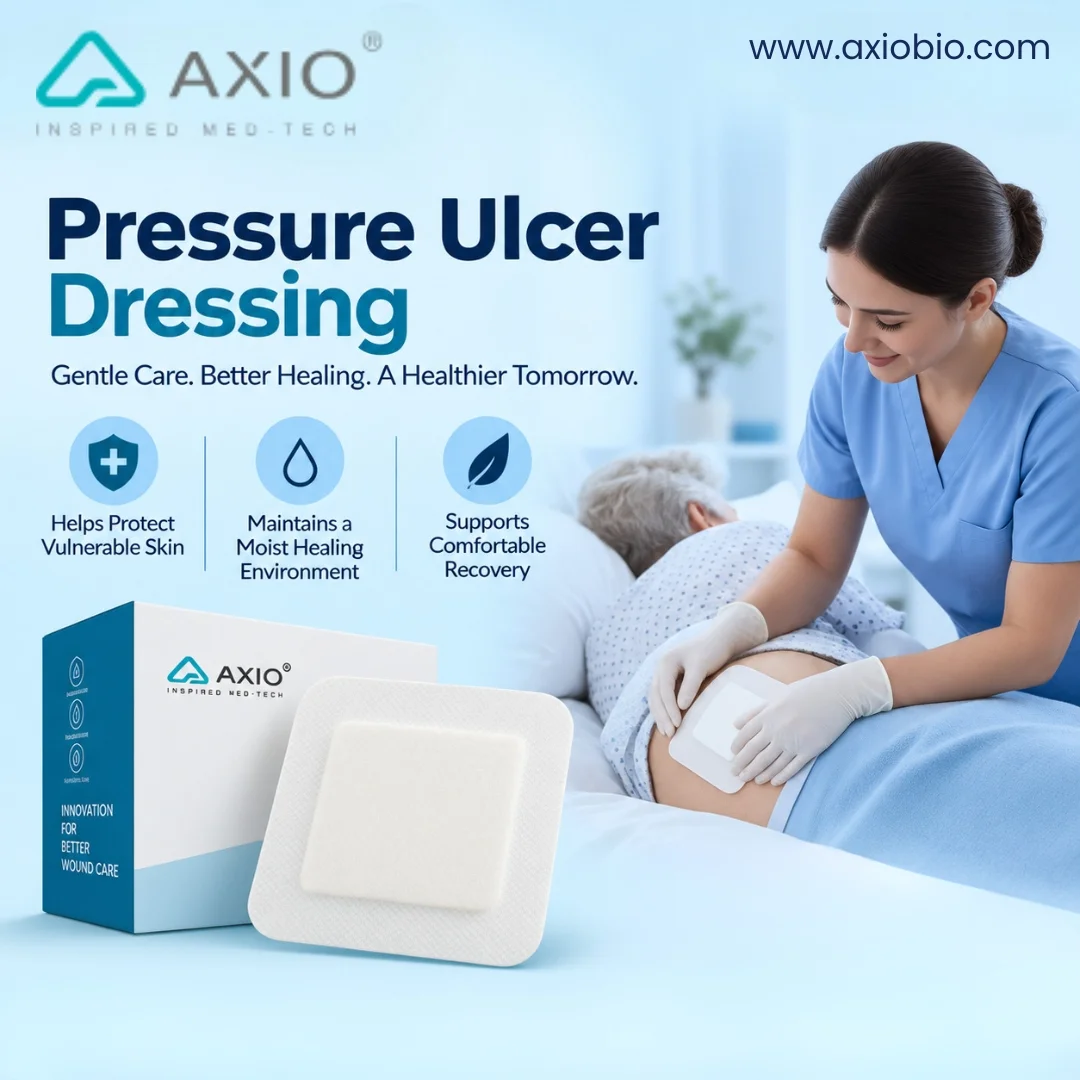
Anyone who has cared for a bedridden patient knows how quickly a small red patch can turn into a painful wound. Pressure ulcers, often called bed sores, form when the same part of the body stays under pressure for too long. They are common in people who spend long hours in bed or in a wheelchair, and left alone, they can become deep, painful, and slow to heal. The right pressure ulcer dressing makes a real difference, and at Axiobio we know how much it matters to the nurses and caregivers who rely on it every day.
Understanding Pressure Ulcers
These wounds usually appear where bone sits close to the skin: the heels, hips, elbows, shoulders, and tailbone. At first, you may only notice redness or a change in skin colour. If the pressure continues, the skin can break open.
Older adults, people with limited mobility, and those with poor nutrition are at higher risk. Sweat, incontinence, and the constant rubbing of skin against bedding can make things worse. A quick daily skin check helps caregivers spot trouble early, and simple habits like changing position often, keeping the skin clean, and relieving pressure points can stop a wound from getting worse.
Why the Right Dressing Matters
A dressing does far more than cover a wound. It manages fluid, keeps out contamination, and reduces friction on the damaged area.
Every ulcer is different. Some produce a lot of fluid and need a dressing that absorbs well. Others need moisture kept in without letting the surrounding skin turn soggy. The wound’s condition and the patient’s overall health should guide the choice.
Comfort counts too. A dressing that stays in place and comes off gently makes routine care easier on the patient. Professionals should always choose according to the wound assessment, clinical guidance, and the manufacturer’s instructions.
What to Look for in a Pressure Ulcer Dressing
Before choosing a product, healthcare teams usually weigh these points:
- Moisture control: Manages wound fluid and supports a healthy healing environment.
- Skin-friendly removal: Lowers the risk of harming delicate skin during changes.
- Friction protection: Reduces rubbing from clothing, sheets, and other surfaces.
- Suitable absorption: Matches the amount of drainage the wound produces.
- Patient comfort: Flexible materials move with the body during repositioning.
- Easy application: Simple to put on and take off, which saves time during busy shifts.
No single dressing suits every ulcer. Depth, location, drainage, and the condition of the nearby skin all shape the final decision.
Preventing Pressure Ulcers Before They Start
Prevention is almost always easier than treatment. Patients who cannot shift position on their own need regular help to take pressure off vulnerable areas.
Caregivers can make a big difference by checking the skin, keeping it clean and dry, and making sure the patient eats and drinks well. Pressure-relieving mattresses and cushions may help those at higher risk. Protective dressings can also reduce friction and shear on high-risk areas, but they work best alongside repositioning and other preventive steps, never in place of them.
Making Dressing Changes Part of Good Care
Choosing the right product is only half the job. How you apply it matters just as much. The wound should be assessed and cleaned properly, and the surrounding skin prepared as the dressing instructions describe.
The dressing should fit well, without pulling or adding pressure. When removing it, go slowly so you don’t disturb new tissue.
At every change, note the wound’s size, appearance, drainage, and the state of the skin around it. These records help the team see whether healing is on track. Worsening pain, spreading redness, unusual odour, pus, fever, or a wound that keeps getting worse can signal a complication, so these signs should always lead to a clinical review.
How Better Wound Care Helps Everyone Involved
Managing a pressure ulcer is demanding for patients, nurses, and family members alike. A suitable dressing and a clear care routine make the job more manageable and more comfortable.
Patients feel the benefit through better protection and gentler handling. Nurses can plan their work more smoothly when products suit the wound and are easy to use. For hospitals and care homes, steady assessment and prevention habits help cut down avoidable complications. In the end, the aim is not just to cover a wound but to give care that keeps up with the patient’s changing needs.
Why Choose Axiobio for Wound Care?
At Axiobio, we understand that healthcare providers need wound care products that work in the real pace of clinical life. Our goal is to offer dependable solutions and clear information so professionals can make confident decisions.
We work closely with hospitals, medical facilities, and distribution partners to understand what they need and support their requirements. When you compare pressure ulcer dressings, look at the intended use, product specifications, clinical suitability, and handling needs. Choosing carefully for each patient is part of responsible wound management, and our team is ready to help you do that.
Supporting Better Pressure Ulcer Management
Pressure ulcers need steady attention, from spotting the first sign of damage to checking progress at every dressing change. Regular repositioning, skin protection, good nutrition, and a dressing that suits the wound all work together as one care plan.
Axiobio is proud to support healthcare professionals with wound care solutions built around practical clinical needs. With careful assessment and the right preventive habits, care teams can work towards better healing and greater comfort for their patients.
Frequently Asked Questions
1. What is a pressure ulcer dressing? It is a wound covering that protects the affected area and helps manage moisture and drainage. The right product depends on the wound’s stage, depth, and overall condition.
2. How do I choose the right dressing for a pressure ulcer? Look at the wound’s location, depth, drainage, and the skin around it. A healthcare professional can recommend a suitable dressing based on these findings and the patient’s needs.
3. How often should a pressure ulcer dressing be changed? It depends on the manufacturer’s instructions, the amount of drainage, and the wound’s condition. Change it when clinically needed, and seek professional advice if you notice leakage, contamination, or other concerns.
4. Can a dressing prevent pressure ulcers? Some protective dressings can reduce friction and shear in people at risk. They should be used together with regular repositioning, skin checks, moisture management, and pressure-relieving equipment.
5. What else helps pressure ulcers heal? Pressure relief, proper wound cleaning, good nutrition, moisture control, and regular clinical assessment all help. Deeper or worsening wounds may need specialist treatment.
6. Where can healthcare providers find wound care products from Axiobio? Healthcare professionals and distributors can contact Axiobio to learn about the available wound care range and get product information.
Contact Information
Website: https://axiobio.com
Email: [email protected]
Phone no: +91 8860786067
Follow Axiobio on Social Media
https://www.facebook.com/Axiobio
https://www.instagram.com/axiobio/
https://www.youtube.com/axiomedical
https://in.pinterest.com/axiobioseo/
https://www.linkedin.com/company/axio-biosolutions-private-limited/
https://x.com/axiobio