Sign up with Google
 Sign in with Zoho

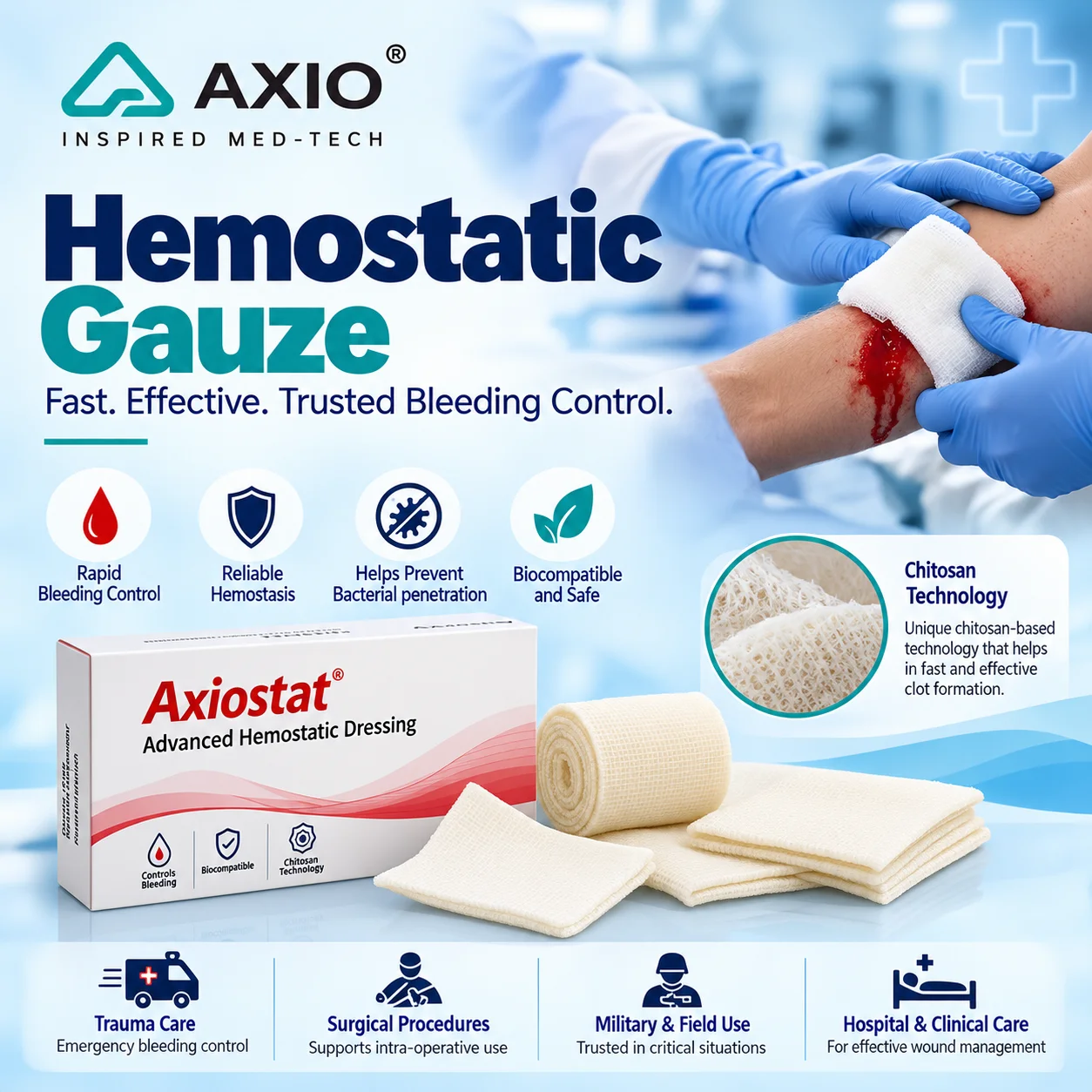
When someone’s bleeding badly, the dressing in your kit either helps or it doesn’t. If you’re stocking supplies for a hospital, an ambulance, or a factory first-aid room, that choice matters more than it seems. The dressing has to be easy to grab, easy to open, and right for the kind of injuries you’re likely to see.
So how do you choose between all the hemostatic gauze products out there? Price won’t settle it. You’ll also want to look at what the dressing is made of, how it’s packed, and who’s selling it.
At Axiobio, we work with wound care and bleeding control products every day, so we know what buyers tend to overlook. These are the things we’d check before ordering.
What Makes a Good Hemostatic Dressing?
Picture a first-aid team arriving at an accident. They need the dressing fast. The packet should open without a fight, and the instructions should make sense at a glance. Nobody wants to squint at tiny print while someone’s bleeding.
That’s why design, material, and packaging all count. A product can look great on a spec sheet and still be awkward to use in real life. Knowing its features before you buy saves you from finding that out the hard way.
Things to Check Before You Buy
The material. Hemostatic dressings aren’t all built the same way. Some rely on particular materials that help control bleeding, and each works a bit differently. Read what the manufacturer says, and look for clinical evidence behind the claims. That tells you how the product works and whether it fits your use.
How it handles. When an emergency hits, responders should be focused on the patient, not wrestling with the dressing. Check how flexible and strong it is. If it’s meant for packing wounds, the instructions should spell out exactly how to do that.
The packaging. It’s easy to ignore until you need the product in a hurry. Can the packet be opened quickly? Are the instructions clear? Does the label tell you straight away what’s inside? Small things, but they add up.
Sterility and expiry. Look at the sterile seal, batch details, expiry date, and labelling before you commit, especially on bulk orders. Build a simple stock-check routine too, so expired or damaged packs get swapped out on time.
Size. One format rarely covers every situation. Think about the injuries your team could face, then pick dressings recommended for those cases. Always go by the manufacturer’s guidance and your own clinical protocols.
The supplier. You’re not just buying a pack. You might need product details, help with a large order, or answers about storage and availability. A supplier who replies clearly and gives you the information you ask for is worth far more than one who just ships boxes.
Who Should Keep Hemostatic Gauze on Hand?
It isn’t only for hospitals. Clinics and ambulance services are the obvious ones, but factories, construction firms, and warehouses often review their first-aid kits as part of workplace safety planning, and bleeding control products can be part of that. Sports clubs and outdoor rescue teams can look at their own activities and decide what they’d realistically need.
Axiobio focuses on wound care, trauma care, and bleeding control. If you’re sourcing for your organisation, start by writing down what you need, then compare options against that list.
Mistakes We See Buyers Make
Most problems don’t come from a lack of products. They come from skipping the details.
Going purely on price is the big one. Cheaper doesn’t mean wrong, but it doesn’t mean right either, so compare specifications and evidence too. Some buyers never check the packet itself, and then find it damaged or confusing when it’s needed. Others order far more than they can store or use before it expires. Then there’s the assumption that everyone on the team already knows how to use the dressing. They often don’t. And finally, plenty of people sign up with a supplier without confirming documentation, stock, and delivery first.
A few minutes of checking up front can save a lot of hassle later.
Why Training Matters as Much as the Product
Putting a dressing in a first-aid kit is a good start. But if nobody knows how to use it, it won’t do much. Make sure your team has seen the packaging, read the instructions, and ideally practised.
Check your kits regularly as well. Swap out anything expired, look for torn or damaged packets, and keep supplies somewhere clearly marked and easy to reach.
And one thing worth repeating: for serious bleeding, call emergency medical services straight away. A hemostatic dressing can help control bleeding when it’s used correctly, but it doesn’t replace proper medical care.
Why Consider Axiobio?
Buyers want to know exactly what they’re getting and where it fits. We get that.
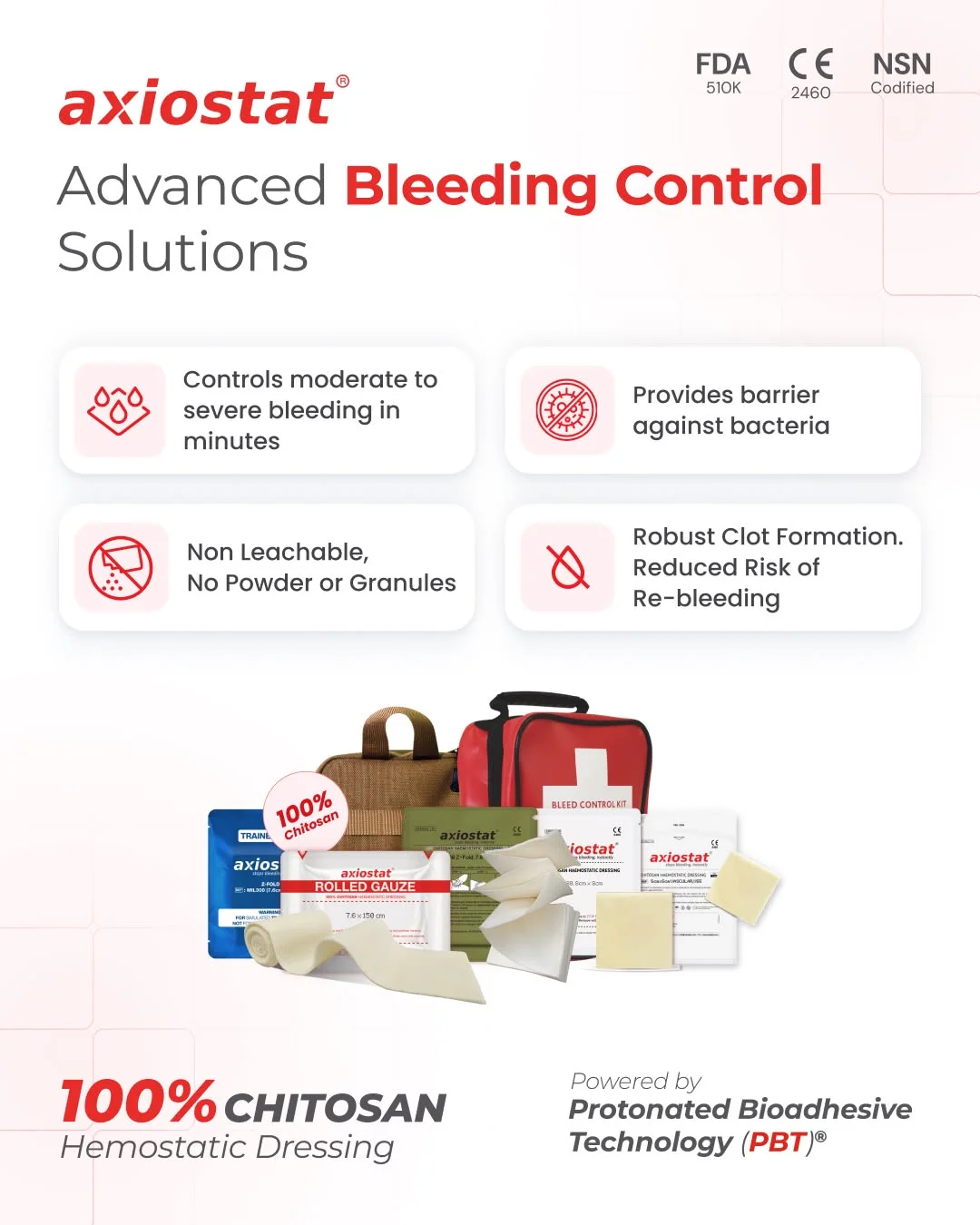
Axiobio develops science-driven wound care technologies covering wound management, trauma care, and bleeding control, including products built on biomaterials. Whether you’re sourcing for a healthcare facility or just gathering information, it helps to understand the available formats, what each is meant for, and what documentation backs them up.
You’re welcome to explore our products and technology on Axiobio.com. If you’ve got specific purchasing needs, get in touch with our team and we’ll talk through the options.
Frequently Asked Questions
1. What should I look for when buying hemostatic gauze? Check the material, intended use, product information, packaging, sterility, and expiry date. Also look at the manufacturer’s clinical evidence, and make sure the product matches your team’s training and needs.
2. Does packaging really matter for bleeding control dressings? Yes. Good packaging protects the product and lets people open it quickly. Clear labels and instructions help a lot when supplies are needed in a hurry.
3. Where can hemostatic gauze be used? That depends on the product’s intended use. It may be part of emergency supplies for hospitals, ambulance services, clinics, and workplaces with relevant injury risks. Follow proper first-aid guidance when choosing.
4. How should I store hemostatic gauze? Keep it in its original packaging and follow the manufacturer’s storage instructions. Check expiry dates, and inspect packets now and then for damage.
5. Is hemostatic gauze enough for heavy bleeding? No. It can help control bleeding when used correctly, but serious bleeding needs urgent medical attention. Follow emergency first-aid guidance and get professional care as soon as possible.
6. Where can I learn more about Axiobio’s bleeding control products? Visit Axiobio.com to explore our wound care technologies and products. You can also contact our team about available options and their intended uses.
Final Thoughts
Choosing hemostatic gauze gets easier once you know what to look at. Look past the price, read the product details, check the packaging and expiry dates, and make sure the dressing suits the people who’ll actually use it.
If your organisation is preparing for bleeding emergencies, those small checks are worth doing before you place an order. Axiobio offers wound care and bleeding control solutions for buyers who want to learn more about biomaterial-based technologies and the products available.
Contact Information
Website: https://axiobio.com
Email: [email protected]
Phone no: +91 8860786067
Follow Axiobio on Social Media
https://www.linkedin.com/company/axio-biosolutions-private-limited/
https://x.com/axiobio
https://www.facebook.com/Axiobio
https://www.instagram.com/axiobio/
https://www.youtube.com/axiomedical