Sign up with Google
 Sign in with Zoho

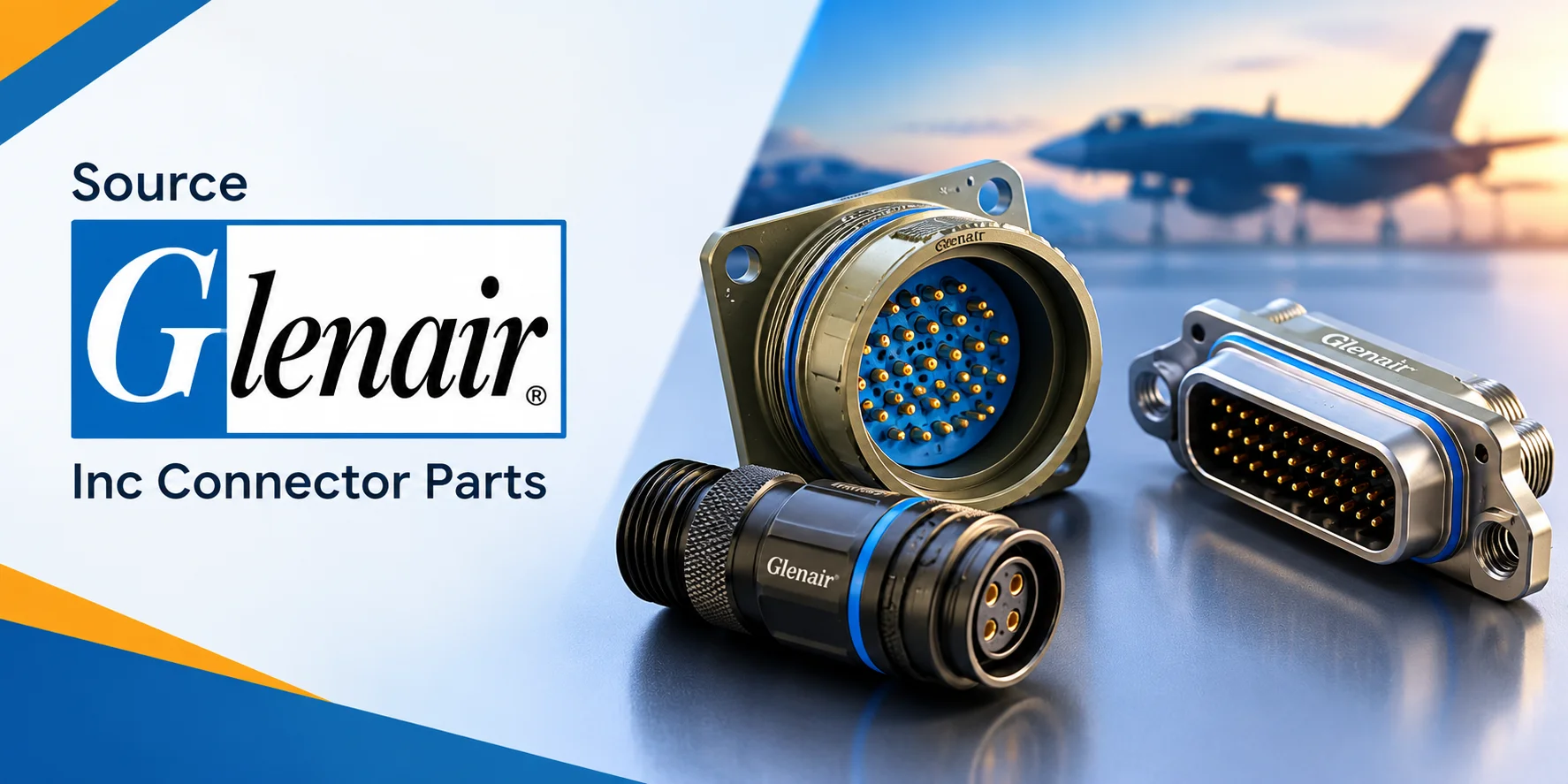
Aircraft maintenance and replacement initiatives frequently necessitate connectors that adhere to precise electrical, mechanical, and environmental standards. Choosing the appropriate connector is essential to ensuring system compatibility, promoting reliable performance, and preventing avoidable maintenance delays. For procurement teams, identifying the correct component can prove difficult when managing legacy aircraft systems, ambiguous part numbers, or constrained supply chains.
Glenair Inc. specializes in interconnect solutions designed for high-stakes environments, such as aerospace and defense. When sourcing Glenair connectors for aircraft maintenance, procurement professionals should prioritize precise part identification, clear application requirements, thorough documentation, and rigorous supplier verification.
Why Connector Selection Matters in Aircraft Maintenance
Aircraft connectors support electrical connections across avionics, communication equipment, control systems, and other onboard applications. An incorrect replacement can create compatibility issues or fail to meet the technical requirements of the original installation.
Maintenance teams should verify the connector's specifications before ordering. These may include contact arrangements, shell size, coupling style, electrical ratings, environmental sealing, and applicable qualification requirements. Physical resemblance alone is not enough to establish that two connectors are interchangeable.
Key Factors to Check Before Sourcing Glenair Connectors
1. Verify the Complete Part Number
Start with the exact part number listed in the aircraft maintenance documentation, equipment manual, or existing component records. Even a small difference in a part number can indicate a different configuration, material, or connector arrangement.
For example, buyers looking for Glenair connector part 444FS001M1033-6-48 should use the complete reference when submitting a sourcing request. This helps suppliers identify the requested item more accurately and reduces unnecessary back-and-forth during procurement.
2. Confirm Technical and Application Requirements
Before placing an order, review the specifications required for the intended aircraft system. Depending on the application, important details may include:
- Contact type, count, and arrangement
- Connector dimensions and mounting configuration
- Voltage, current, and signal requirements
- Temperature range, vibration resistance, and environmental protection
- Applicable drawings, standards, and qualification requirements
Engineering or maintenance personnel should confirm that the selected component meets the requirements of the specific installation.
3. Check Documentation and Traceability
Supporting paperwork is frequently needed for aerospace procurement in order to prove component authenticity and compatibility. Buyers may request manufacturer documentation, certificates of conformance, traceability records, or other inspection and acceptance documents, depending on the part and purchasing requirements.
Before making a purchase, confirm the documentation needs, especially if you're sourcing outdated, discontinued, or difficult-to-find components. This lessens the possibility of receiving parts that aren't suitable for the planned maintenance.
4. Evaluate Replacement Options Carefully
When the original Glenair connector is difficult to find, procurement teams may need to investigate alternative sourcing options. However, a connector with similar dimensions or electrical characteristics should not automatically be treated as an equivalent replacement.
Any proposed substitute should be reviewed against the original technical requirements and approved through the applicable engineering and maintenance procedures. This is especially important when connectors form part of safety-critical aircraft systems.
5. Consider Availability and Lead Times Early
When maintenance schedules are constrained, connector sourcing may create a bottleneck. Before committing to a maintenance program, buyers should verify stock condition, anticipated lead times, order quantities, and delivery arrangements.
Procurement teams might find possible supplier sources by looking through manufacturer lists and collaborating with an aircraft parts distributor. Supplier responses can also be more helpful if full part information and documentation requirements are provided at the outset of the RFQ process.
Where to Find Glenair Connectors for Replacement Projects
When comparing sourcing possibilities, buyers can start by looking through the Glenair Inc. connector listing that is currently accessible and investigating different aircraft connector manufacturers. Procurement teams might find pertinent component listings by looking through the larger aerospace connections category.
For purchasers looking to source aviation and aerospace components, Aerospace 3Sixty offers an online resource. It provides a starting point for submitting part specifications and getting bids because it is a distributor of aeronautical parts.
When submitting an RFQ, include the complete part number, required quantity, delivery location, desired delivery date, and any applicable documentation requirements. These details help suppliers assess the request and respond with relevant availability and quotation information.
Conclusion
It takes more than just finding a matching product name to find the appropriate Glenair connector for aeroplane repair. A more dependable procurement process is facilitated by accurate part-number verification, technical compatibility tests, documentation inspection, and early availability checks.
Maintenance and procurement teams can minimise preventable delays and make more informed replacement decisions by gathering comprehensive sourcing information and evaluating appropriate supplier options. Buyers can submit an RFQ for Glenair connector component 444FS001M1033-6-48 to find out availability and obtain a price for particular specifications.







 (1) (3).webp)