Sign up with Google
 Sign in with Zoho

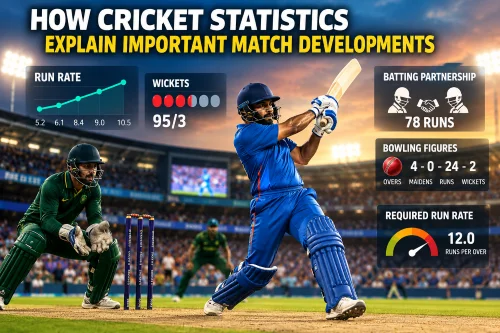
A cricket match can change direction within a few deliveries. A sudden wicket, a productive partnership or a disciplined bowling spell can influence the final result.
Cricket statistics help explain these developments. They show how teams perform during different stages of an innings and why certain moments become important.
Why Doesn't the Final Score Explain the Complete Match?
A team finishing on 175/6 may have started confidently or recovered after losing early wickets.
The final total does not explain that difference. Comparing scores at different stages reveals how the batting team built its innings.
How Can Run Rate Reveal a Change in Batting Momentum?
Run rate measures average runs scored per over.
For example, a team scoring 50 runs in five overs has a run rate of 10.00. If it adds only 25 runs in the next five, its scoring pace has slowed.
This change may reflect effective bowling, lost wickets or a more cautious batting approach.
Why Can Two Quick Wickets Change a Team's Strategy?
Wickets interrupt partnerships and bring new batters to the crease.
If a team moves from 90/1 to 95/3, it has lost two wickets for five additional runs. The remaining batters may need to rebuild before increasing the scoring rate.
What Do Bowling Figures Tell Us About Match Pressure?
Bowling statistics explain how effectively a player restricted scoring or took wickets.
Three useful figures are:
- Wickets: The number of dismissals credited to the bowler.
- Economy rate: Average runs conceded per over.
- Overs bowled: The amount of bowling completed.
A bowler conceding 20 runs in four overs has an economy rate of 5.00.
How Do Partnerships Help Teams Recover From Difficult Situations?
Partnerships show the runs added while two batters are together at the crease.
A team struggling at 40/3 may recover through an 80-run partnership. Such a contribution can restore stability and improve the final total.
How Does Required Run Rate Explain Pressure During a Chase?
Required run rate measures how quickly a chasing team needs to score.
If 60 runs are required from six overs, the rate is 10.00. If the next two overs produce only 12 runs, the team needs 48 from four overs, increasing the required rate to 12.00.
Which Statistics Should Cricket Beginners Check First?
Readers can begin with a few important figures:
- Team score and wickets lost.
- Overs completed.
- Current and required run rates.
- Important batting partnerships.
- Bowling economy and wickets taken.
These details provide a useful overview of how an innings developed.
Why Should Cricket Statistics Always Be Read in Context?
A low run rate may be reasonable on a difficult pitch, while a higher rate may be necessary when chasing a large target.
Match format, pitch conditions and available wickets all influence how statistics should be interpreted.
By combining these details, readers can understand the performances and turning points behind a cricket match rather than focusing only on the result.
Read More Sports Related Info: https://99exchange.exchange/





.webp)