Sign up with Google
 Sign in with Zoho
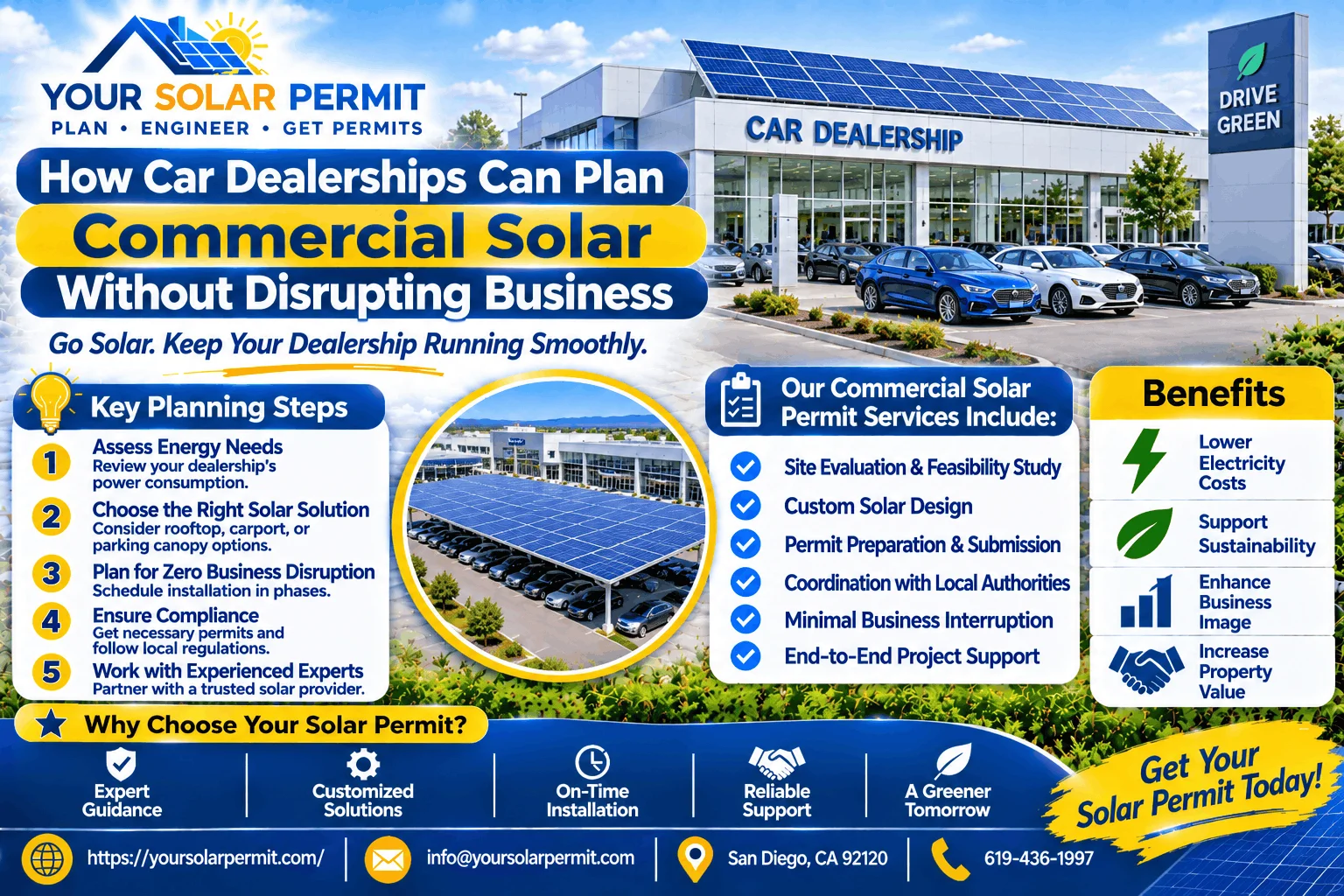
Commercial solar permit services can help car dealerships plan solar installations while protecting daily showroom operations, customer access, vehicle displays, and service department activities. Although dealerships often have large rooftops and parking areas, not every section is automatically suitable for solar panels. Careful planning is necessary to ensure that the proposed system meets electrical, structural, and local permitting requirements.
Dealership owners considering commercial solar permit services should begin with a detailed assessment of their property, building layout, roof condition, and electricity consumption. A well-organized plan can help avoid unnecessary construction delays and make the installation process easier to manage.
Review Showroom and Service Department Requirements
Car dealerships consume electricity throughout the day. Showroom lighting, heating and cooling systems, vehicle lifts, diagnostic equipment, offices, and outdoor displays all contribute to energy demand. Understanding these requirements helps determine the appropriate solar system capacity.
Roof conditions also need attention. HVAC units, skylights, drainage systems, and existing electrical equipment can affect panel placement. A professional solar permit design should clearly identify the proposed panel arrangement, equipment locations, structural considerations, and electrical connections.
Maintain Customer Access and Vehicle Operations
One of the biggest challenges of commercial solar installation at dealerships is maintaining normal business activities. Customers still need convenient parking, service departments must remain accessible, and vehicle deliveries should continue without unnecessary interruptions.
Before construction begins, dealership management should coordinate contractor access, equipment storage, safety barriers, and installation schedules. Dividing the project into manageable phases may help reduce disruption, particularly at busy dealerships with limited parking availability.
Prepare Accurate Engineering and Permit Documents
Proper documentation is essential for a smooth approval process. Project plans should address electrical capacity, inverter placement, conduit routing, structural requirements, and utility interconnection details.
Depending on project complexity and local regulations, PE stamping services may also be required. Complete drawings and supporting engineering documents help reviewers evaluate whether the proposed installation meets applicable building and electrical codes.
Reliable solar permit services can help coordinate technical drawings and supporting documents before submission to the relevant authorities.
Evaluate Costs, Benefits, and Potential Challenges
Solar energy may help dealerships offset electricity expenses associated with showrooms, offices, and service departments. However, roof repairs, structural improvements, shading, equipment costs, and installation schedules should be considered before making a financial commitment.
Dealership owners should compare expected energy savings with the overall project investment and evaluate whether the proposed system supports their long-term business goals.
Final Thoughts
Planning commercial solar for a car dealership requires more than selecting suitable roof space. Owners must consider building conditions, electrical requirements, customer accessibility, and local permitting standards. Working with experienced solar permitting services can help dealerships organize project documentation and move toward a properly planned solar installation. Visit Your Solar Permit to explore commercial solar project design and permitting support.