Sign up with Google
 Sign in with Zoho

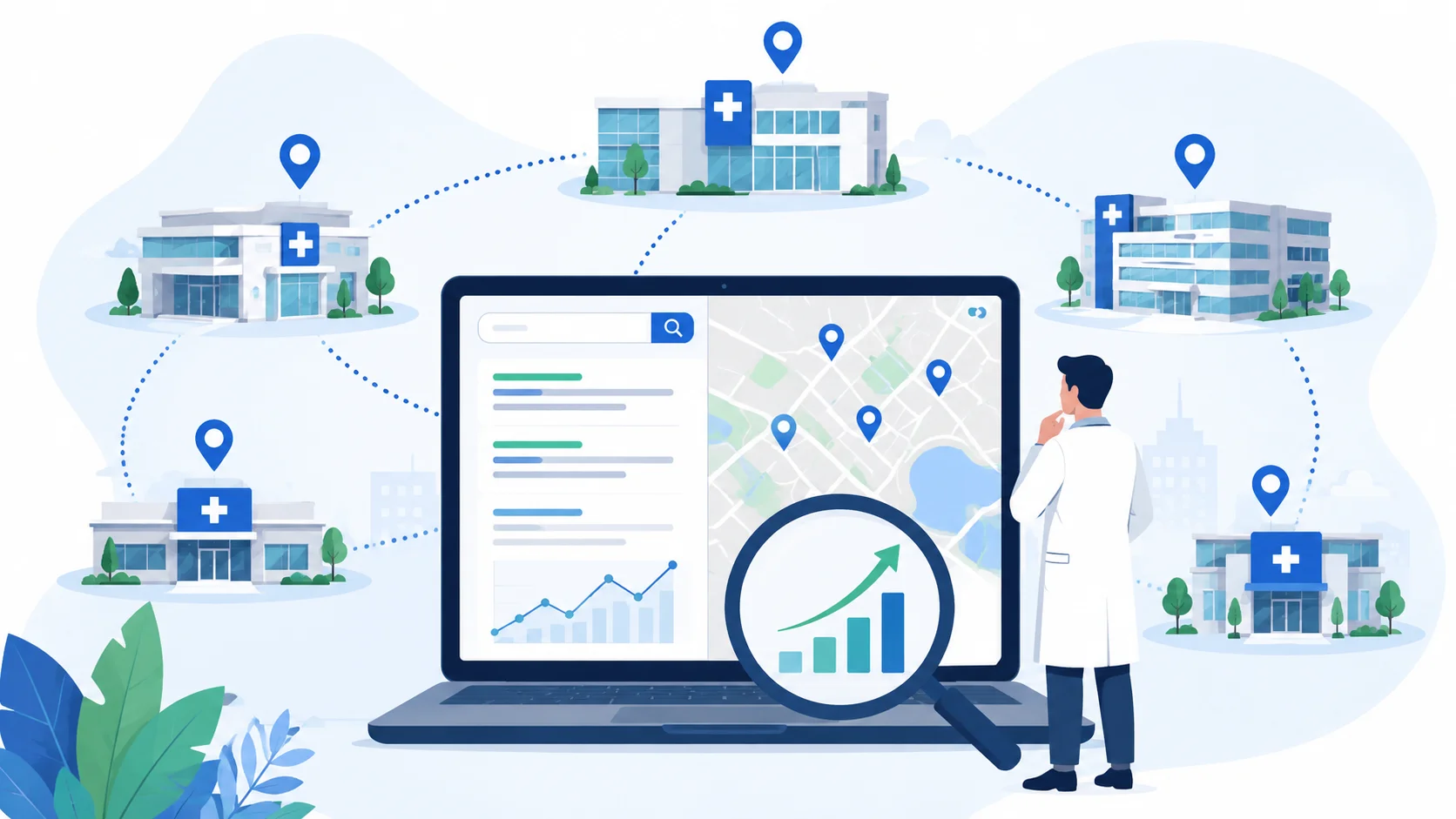
Running SEO for one clinic is simple. Running it for fifty locations is a different game entirely. Duplicate content, inconsistent listings, and conflicting local pages can quietly sabotage your rankings. This is where structured healthcare SEO services make the difference between visibility and chaos.
Why Multi-Location Healthcare SEO Gets Messy Fast
Every new location adds another set of variables: a new address, a new phone number, new doctors, and sometimes a new website template. Without a system, teams end up duplicating pages, copying meta descriptions, or leaving old locations live after a clinic closes.
Search engines notice this. Google can flag near-duplicate pages as low quality, which hurts rankings across your entire domain, not just one location.
Start With a Centralized Location Page Strategy
Each clinic or facility needs its own unique page, but that page should follow one consistent framework.
A strong location page typically includes:
- Full name, address, and phone number (NAP) that matches your Google Business Profile exactly
- Location-specific services, not a copy-pasted service list
- Local provider bios and photos
- Unique patient reviews or testimonials tied to that site
- Embedded map and driving directions
Templates help you scale, but the content inside each template must stay local and specific. A page that just swaps the city name is not enough anymore.
Fix NAP Consistency Before It Becomes a Ranking Problem
Inconsistent business names, addresses, or phone numbers across directories confuse both search engines and patients. This is one of the most common reasons multi-location healthcare brands lose local rankings.
Audit these regularly:
- Google Business Profile listings for every location
- Healthcare directories like Healthgrades, Zocdoc, and WebMD
- Insurance provider directories
- Your own website's footer and contact pages
Even small mismatches, like "St." versus "Street," can create confusion in local search algorithms.
Manage Google Business Profiles at Scale
Each location needs its own verified Google Business Profile. Trying to manage dozens manually invites errors, so most healthcare groups use bulk location management tools inside Google Business Profile.
Keep these updated consistently:
- Hours of operation, especially around holidays
- Accepted insurance plans, where relevant
- Services offered at that specific site
- Photos of the actual facility, not stock images
Profiles that go stale lose trust signals over time, both with patients and with Google's ranking systems.
Build a Scalable Content Structure
Blog content and educational pages should live at the parent brand level, while location pages stay lean and local. This avoids duplicate content issues and keeps your topical authority centralized.
A practical structure looks like this:
- Corporate domain: condition guides, treatment explainers, provider directory
- Location subpages: local services, local team, local reviews
- Optional city or region hub pages for larger metro areas with multiple clinics
This setup also helps with AI search tools like ChatGPT, Perplexity, and Google AI Overviews, since they favor clearly structured, well-organized sites when pulling healthcare information.
Common Mistakes That Hurt Multi-Location Rankings
Even experienced marketing teams run into these issues:
- Publishing identical service descriptions across every location page
- Letting closed or relocated clinics stay indexed
- Ignoring schema markup for medical organizations and local businesses
- Skipping mobile optimization, even though most patients search on their phones
- Treating reviews the same everywhere instead of responding per location
Fixing these issues one at a time is manageable. Ignoring them compounds problems as you open new locations.
Use Schema Markup to Help Search Engines and AI Tools
Structured data tells search engines exactly what your business does, where it operates, and what services it offers. For healthcare groups, this includes MedicalOrganization, LocalBusiness, and Physician schema types.
This markup also helps AI search assistants pull accurate, location-specific answers when patients ask things like "urgent care near me open now."
Track Performance by Location, Not Just Overall
A single dashboard for all locations hides real problems. Some clinics may perform well while others quietly lose visibility.
Track these metrics per location:
- Local pack rankings for core service keywords
- Google Business Profile calls, direction requests, and website clicks
- Organic traffic to each location page
- Conversion rate for appointment requests
This location-level view helps you catch problems early, before they affect the whole group's visibility.
Final Thoughts
Scaling SEO across multiple healthcare locations does not have to mean chaos. A consistent framework, clean NAP data, and location-specific content keep your visibility strong as you grow. The groups that treat local SEO as infrastructure, not an afterthought, are the ones that stay visible while competitors struggle to keep up.